Cult of the Axe Murderer
SEASON 4 : EPISODE 51
JANUARY 28, 2026
The Fox sisters are credited with igniting the Spiritualist movement. At its height, by the late 1800s, upwards of 8 million people across the US and Europe were said to subscribe to spiritualist beliefs. But, in 1888, the Fox Sisters admitted that it was all fake. They were not mediums and none of that was real. Every message, knock, or rapping from the other side was all manufactured by them.
Follow along on Instagram, TikTok, and YouTube @agoodnightforamurder.


The bonus content on Patreon for this episode is about when axe murder ran rampant in America.
In the early 1900s in the US entire families were being slain in their beds as they slept. It’s human nature to want to believe that most people are good. So, pretty quickly, theories evolved that these murders were connected. We wanted to believe this was the work of one bad apple, and all we had to do was catch him, then we’d feel safe. Modern researchers have found good data to support this, however, none of it has really ever managed to be proven. So, was this the work of one? Or, way worse, were there many axe murderers out there?
-
ARTICLES
The 'Voodoo' Murders of Clementine Barnabet, Who Claimed to Have Killed 35 People
VICTORIAN SOCIETY TIP
A Brief History of Security through the Ages
Home Security: The History, The Evolution, The Future
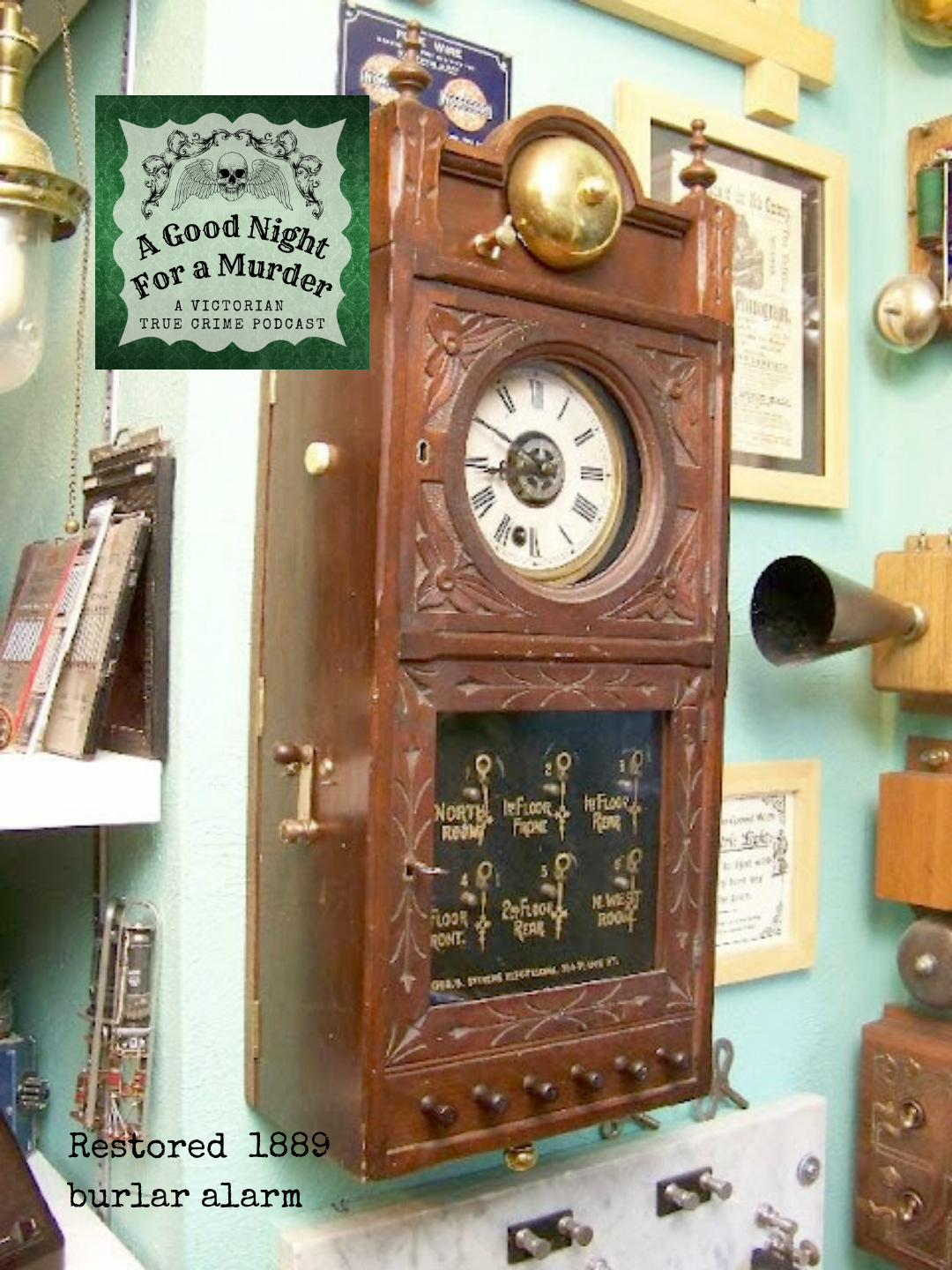
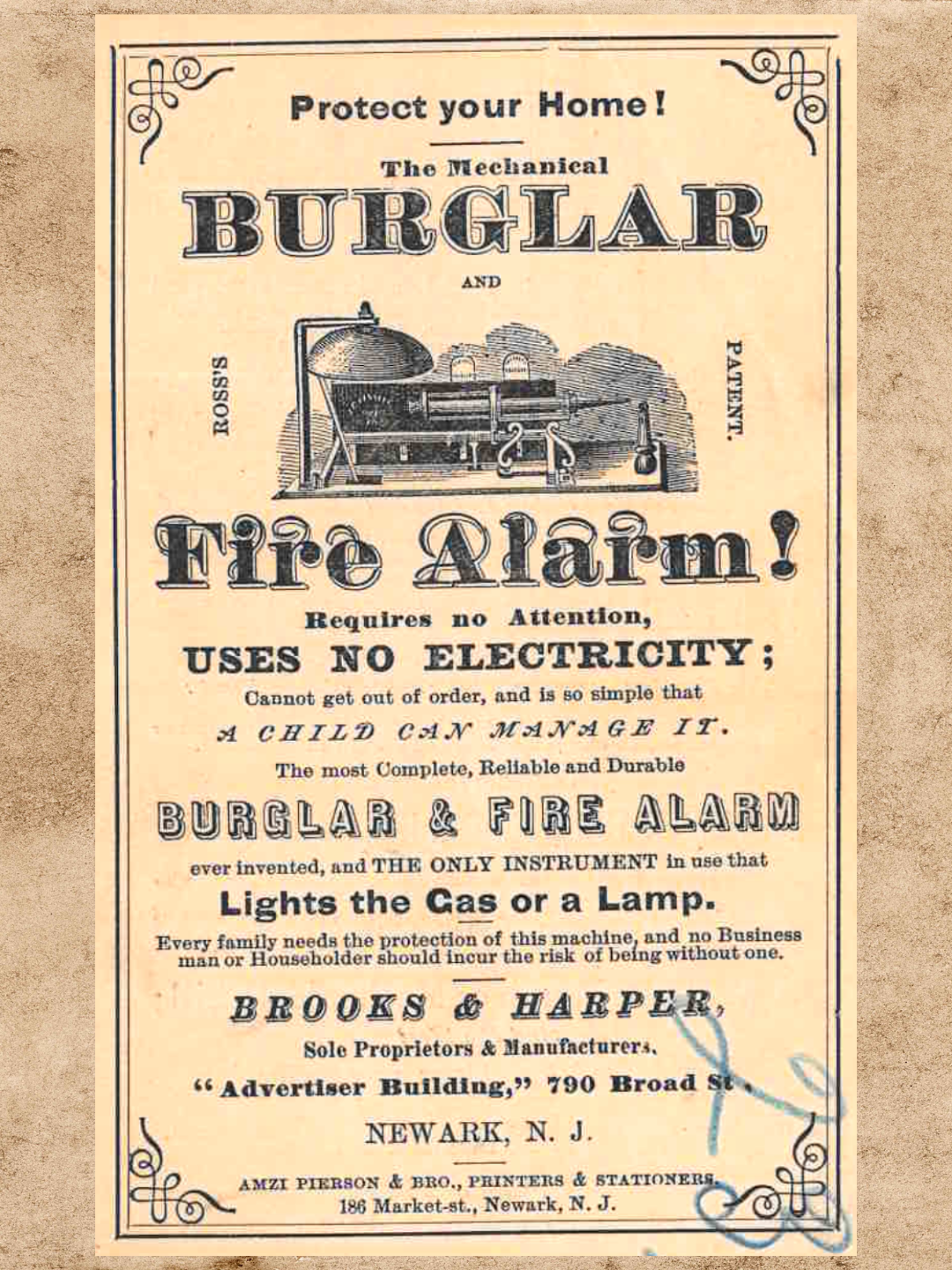
Protecting Buildings: A Late 19th Century Alarm System
How Safe is your Safe? Security Scandals of the Victorian Era
Review of At Home With the Georgians, Part Three: Safe as Houses
The History Of Victorian Door Hardware And Locks
Everything you ever wanted to know about annunciators
Centuries of Security: A Brief History of Home Defense
-
INTRO
Hello everyone, welcome to A Good Night for a Murder, a Victorian true crime podcast.
My name is Kim, and first and foremost, happy new year!
I hope you enjoyed your time with your friends and family, and are feeling refreshed and ready to take on new things!
Apparently, what we’re taking on over here on A Good Night for a Murder, is what has become Axe Murder January
For no reason other than there are a lot of historic axe murder cases…
We’re going to start tonight with the case of Clementine Barnabet who was accused of spearheading an “axe murder voodoo cult” in the early 1900s
The bonus content covers more axe murders and the theories that perhaps they are all actually linked?
Even the Good Night Snack episode coming out later this month is on an axe murder case
Clearly, we have a lot to cover - so let’s get started
But first, a Victorian society tip.
TIP
Tonight’s tip is about Victorian home security:
Very relevant to the cases we’ll discuss tonight where everyone’s worst fear of a home intruder with murderous intentions comes true
Today it’s almost the bare minimum is to have a doorbell camera on your front door
But what did Victorians do?
First, Victorian homes were built with security in mind
Those high walls or hedges, and wrought iron fences with spikes on top were meant to keep people out
Also, between the exterior wall and the house, there was often a deep drop down to a basement where servants would enter and exit
This worked sort of a like a moat,
And while it didn’t run all the way around the house, it did make things a little more difficult for would-be breaking and enter-ers
The Victorians were also renowned for their locking technology
Door locks featuring multiple levers that had to align with a specific pattern, or complex keys that required precise turns became popular
The first burglar alarm was actually invented in 1853 by Augustus Pope
It used electromagnets to ring a bell with a hammer when a door or window opened.
These would sometimes be combined with annunciators, or servant call systems, to alert to different parts of the house
In 1857, Edwin Holmes acquired Pope’s patent, and expanded the company’s offerings to include their own police force that would respond to its alarms
This was the beginning of central monitoring
Wealthy homeowners who had large estates often set man traps…
Which are exactly what they sound like…!
Spring loaded traps with iron jaws that were chained to anchored stakes around their grounds…
For as many good ideas that the Victorians had, they had a lot of terrifyingly bad ones too…
Anyway, that’s all well and good if you’re rich, but what if you were poor?
Well, for one thing, the poor had very few valuables to steal, so they weren’t as worried about robbers
Even if you’re unconcerned about burglary though - as listeners of true crime know - there are people with bad intentions out there!
So, how we keep them out
Well, for one thing, you could get a dog
Big dogs were scarier to thieves but depending on their temperament, may not rise to the occasion if confronted
Little dogs, though, were usually noisier, and were thought to be lighter sleepers, so they made good alarms
This is not news to anyone who has ever owned a dog…
Besides other common precautions like having a weapon or firearm handy, the other major recourse for poorer citizens so far as security was just… to know your neighbors
Organized police forces as we know them were not a thing until well in to the mid to late 1800s
At first their jobs were mostly things like keeping an eye out for illegal gambling, catching loose livestock, lighting signal beacons, collecting taxes, and the like.
If there were any crimes to solve, the community was just sort of expected to resolve it amongst themselves
For this reason, community watchfulness was a big deal - any strangers would be noticed quickly and confronted
Town-wide nighttime curfews were common for this reason
Because if we’re all in bed by 11, no one is out there to get in to trouble
This also made the job of night watchmen easier
Night watchmen were kind of a precursor to modern police forces
Their jobs were to roam the streets looking for anything untoward, or sometimes monitor from watch towers
Aside from that, the advice was similar to what we say today, which is: be vigilant, and lock your damn door
ANNOUNCEMENTS
CONTENT WARNING
A Good Night for a Murder is a true crime podcast that does cover stories including death, violence, sexual assault, and other adult themes.
This episode does include death and harm to children.
Please take care while listening.
EPISODE
On February 24, 1911 the Barnabet family of Lafayette, Louisiana awoke to the news that their neighbors, the Andrus family, had been murdered in the night
The family, 30 and 29 year old husband and wife, Alexander and Mimi Andrus, and their children, 3 year old Joachim (wah-KEEM), and 11 month old Agnes had been struck down in their sleep with an axe that was found on the floor of the home
A month before in nearby Crowley, Louisiana, the Byers family had been killed in the same fashion
Father, mother, and young child all axed to death in their sleep
The murders were eerily similar to another, back in 1909 out in Rayne, Louisiana, where a mother and her 3 children, ages 4 - 9, had all also been killed
All families of color, all murdered in the night by axe.
And now, the murders had come to the Barnabet’s doorstep
Some though, thought the murders had done more than just arrive in Lafayette
They thought the Barnabets were, in fact, responsible
The Barnabet family had moved to the area in 1909, and included Raymond Barnabet, his live in girlfriend and mother of his younger children, Dina Porter, Raymond’s children, Clementine, Zepherin, and possibly two more children
Raymond also had an older daughter from a prior relationship, Pauline who lived in Rayne
Aside from the alarmingly similar MO, police had not linked the murders together at the time and were still investigating suspects individually
An alleged mistress of Raymond’s reported that she felt Raymond might have had something to do with the murder of the Andrus family
Police knew Raymond as a petty criminal who reportedly abused his family, and two days after the murder, they arrested him
However, they did not have sufficient evidence to hold him, and he was released within a week
The investigation, however, was ongoing
Raymond’s daughter, 17 year old Clementine, and son, Zepherin of about the same age, both gave statements that he had come home boasting of the Andrus murders with bloodied clothes
They stated that they feared for their life so long as their father was free.
His partner, Dina, stated that she had not seen or heard any of that
But did testify that Raymond was violent with her and the children, and had even threatened to kill her
Testimonies from neighbors corroborated Dina’s statements
In the meantime, on March 21, 1911 another entire family was murdered
This time it was the Casaway family
51 year old Alfred, 37 year old Elizabeth, and their three children: Louise, age 6, Josie, age 3, and Alfred Carlisle, only 5 months old
This murder occurred in San Antonio, Texas,
So, Raymond was not suspected, but citizens all throughout the area are really putting pressure on police to solve any one of these murders!
Throughout the entire region whole families are getting axed to death in their own beds and no one is helping them!
So in July of 1911, Raymond was rearrested
His case went to trial and on October 19, 1911, Raymond Barnabet was actually convicted and sentenced to hang for the the murder of the Andrus family
However, someone had smuggled a bottle of wine in to Raymond, and he was completely wasted for his entire trial
It was on these grounds that his attorney was able to file for an appeal
In the meantime though, Raymond would be behind bars, which brought comfort to the residents of Lafayette
Until, it happened again…
On November 26, 1911, the Randall family of Lafayette - parents Norbert and Azema and their 4 children - were murdered in the night
Norbert had been shot in the head, but the rest of the family had been bludgeoned, again, by axe.
Being locked up, Raymond was not a suspect, but in a curious turn, his 17 year old daughter, Clementine, fell under suspicion.
At the time, Clementine was working as the live-in housekeeper for the Guidry family, who lived only a few blocks away from the Randalls
There sheriff was already suspicious of the Barnabet teens due to their troublemaker reputation about town
Then, blood was found on the back gate to the Guidry residence
And that was all the sheriff needed to bring in both Clementine and Zepherin
Zepherin had an alibi for the night, but Clementine did not
Upon searching her room, they found an apron, dress and underwear with blood on it
Clementine had testified during her father’s trial that it was him who had wiped blood on her clothes
But now, investigators wondered if that was a lie, and it was actually Clementine who had been responsible for the Andrus murders as well!
Ultimately, Clementine would go on to stand trial for both the Andrus and Randall family murders!
During the trial, Clementine acted erratically including rocking back and forth in her chair and laughing
Things only got stranger from there, as she claimed to be acting under orders from an offshoot of the Christ's Sanctified Holy Church congregation in Lake Charles, Louisiana, called the Church of Sacrifice
She confessed to all of the murders alongside an unspecified number of accomplices, including the 1909 case in Rayne that she said she committed while visiting her sister as a test
But then, while Clementine was locked up, another three families were murdered
These were:
The Warner family including 24 year old mother, Marie, and her 3 children ages 9, 7, and 5
The Wexford family
And the Broussard family, including 40 year old Felix, his 36 year old wife Mathilda, and their 3 children ages 8, 6 and 3.
In the case of the Boussards, there was allegedly an odd message scrawled on the wall that read:
“When he maketh the inquisition for blood, he forgetteth not the cry of the humble"
This is actually a misquoted version of a Psalm 9:12 in the King James Bible
But it was signed “Human Five,” which the press really leaned in to…
In fact, the press leaned so far in to these stories, they start making up their own parts
For example, the Wexford family murder I just mentioned, may not have been real
There weren’t any official reports made on it
It’s only mentioned in the press, and the details are pretty close to that of the Warner family
Similarly, for the message on the wall signed the Human Five, police did wonder if that could be a gang of some sort
They also wondered if a reporter looking for a scoop could have written that themselves
Sometime later, Clementine recanted her confession
Which kind of made sense to officials
They definitely didn’t think she was behind all of the murders
But then, in April of 1912, Clementine confessed again, this time in lurid detail
Clementine said she had acquired a “conjure bag,” a Voodoo or Hoodoo charm meant to protect her while committing the crimes
She said their purpose was to make her invisible to authorities, and that she also disguised her self as a man
She said that she and four accomplices drew lots as to who would test the charms
At first, she said they didn’t know who the victims would be
Then later said the chose them based on families that had infants, even though a number of families did not have infants at all
All together, she said they were responsible for 35 murders, and that she herself committed 17 with her own hands
She later upped her own count to 20
This wasn’t the only part of her story that was hard to keep track of though
Her story often contradicted itself as well as disagreed with crime scene details
For instance, she claimed to have nearly always entered through the back door
In most instances, the perpetrator entered through a window
She claimed to have shot Norbert Randall herself, but got the location of the shot wrong
When other voodoo and hoodoo practitioners were asked about the conjure bags Clementine described, they said they sounded like what they would make to heal rheumatism or back pain
So far as the other 4 accomplices from the Church of Sacrifice though:
Clementine said they were two men and two women, but would only name the women by their first names only: Mary and Irene
Her brother named two men he claimed he knew were with Clementine the night of the Randall murders - Edwin Charles and Gregory Porter
It sounds like there were 4 or 5 arrests based on Clementine and her brother’s stories, but none ever quite fit the narrative they were pushing, and none of them were ever charged
Later that same month, Clementine was allowed to give a press conference of sorts…
She smoked cigars given to her by reporters and sang hymns for them
She was also excited about having her photo appear in the newspaper
The press went absolutely wild for Clementine’s confession, leaning heavily in to the voodoo and hoodoo aspects of the story
A number of motives for Clementine were invented, including that Clementine was the high priestess the Church of Sacrifice, a ritualistic human sacrifice cult
Police did question Pentecostal revival preacher, Reverend King Harris, who led Christ Sanctified Holy Church - the group that allegedly inspired the Church of Sacrifice
But he said he’d never heard of any Church or Sacrifice and was visibly shaken at the implication that his sermons could inspire such brutal killings
Clementine’s defense attorneys argued that she was clearly insane, but a team of court appointed physicians declared Clementine was fit to stand trial
So, her trial for the murder of Azema Randall began on October 21, 1912
Her attorney said Clementine’s abusive childhood caused her confessions to be unreliable
He also questioned the forensic methods used to match the blood of the Andrus family to that found on Clementine’s clothes
Despite this, Clementine was convicted on October 25 and sentenced to life in Louisiana State Penitentiary
During her incarceration, she worked on the on-site sugarcane fields, and only tried to escape once in July of 1913
Actually she did escape but they caught her and brought her back
Aside from this, she was described as a model inmate!
And then, about 10 years in to her life sentence, Clementine was released!
The explanation given by the prison was that the prison’s physician, along with an inmate who studied medicine during his confinement, had performed an “operation” on Clementine, and now she was cured…
This sounds a lot like a lobotomy, but those weren’t a thing yet in 1923…
So, we don’t really know what they did to Clementine…
If anything…
The modern take on it is that despite the court conviction, no one had actually believed her story in the first place, and they saw no reason to keep an innocent woman locked up
So, they invented a reason to let her go
Either way, after her release, Clementine was never really heard from again
Which does kind of support the theory that her whole story was made up
It would be interesting to know when her father died…
We have no way of knowing but I’m curious if she was honestly just afraid of him the whole time…
Like, to the point that she wanted to be put in prison to feel safe…
What was real though, was a string of bloody axe murders perpetrated against innocent families throughout the south
In most cases, there were other arrests made with varying degrees of certainty
And, despite no evidence confirming its existence, the Church of Sacrifice was blamed for killings for years to come
There is also an interesting theory that suggests the murders between 1909 and 1912 are the early work a serial killer
If true, that would place their body count upwards of 90 victims including men, women, children and even infants
That is actually what the bonus content for this episode is about
I am interested to hear what you think of Clementine Barnabet though.
Do you think she was actually guilty of anything?
Do you think her father or her brother were?
And what do you make of the story of her release?
If you’re listening on Spotify, you can comment on the episode there
Or if you head on over to Instagram, TikTok or YouTube @agoodnightforamurder, you can let me know what you think there as well.
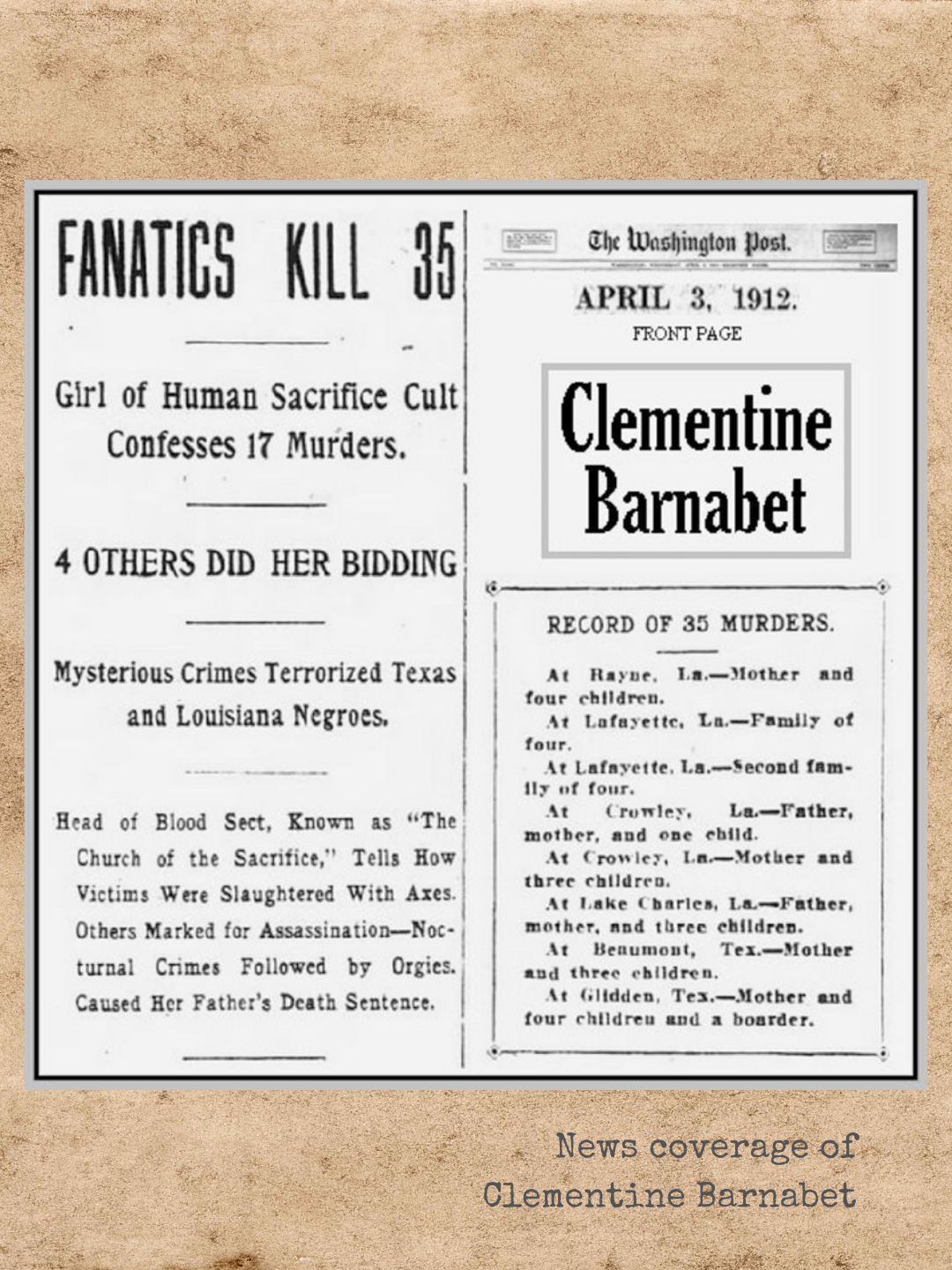
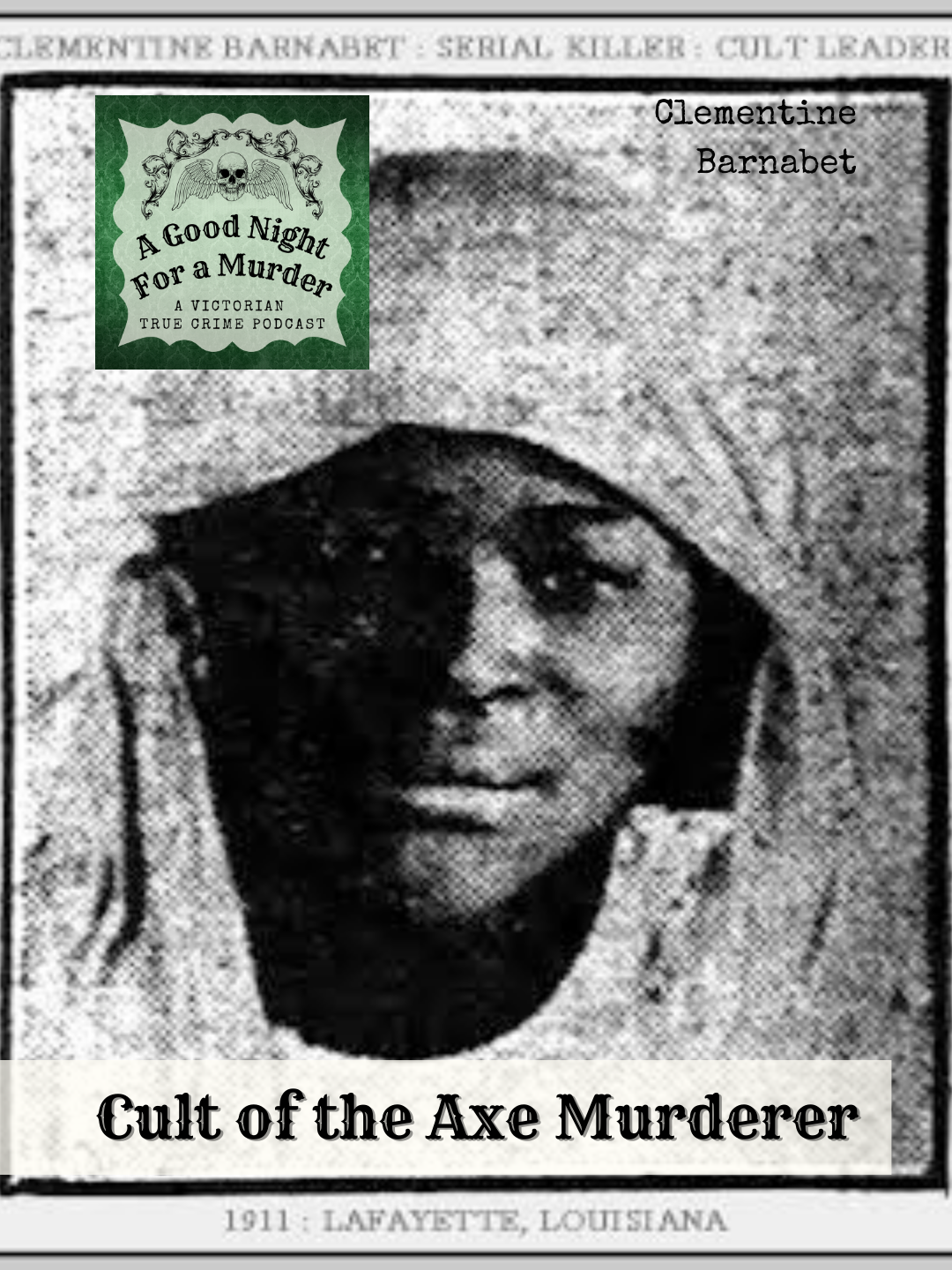
I’ve also posted a photo of Clementine and some of the sensationalist newspaper coverage of her case.
You can also see the photos and source links for this episode on the episode blog on my website at agoodnightforamurder.com
As mentioned, the bonus content for Patreon members for this episode are more axe murder cases and the eerie similarities between them.
Listen through the outro music to hear a short preview of this Patreon bonus content
To subscribe to Patreon and learn more about the podcast you can visit agoodnightforamurder.com.
Also follow me on Instagram, TikTok, or YouTube @agoodnightforamurder
Please rate and review, and share with friends
Thank you for listening,
And I will talk to you again soon