SEASON 5 : EPISODE 56
NOVEMBER 4, 2026
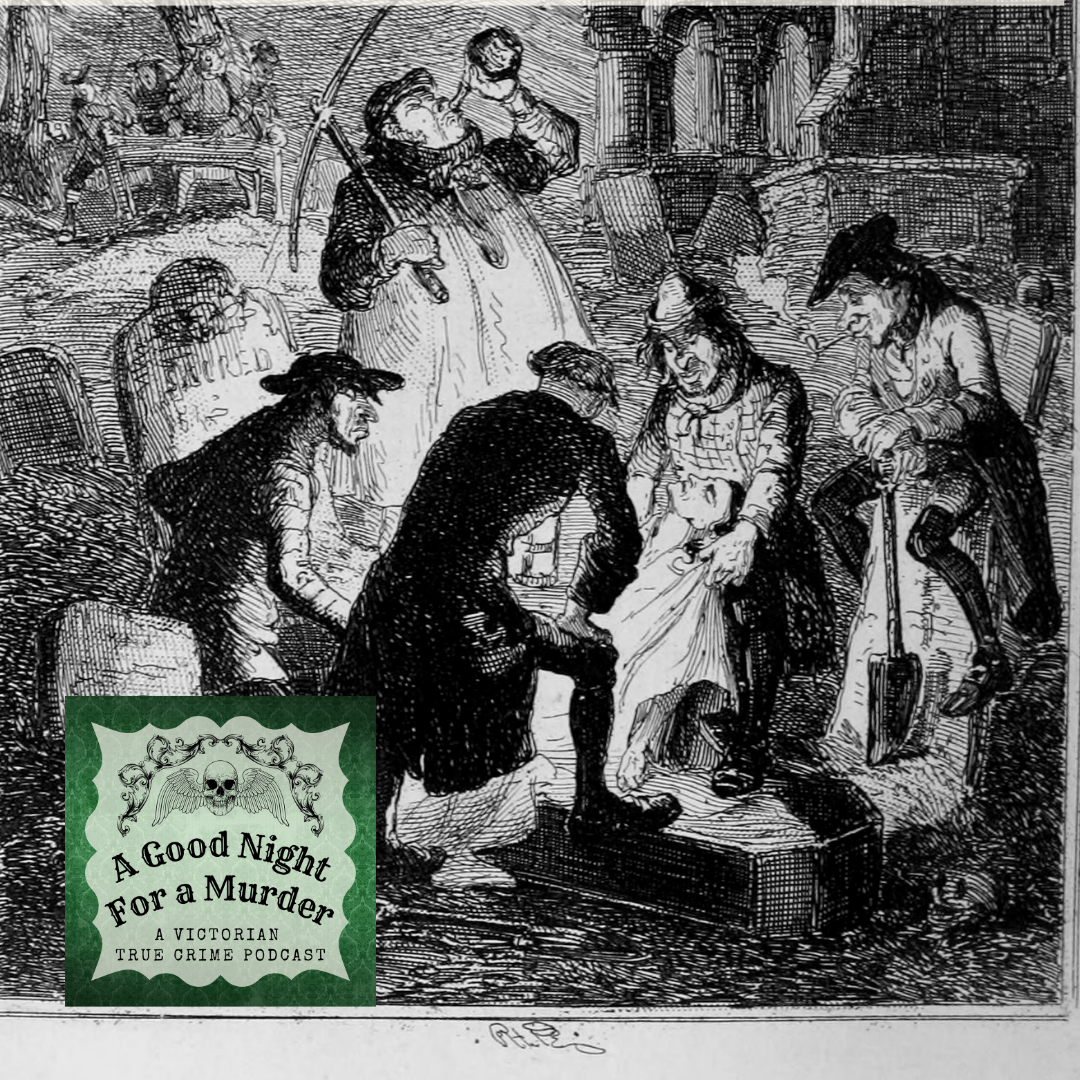
Tonight’s episode is guaranteed to satisfy your morbid curiosity for dark history. Set in Edinburgh, Scotland, home of the renowned University of Edinburgh Medical School, and considered the premier center for medical training during the early 19th century, this case is about two opportunistic lodging-house keepers who saw the medical community’s need for fresh cadavers, and capitalized on it in the darkest way imaginable.
More from this episode:
How to not get body snatched
Use code GNFAM10 for 10% off in the merch shop, including new items!
Follow along on Instagram, TikTok, and YouTube @agoodnightforamurder.
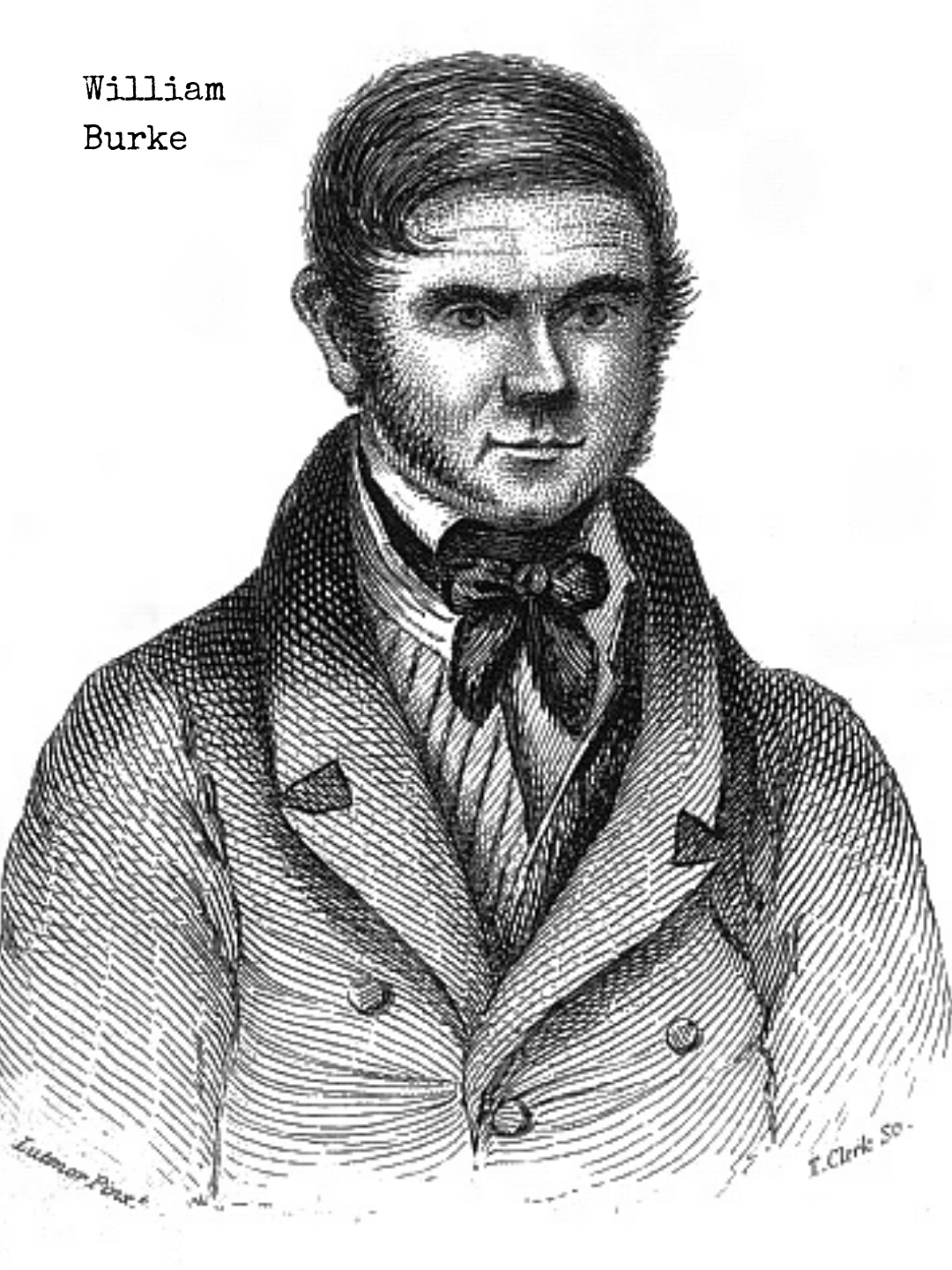
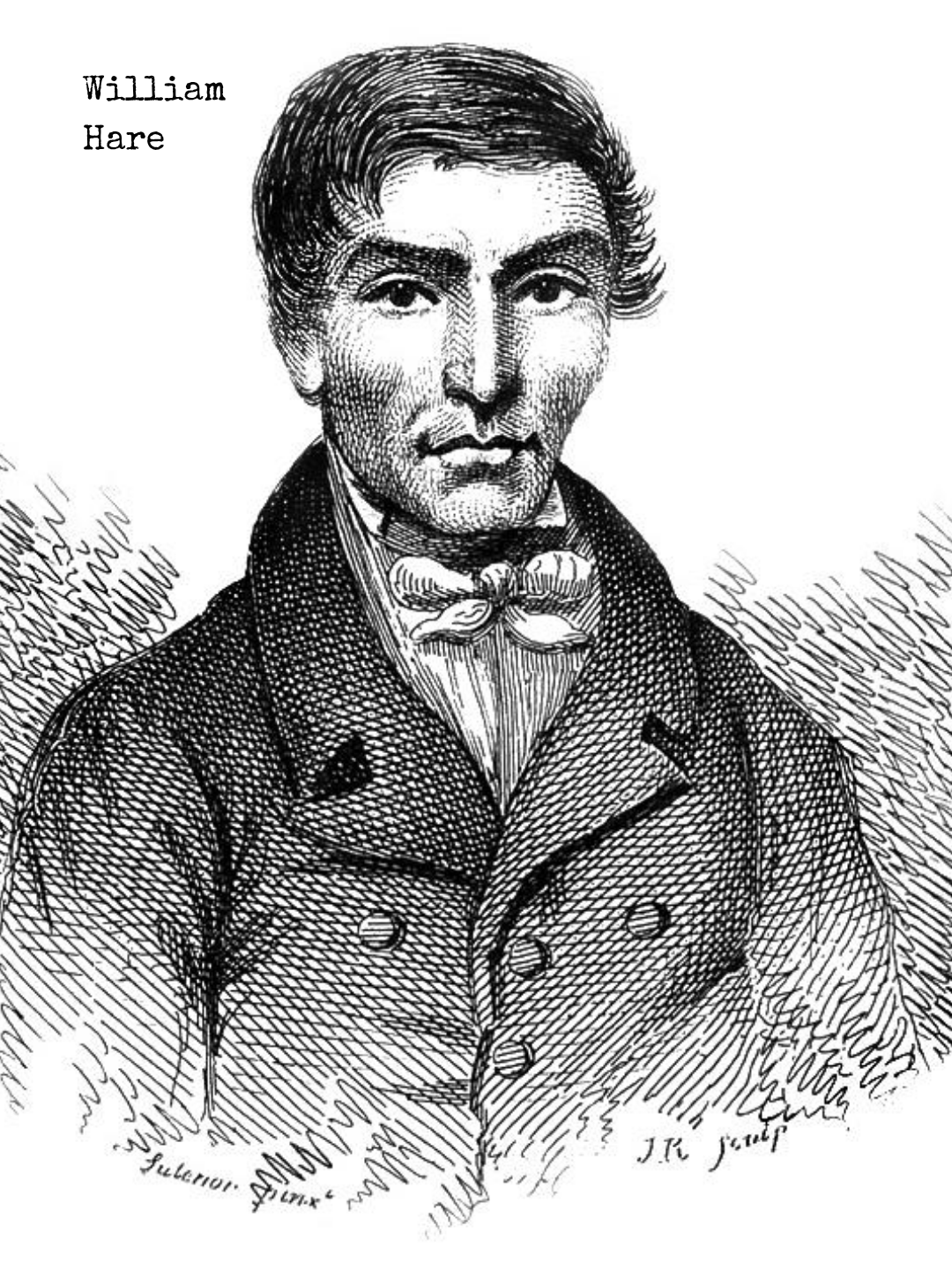
-
ARTICLES
Resurrectionists in the United Kingdom
Who were Burke & Hare? Edinburgh’s Infamous “Body Snatchers"
From crime to collection: Burke and Hare at the Library
When science met scandal: Dr Robert Knox and the Burke and Hare murders
The History of Burke and Hare and of the Resurrectionist Times (1884)
VICTORIAN SOCIETY TIP
Body Snatching and Burial Reform in 19th-Century Britain
Tombstone Madness: A 19th Century Occupational Disease
Resurrectionists in the United Kingdom
-
INTRO
Hello everyone, welcome to A Good Night for a Murder, a Victorian true crime podcast.
My name is Kim, and tonight’s episode is guaranteed to satisfy your morbid curiosity for dark history.
Set in Edinburgh, Scotland, home of the renowned University of Edinburgh Medical School, and considered the premier center for medical training during the early 19th century, this case is about two opportunistic lodging-house keepers who saw the medical community’s need for fresh cadavers, and capitalized on it in the darkest way imaginable.
This is the story of Burke and Hare
But first, a Victorian society tip.
TIP
A lot of you are likely already familiar with the story of Burke and Hare
Even if you’re not, you’re about hear the whole thing in a few moments
So, it won’t really be a spoiler to tell you that their case has to do with the act of body snatching
To be clear, body snatching is the illicit activity of stealing corpses - most commonly, right out of their grave
That’s why tonight’s tip is about how to prevent body snatchers
First, body snatching was a very real, but also very temporary problem in the 19th century
This was before embalming was widely utilized, and after 2 - 3 weeks - sometimes up to 6 weeks if temperatures were below freezing - bodies no longer held value for anatomists due to their state of decomposition
So, all of the measures did not have to be deployed indefinitely
They were only necessary for a short time
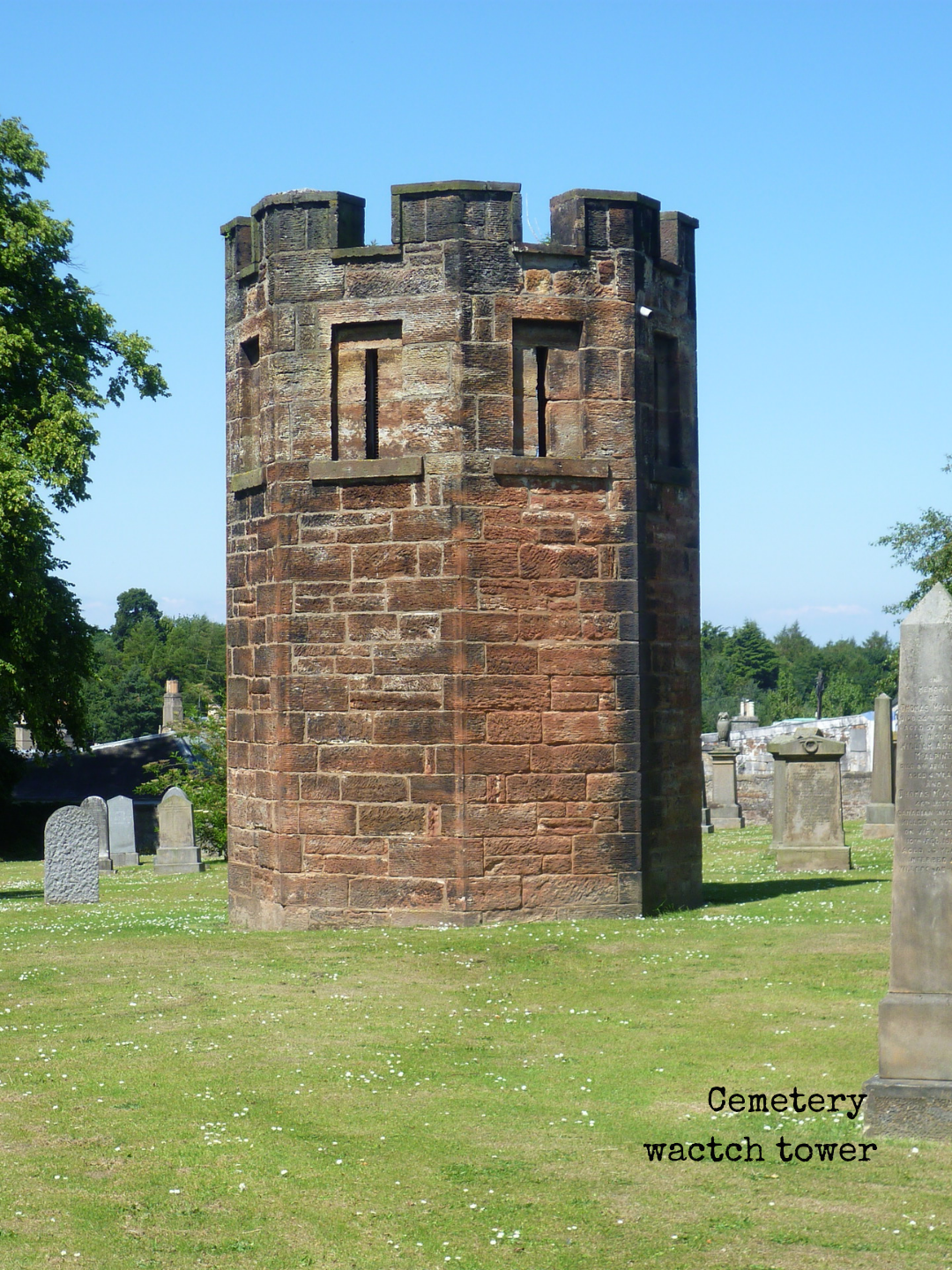
That said, the first line of defense was monitoring from watch towers or organizing night watches
Many cemeteries built tall stone watchtowers and posted armed guards to surveil burial grounds at night
Sometimes these were paid for, built, and staffed by the cemetery itself
or, in smaller villages, the towers were funded by parishioners or community members
Here, it was common to form “Watch Societies” that were volunteer-run or sometimes paid for by a small subscription fee
The idea being if you participated, when the time came for you or someone in your family, you would benefit from the guardianship of the watch society you had contributed to
Similarly, some families simply organized amongst themselves to post up at the gravesite all night in shifts
Wealthier families simply hired a private guard,
but this could be problematic as guards could easily be bribed or were often not a match for gangs of “resurrection men,” as they were called
Another tactic was since bodies were only valuable for the first few weeks, then just put the bodies somewhere more secure for that period
That “somewhere more secure” was the mortuary house, also called dead house, or receiving vault of the cemetery
These held several purposes:
One, being a place to store bodies in the winter in case the ground was too frozen for burial
Two, being a more sanitary option to ones house for holding a decedent while their family raised the funds for the burial
And three, being a very secure, reinforced, locked space to keep out would-be body snatchers
Like cemeteries, these were funded by local taxes, churches, or cemetery companies
If you were rich though, you could also just build a sturdy, locked, stone mausoleum on your purchased plot
But since watch towers, guards, and receiving vaults were not a sure a thing, Victorians came up with more creative ways to protect against body snatchers
The MO of resurrectionists was usually to dig down at the head of the coffin, then break open the end and pull the body out
Wealthy Victorians thwarted this by purchasing heavy iron or lead coffins with specialized locking mechanisms that were nearly impossible to break open quietly or quickly.
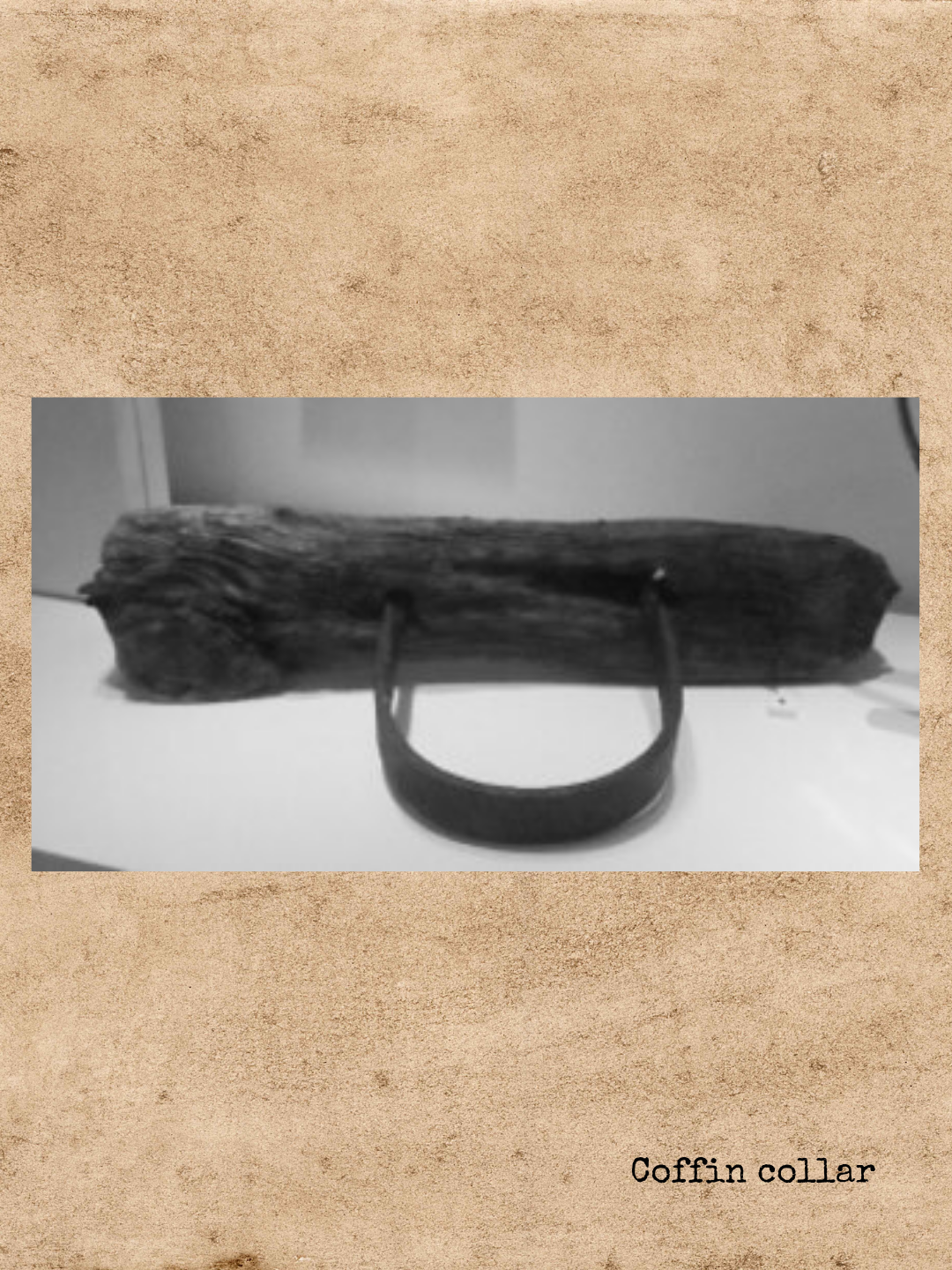
Another device was called a coffin collar
They were iron bars bent in a U shape that would be placed over the decedent’s neck and bolted to the bottom of the coffin, so they couldn’t be pulled out…
This is true nightmare fuel for those who feared The Other horrifying infamous Victorian era problem of being buried alive
To be honest though, metal coffins and coffin collars were not actually that common…
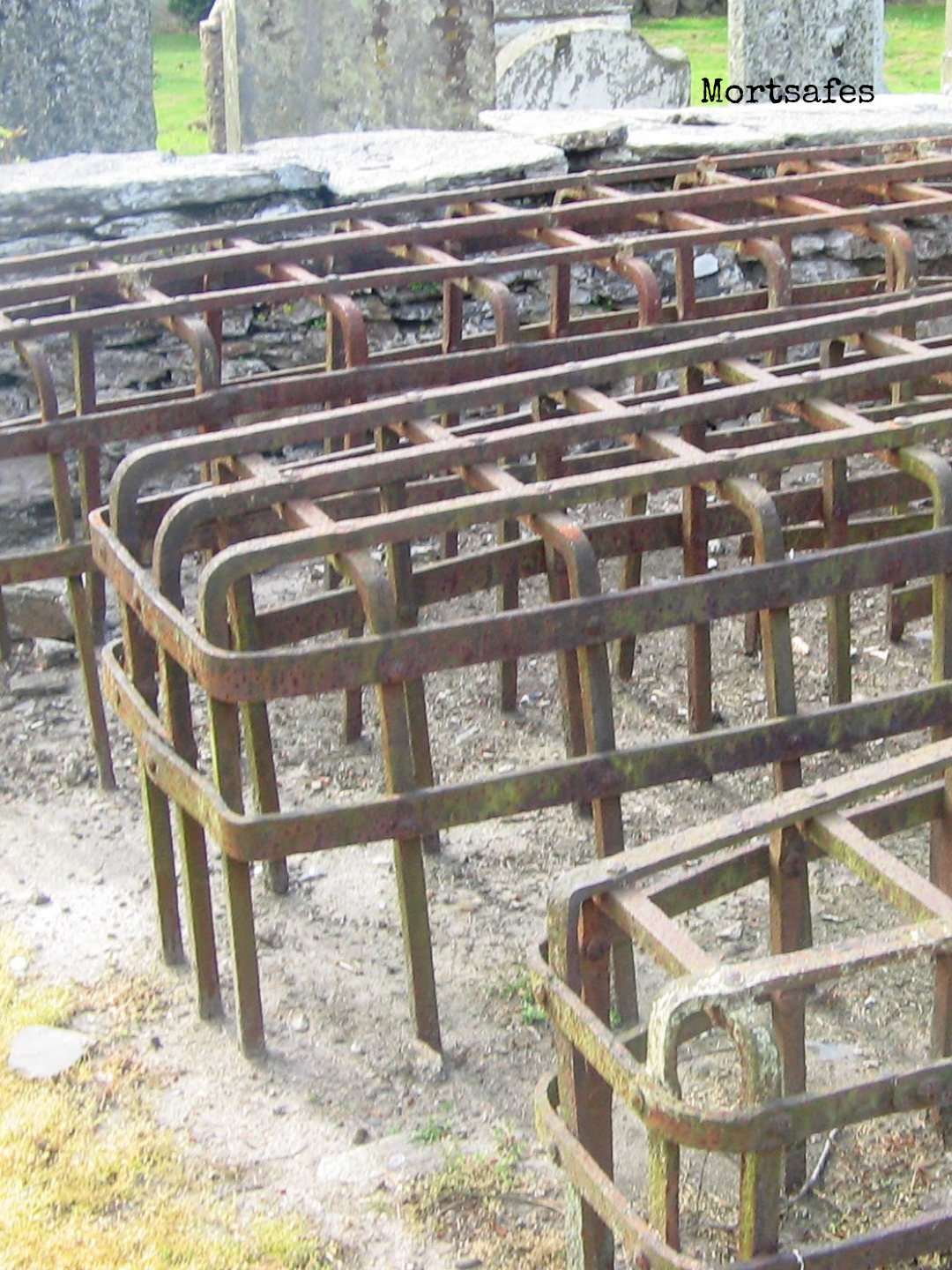
What became more popular were mortsafes
Above ground, mortsafes look like a heavy iron cages, sometimes topped with stone, placed on top of graves
Despite popular lore, these were not used to keep suspected vampires in, but to keep the living out
Below ground, a heavy metal plate slightly larger than the coffin would be placed on top of it
The plate had holes drilled all around the edges
Iron rods about 8 feet long would then be inserted in the holes and driven in to the ground about a foot or 2 past the coffin
The grave would then be filled, then the mortsafe top would be placed
This is the iron work component we see above ground.
It would be locked on to the bars effectively creating a cage around the whole grave keeping body snatchers out
They were also not intended to be permanent though
After a few weeks, the entire mortsafe contraption would be dug up so it could be used for someone else, and the grave would be refilled
Sometimes churches or cemeteries bought them and kind of rented them out
And sometimes - like the watch service - a group would get together and purchase them
For an annual membership fee, you could use it for yourself or your family when your time came.
They would also rent them out to non-members
So far, very subtle, very demure, very Victorian…
Hang on tight though, for a hard left about cemetery guns and grave torpedoes
They are as they sound.
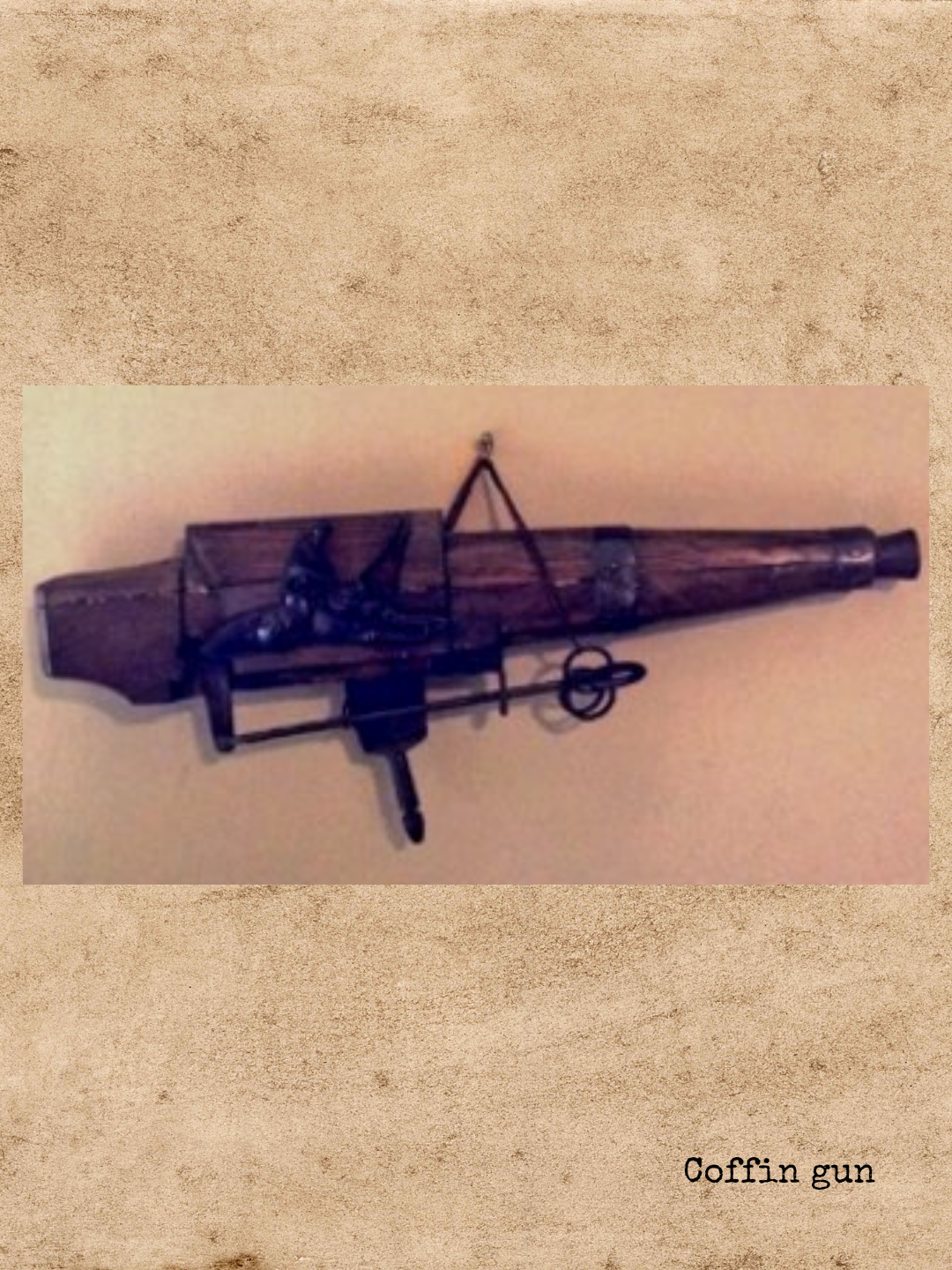
Grave guns were trip wire activated firearms on a swiveling base positioned directly over new graves
If any unsuspecting grave robber or body snatcher approached, the grave the gun would fire
Unfortunately, if any unsuspecting person, including security guards, caretakers or family members approached, the gun would also fire
These were usually rented for a few weeks by wealthy families, and while they were a solid psychological deterrent, they were not fool proof
Some resurrectionist gangs would send women disguised as mourners in to the cemetery during daylight to map out exactly where the trip wires were placed
They could also obviously be seen above ground, even in the dark, so they could be disabled
Ever the innovators though, Victorians invented: coffin torpedoes
These were literal bombs buried with the coffin that would detonate if the coffin was tampered with
And they worked
Here’s one that made the news in 1881
Obviously, these would also damage the body of the loved ones families were trying so hard to protect, which kind of negates the point
There was also serious concerns about leaving live bombs planted throughout cemeteries
Fortunately, as times changed, all of these tactics for preventing body snatchers were no longer necessary
Before we get in to tonight’s case, there is a sale happening in the Good Night For a Murder merch shop!
10% off with code GNFAM10, and that includes brand new, freshly added items which are a new mug with an all over Victorian true crime themed print, winged skull sleep shorts, and a new candle, so you can be cozy for November
Please check it out at agoodnightforamurder.com and use code GNFAM10 - that stands for Good Night For a Muder - 10 for 10% off
Thank you!!!
CONTENT WARNING
A Good Night for a Murder is a true crime podcast that does cover stories including death, violence, sexual assault, and other adult themes.
Please take care while listening.
EPISODE
Before the 16th century, very little was known about human anatomy
Most anatomical findings, at this time, were limited to the dissection of animals
Advancements towards the understanding human anatomy before this period mostly came from Mondino de Luzzi, an Italian physician, anatomist and professor of surgery
It was Mondino who performed some of the earliest systematic human dissections and documented them in 1316 in what is considered the first ever anatomy textbook.
Due to medieval influences and methods though, there were some mistakes
First, these dissection studies took place over the course of 3 - 4 days
Which meant Mondino was racing against the rate of decomp
Things could start to become… muddled… as days rolled on
Also, since these dissections were held lecture style, Mondino was stood at a pedestal while another would do the actual cutting - he was not actually doing the dissections his self
There was also a third man involved who would use a long wooden pointer to point at whatever he thought Mondino was talking about
What’s more, they didn’t really have the opportunity to do this a lot
So if they saw something that didn’t really align with what they thought they should be seeing, they just chalked that up to a meaningless anomaly of this particular body, or blamed it on decomposition
Mondino also had trouble disagreeing with the writings of the great philosophers
For example, Mondino doubled down that the heart had only 3 chambers versus the 4 he actually saw, because 3 aligned more closely with the philosophical ideas of Aristotle
He also described the human uterus as being a 7 chambered organ
This is a typical feature of pigs and other multi-offspring animals, but not so of humans
The female reproductive system would prove very confusing to anatomists for centuries to come, by the way, partly because they got way fewer opportunities to study females, and partly because, well… men…
By the way, if you’re wondering, “Why the history lesson? I’m here for crime.”
Please bear with me.
For you to understand the state of things in the 1820s when our case takes place, it’s important to know how things got to that point
So, Mondino’s anatomy text book would be considered the standard for pretty much the next century
In 1506, King James the 4th gave royal patronage to the Barber-Surgeons of Edinburgh, allowing them to dissect the "bodies of certain executed criminals" at the rate of 1 per year.
Before this it was just sort of a “take em where you can get em” situation
Remember back then most people were not dying in hospitals like they are today
They were dying in their homes where families or their communities would handle their burial directly
And what family is going to give their loved one over to the anatomists?
No one.
Mondino was already working mostly with the bodies of executed criminals - occasionally supplemented by grave robbing students - but this edict took steps at providing a supported path forward.
The next great stride was made by Andreas Vesalius, who was born in Brussels and became a professor of anatomy at the University of Padua
He is considered to be the founder of modern human anatomy
Vesalius published seven volumes on anatomy titled The structure of the human body, in 1543
He did correct some of the misunderstandings put forth by Mondino, but where ever there were gaps, he would usually still supplement with knowledge of animal anatomy
He was also not above utilizing human remains stolen from graveyards, by the way
Eventually Henry the 8th gave patronage to the Company of Barber-Surgeons, allowing them access to four executed felons each year
Charles the 2nd later increased the number to six felons a year
Elizabeth the first followed suit by granting the College of Physicians the right to anatomise four felons annually in 1564
The Company of Barber Surgeons and College of Physicians, by the way, were not schools, but more so professional groups dedicated to medical science
The “barber surgeon” was a literal mix of what we consider a barber, who cuts hair and trims beards, and a surgeon, who operates on people
Their early purpose was caring for soldiers during and after battle and their primary skill was wielding a razor, for whatever its purpose was
This type of work was too messy for physicians who chose more of an academic path
Physicians did indeed observe or consult during surgery, but generally considered the actual cutting beneath them
From the 16th century forward, anatomy was the subject of the first public lectures given in any science by several of these professional organizations, each made up of about 30 - 40 members
They were still held in an auditorium type setting at the rate of 4 - 6 year per year
How much could really be learned from the benches of the auditorium theater though?
It was clear that they needed more bodies
It’s a popular belief that the government or church were the ones slowing down the pipeline
But, that’s not really true
Autopsies were a necessary and required part of many investigations - no one in law enforcement was opposed to that
So far as the church, they too highly prioritized autopsies
When deeply religious figures or suspected saints died, the Church was quick to authorize autopsies to search for signs of divine favor inside the body
The main hurdle anatomists faced was public opinion
Lawmakers had to strike a balance between answering to the masses - who did not want their loved ones cut up - and scientific advancement for the greater good
Several major hospitals and teaching centres were established in Britain during the 18th century, but suffered from a severe shortage of legally available corpses
Institutions in the US had the same problem
Cities on both sides of the Atlantic became renowned for body snatching
Criminals, who became known as resurrectionists, frequently raided graveyards at night, removing newly buried bodies from their coffins to sell to medical institutions
In 1694, Edinburgh allowed anatomists to dissect corpses - quote - "found dead in the streets, and the bodies of such as die violent deaths ... who shall have nobody to own them"
Further, victims of suicide, infants who did not survive childbirth, and unclaimed bodies of abandoned children were also given over
This made no one happy, though…
First, it was still not enough for anatomists, and mostly served to place them at odds with the public
The public resented the free use of the death penalty and frequently mobbed officials at executions to keep bodies from being turned over to anatomists
To avoid all out riots, authorities would often ignore instructions from surgeons and just turn over bodies of executed criminals to their families
This was a two way street though, which led to anatomists paying prison expenses and funeral costs just to get their hands on bodies of condemned prisoners,
Or, outright bribing prison officials to be given bodies they were not legally entitled to
The Murder Act of 1752 stipulated that - quote "every murderer shall, after execution, either be dissected or hung in chains".
Authorities hoped this would discourage murder,
but also, leave no gray area for what was to happen with the bodies of convicted murders
trying to circumvent the whole “who gets the body?” problem that kept coming up…
But, this was still not enough to fulfil the growing needs of anatomists as medical advancements marched on, and more and more students of anatomy flooded in to cities
There was The Other way… to procure bodies though…
We already mentioned the forefathers of anatomy themselves had utilized it…
And that was stealing bodies directly out of their graves - otherwise known as the act of body snatching…
It had been happening for centuries already, but the demand generated by 19th century medical advancement gave rise to the full blown commodification of body snatching
Legally, because a body was not considered property, it could not be owned
And what could not be owned, could not be stolen
However, there were legal protections surrounding the actual grave site
So, to avoid getting caught, resurrectionists formed networks who would all get a cut once the body was sold to a medical institution
This could include the cemetery sexton, gravediggers, undertakers, or local officials who would all act as informants
The resurrections themselves would then go in to the cemetery under the cover of night and take the bodies from their graves
The process of removing one body could be accomplished in about 30 minutes
Beyond that, you also had to know who was buying
Medical or academic institute workers like custodial staff, assistants and students were also involved to connect resurrectionists with anatomists
There were other ways as well.
Sometimes women would pose as grieving relatives to claim a body from a workhouse
Usually, if someone died in a workhouse the local parish would foot the funeral bill
Allowing the body to be claimed reduced their expenses so questions were rarely asked
Servants would also allow resurrectionists access to the bodies of their dead employers, working with others to secretly bury an empty coffin instead
And sometimes, bodies disappeared from their own viewings right out of their own homes.
If caught, the offender typically received one of the lighter sentences for crimes against public morals - which could be fines or a public whipping
By and large though, most authorities turned a blind eye
The real risk was being exposed publicly ostracized
So, while resurrectionists did operate on the fringe of legality, and one couldn’t really call it an honest living, by the time our case takes place in 1827, being a resurrectionist could very well be considered…. well paying career choice… for the time
Now, in 1827, the city of Edinburgh, Scotland was the premier choice of the English-speaking world for academic medical training and studies
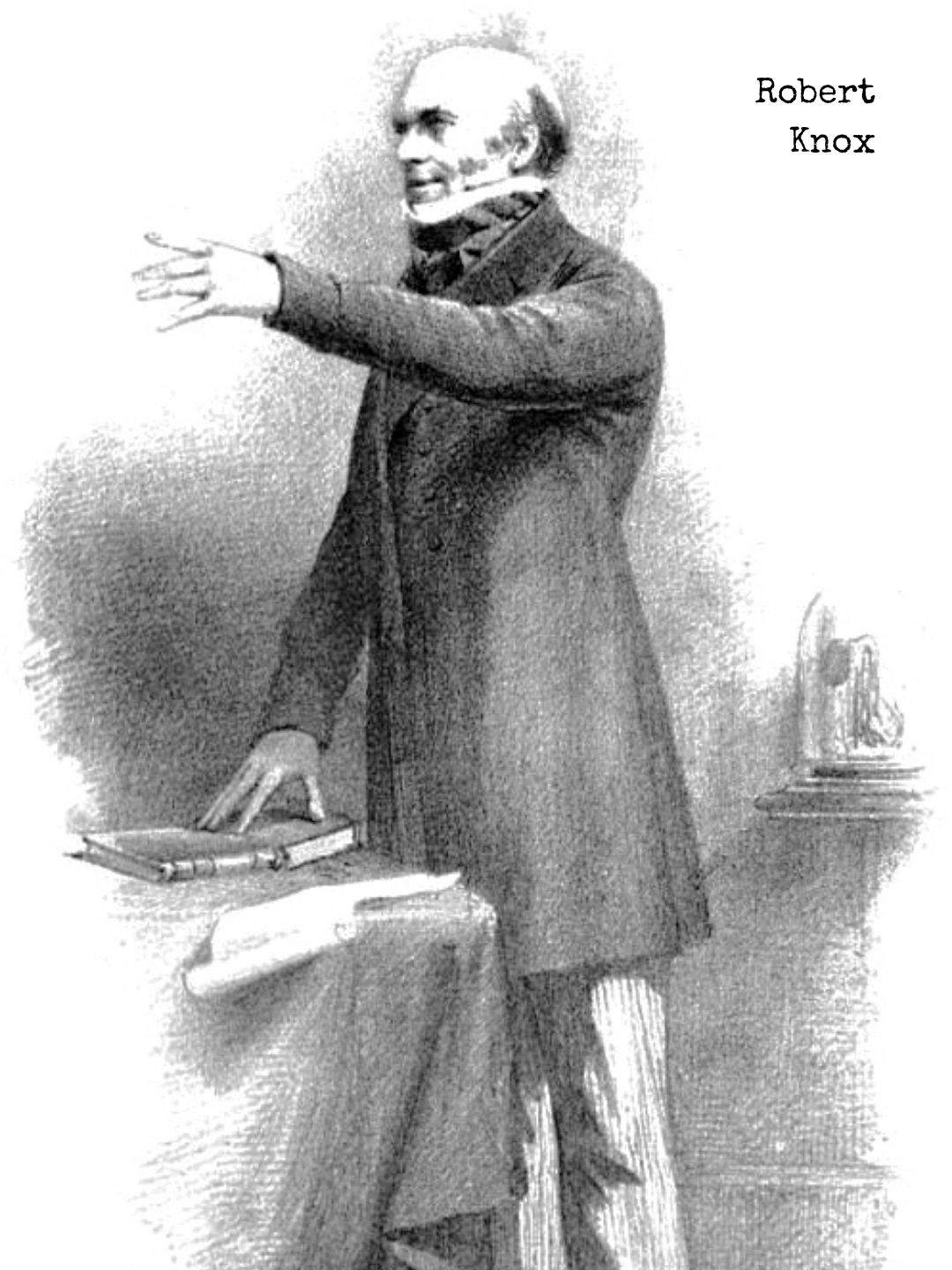
And there in Edinburgh lived Dr. Robert Knox, an independent lecturer of anatomy for the University of Edinburgh
Knox became a surgeon in 1814, and entered into service as an army physician in 1815
He held several posts and eventually settled in Edinburgh in 1820
In 1825 he became a fellow of the Royal College of Surgeons of Edinburgh, where he lectured on anatomy.
Dr. Knox lectured and performed human dissections twice a day
His lecturers were highly attended, and overall, he is credited with single handedly raising the profile of the the study of anatomy in Britain
This stature did not afford him easier access to dissection subjects though
He had the same problem all the other anatomists did when it came to a supply of fresh bodies
And, just like all of the other anatomists, he was a routine patron of the underground resurrectionist network in Edinburgh
On the evening of November 29th, 1827, two men appeared at Knox’s home on Surgeon's Square with the body of a man to sell
The body was satisfactory condition, so Knox paid the men £7 10s for it told them he would, “be glad to see them again when they had another to dispose of."
That £7 10s from 1873 is worth approximately £1,050 British pounds and a little over $1,400 US dollars
At the time, this would be equivalent to several month’s wages for either man
Now, of course, Dr. Knox did not ask, but the body was that of a man named Donald, who had recently lodged at the home of William Hare on Tanner’s Close in Edinburgh
Donald got by on a quarterly army pension and at this time owed Hare £4 of back rent
Before he could receive his next pension check and pay off his debt to Hare though, he died.
This put Hare in a bit of tough spot as well, because now, he was never going to get that £4 of rent he was owed
He had complained about this to his buddy, William Burke, and together, the two of them came up with a plan
They knew there was money to be made by supplying bodies to the local medical institutes, and here they were with a body
So, Burke and Hare called for a coffin that was paid for by the local parish
Except they didn’t place Donald in the coffin
They hid his body under the bed and filled the coffin with bark from a local tanner, and sealed it
After the coffin was removed for burial, they waited until dark, concealed the body and found their way to Surgeon’s Square where a number of medical professionals lived
They initially asked for directions to the home of another anatomy professor, Professor Monro, but a student who caught a whiff - maybe quite literally - of what they were up to, sent them to Konx’s residence instead.
At this time, William Burke and William Hare were clearly not career resurrection men
Burke was actually a cobbler by trade who earned up to about £1 a week
He was known as an industrious and good-humoured man, who would often sing and dance on his doorstep to attract clients, and always had a Bible in his hand
He had been married, but deserted his first wife over a property dispute with his father in law
He then moved to Scotland to work on the Union Canal where he married again to a woman named Helen McDougal.
Once the canal was finished, Burke and his wife floated around looking for work, mostly just hawking used clothing
Hare had also worked on the Union Canal for seven years before moving to Edinburgh in the mid-1820s, where he worked as a coal man's assistant.
He lodged at Tanner's Close, which at the time was owned by couple, Logue and Margaret Laird
In 1826, when Logue died, Hare took up with his widow and now he ran the lodging house
Hare did not enjoy as favorable a reputation as his counterpart Burke, and had been described as “illiterate and uncouth—a lean, quarrelsome, violent and amoral character.”
In 1827, both couples, Burke and his wife Helen, and Hare and his wife Margaret, took seasonal harvest work outside the city, and that was how the four became acquainted
When the work was over, they all returned to Edinburgh, and Burke and Helen moved in to Hare and Margaret’s lodging house at Tanner’s Close
The two couples soon acquired a reputation for heavy drinking and boisterous behaviour
Following the sale of Hare’s dead lodger, the men split the £7 10s from Dr. Knox
Burke receiving £3 5s, and Hare receiving £4 5s
which was more than enough to cover the loss of unpaid rent
About three months later, Hare had another problem on his hands
Hare had taken on a lodger, Joseph, who came down with a fever, and the man was not doing well
It was unsettling to the other lodgers, and Hare and his wife were concerned having this sick man in their house would be bad for business
So, Burke and Hare talked things over, and it was decided that they were going to speed things along to resolve the situation
They plied Joseph with whiskey until they were confident that in his drunk and ill state, he would not fight back,
Then, Hare suffocated Joseph while Burke lay across his upper torso to restrict movement
They again sought out Dr. Knox who this time, paid them £10.
Before long, they found themselves in the same situation again
A travelling salesman, whose name we do not know, fell ill with jaundice while staying on at Hare’s
It seemed best for everyone to just get him out of the house
So again, Burke and Hare got him drunk and suffocated him to death
Knox, again, paid £10.
By February of 1828, it had become apparent to Burke and Hare that they had stumbled upon a bit of a get rich quick scheme, and they no longer saw a reason why they should wait for a lodger to fall ill before “doing what they did”
So, on February 12th of 1828, they invited Abigail Simpson - a pensioner and salt seller - to Hare’s house, and served her up drinks until she was too drunk to return home to her neighboring village
Then, they lured her to a side room of the house, and suffocated her as well
Knox, again, paid the pair another £10
While he did comment on how fresh the body was, he did not ask questions
Let’s talk about the wives for a minute here, Helen and Margaret
They weren’t stupid
They knew where the money was coming from, and they were complicit
So later that month or early next, when Margaret encountered an old woman who seemed to have no one in the world to ask after her, she invited her to their house on Tanner’s Close
She drank with the woman until she passed out
When Margaret’s husband came home later, he placed a stiff, heavy mattress cover over the old woman’s face, then just waited
By nightfall, the old woman had died and when Burke arrived home, he and Hare transported the body to Dr. Knox where they predictably received their payment of: £10
In the beginning of April, Burke met Mary Paterson and Janet Brown in the Canongate area of Edinburgh.
All night long he bought them drinks then suggested they go back to the lodging house for breakfast
Instead, they went to Burke’s brother’s house and continued drinking
Eventually, Burke’s brother left for work, and Mary passed out at the table
Burke continued talking with Janet, but then… his wife Helen came knocking at the door, looking for her husband!
Helen accused him of cheating on her, and a fight broke out between the two
Burke threw a glass at Helen and cut her above her eye
Janet said he hadn’t known Burke was married, and got the hell out of there
Helen also walked out and went to get Hare and his wife to help her wrangle her drunken husband
When they arrived, Burke and Hare came up with another plan though
The men locked their wives out of the room, then murdered Mary in her sleep
That afternoon, they put the still-warm body into a tea chest which they then set out to deliver to Knox
One of Knox’s assistants thought he recognized the girl, and asked where they got the body
Burke and Hare told him she’d drank herself to death, and they purchased the body from an old woman in Canongate.
Knox was pleased with the body’s condition and paid them £8
Helen, meanwhile, happy enough to move on considering she had at least gotten a new set of skirts and petticoats out of it
Mary’s friend Janet did return looking for her, but they just told her she’d left for Glasgow with a traveling salesman
Some time after, Hare took on a lodger named Mrs. Haldane
One night, she got drunk and fell asleep in the stable
Burke and Hare capitalized on this, and smothered her to death to sell to Knox
When her daughter came looking for her later on, this presented a problem
Burke and Hare’s goal was to target those on the fringes of society that didn’t seem to have anyone in the world looking out for them
They had left a loose end when Mary’s friend Janet came back looking for her, and they weren’t about to do that again
So, when Mrs. Haldane’s daughter showed up, Burke received her at the house and invited her in for some drinks
Once she was intoxicated, Burke alone murdered her, and took her to Knox his self
For this, he was paid £8 which he did not share with Hare
At some point, I guess Burke decided - forget cobbling shoes, this was his full time job now
Because in May of 1828, an old woman joined the house as a lodger, and one evening when she was drunk, Burke found it easy to smother her - again without Hare - and he sold her body to Knox for £10.
Then came the murder of a woman known as Effy
She got by, by scavenging through trash bins for things that could be resold
Several times, she’d sold Burke some scraps of leather for his cobbling business
Burke tempted her into the stable, where he and Hare killed her
Knox paid another £10 for the body.
A short while later, Burke encountered a constable helping a very drunk woman back to her lodgings
Burke realized this was an opportunity, and told the constable he knew where she was going, and he could take her there
The constable was happy to oblige
But of course, Burke took her back to his own lodging house, where she was killed and sold for another £10 from Knox
I know, this story is very dark
But an extra word of caution for the next few minutes, as the next bit does involve harm to a child and an animal
In June of 1828, a woman and her young grandson came to lodge at Tanner’s Close
Burke and Hare murdered the grandmother by suffocation in the next room, then did the same to the young boy
Burke would later say this was the murder that disturbed him the most as he had since been haunted by the boy’s expression
Their usual tea chest for transportation was too small for both bodies though, so they stuffed the two into a herring barrel
They loaded the barrel onto a cart and set out for Knox’s residence, but at a certain point, the horse refused to take another step forward…
Hare had to call on a porter with a handcart to help him transport the barrel the rest of the way
Once back to Tanner’s Close, it’s reported that Hare shot the horse dead out of anger
On June 24th, Burke and his wife Helen departed for a short trip to visit Helen’s father
When they returned, they found Hare in good spirits, wearing new clothes and claiming he’d found some money
This made Burke suspicious as just before he and Helen had left for their trip, Hare was lamenting being exceptionally short on cash to the point he’d had to pawn some of his wardrobe
Hare denied that he’d sold another body to Knox, but Burke visited with Knox who told him, yes, he had done business with Hare while Burke was away
The two men came to blows over this which resulted in Burke and his wife moving out of the house at Tanner’s Close and in with Burke’s cousin, referred to as John Broggan or just Brogan
By late September, early October of the same year though, the two must have come to realize they were better together
When an elderly washerwoman visited Tanner’s Close to do laundry, Burke and Hare got her drunk and killed her
This time, the pair split the £8 payment from Dr. Knox.
It would seem no visitor to Tanner’s Close was safe
This was further proven when only a week or two later, one of Burke’s wife’s relatives, named Ann McDougal or Dougal, came to visit
Ann stayed in the house at Tanner’s Close for a few days before she, too, was murdered by Burke and Hare for which they were paid £10
Remember what we said earlier: the women were not stupid, they were complicit
It would seem that Burke’s wife Helen was especially ruthless as she had offered up her own family member
But also, it was said that around this time Hare’s wife Margaret had suggested the 3 of them kill Helen!
Her reasoning was that of the 4 of them, Helen was the only Scot and as such could not be trusted
Burke refused, but I feel like Margeret wouldn’t have brought it up if she didn’t think there was at least a chance he would have agreed…
At this point, Burke and Hare have earned about £136 from Dr. Robert Knox over the course of 1 year
£136 is worth a little over 19,000 in today's British pounds and about 26,000 in US dollars.
It’s unclear if they started to get too confident, too greedy, or if they just weren’t very good criminals, but they made kind of a blunder in selecting their next victim
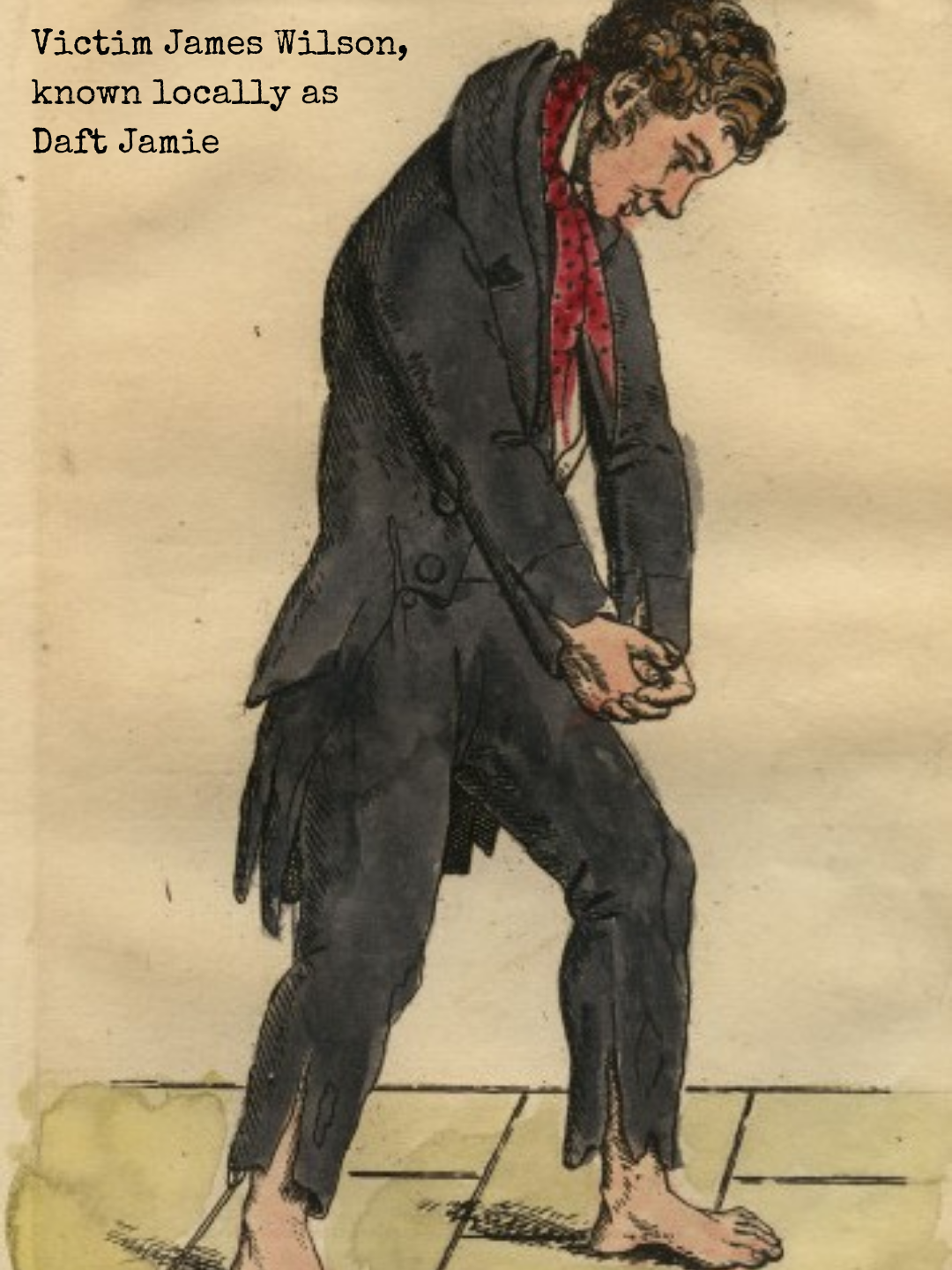
He was 18 year old James Wilson
He likely appeared as an easy target as he walked with a limp due to a foot deformity, and he was mentally disabled
He lived on the streets and supported hisself by begging, and was known locally Daft Jamie
And everyone kind of looked out for him
In October, Hare lured Jamie to his lodgings by promising him whiskey
He then sent his wife to fetch Burke who joined Jamie and Hare in their drinking
When the two men tried to overpower Jamie, things went badly
Jamie was not as drunk as they thought, and despite his disability he was young and strong
Together though, they did manage to get the best of Jamie, and stole his snuff box and spoon before transporting the body to Knox
The following day, several of Knox’s students piped up about recognizing the body as the benevolent beggar
Knox was quick to deny this though
Even so, Knox moved up the dissection of this body, and removed the head and feet prior to the demonstration
Meanwhile, unlike before, it had not gone unnoticed that Jamie was missing, and people were beginning to speculate about it
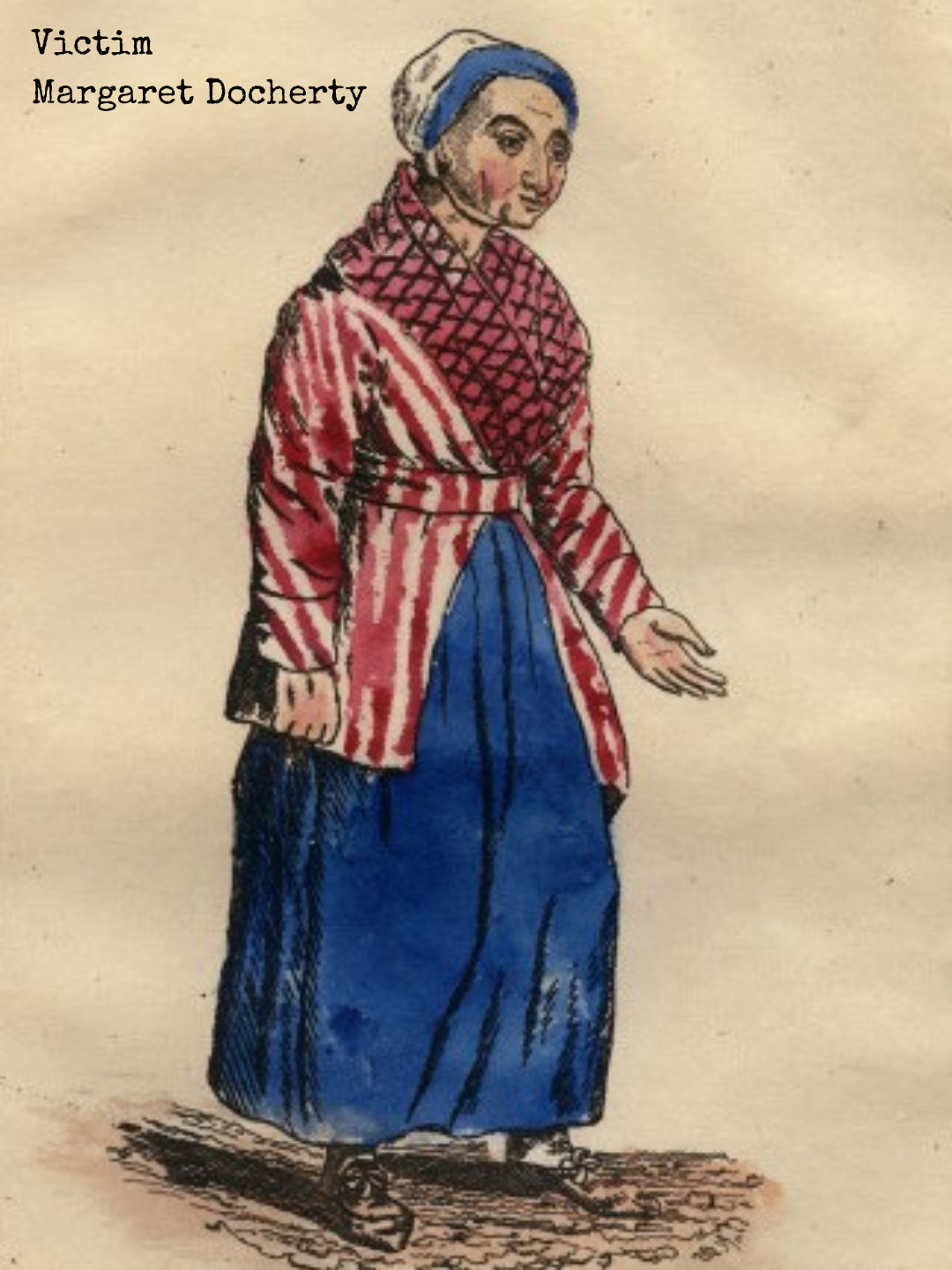
Later that same month, Burke lured Margaret Docherty, a middle aged Irish woman, to his cousin Brogan’s home under the pretense that his mother’s name was also Docherty and from the same area of Ireland
At one point Burke left under the guise of buying more whiskey, but really it was to fetch Hare
Things were falling in to place for Burke and Hare to take their next victim, except for one problem
Brogan also operated his home as a lodging house, and had two other lodgers staying on at the time - Ann and James Gray
Burke explained they unexpectedly had some relatives come in to town, and things might carry on very late into the evening
They offered to pay the pair to go stay at Tanner’s Close for the night instead, which they accepted
Around 9 pm, the Gray’s returned to collect some of their belongings, and true to his word, they saw Margaret Docherty, Burke, Hare, and their wives, all drunk, dancing, and living it up in
That night, Burke and Hare did muder Docherty, and stowed her body behind the bed under a pile of straw
When the Grays returned the next day, Ann tried to retrieve some of her belongings near the bed where they’d stashed Docherty’s body, and Burke got very defensive over it
The Grays found this suspicious, and took it upon themselves to investigate later when they were left alone in the house
Like I said: I’m not sure if they were over confident or just not smart…
They immediately discovered the body and left to report this to the police, but were intercepted by Burke’s wife Helen, who tried to bribe them with £10 a week to keep quiet
The Grays could not be bought though and proceeded to make their report
Meanwhile, Burke and Hare got the body out of the house, and transported it to Knox
The police searched Brogan’s residence and found a pile of Docherty’s bloodstained clothes under the bed
When questioned, Burke and his wife both claimed that Docherty had taken off without saying where she was going, but gave vastly different timelines of events
Police found this suspicious enough to take the pair in for questioning
The following morning police visited Knox’s dissecting room where they had James Allen view the body of Margaret Docherty
He positively identified her as the woman who he’d seen with Burke and Hare the night before
Hare and his wife were arrested that day, as was Burke’s cousin Brogan
A few days later, Brogan was released and a warrant was issued for the detention of Burke, Hare, and both of their wives
The four were kept apart and their stories conflicted with one another as well as their earlier statements
A police surgeon and two forensic specialists were appointed to examine the body of Magaret Docherty
Their determination was suspected murder by suffocation, but could not prove it.
This was still enough to charge William Burke and William Hare with murder, and as word got out, the case became known as the West Port murders, named so for the region of Edinburgh where the house on Tanner’s Close stood
After this, others came forward, including Janet Brown, who identified her missing friend Mary Paterson’s clothes that Burke’s wife had kept
As well as a local baker who told police Burke’s nephew was wearing what he recognized as Jamie Wilson’s trousers
While police were sure murder had taken place, they were unsure who they could successfully bring charges against
In the end, they thought it better to bring a strong case against one with a high likelihood of conviction, versus a flimsy case against all 4 and risk no conviction
Warrants were issued against all 4, but then, Hare was offered immunity if he would testify for the prosecution
As the law prevented a husband from testifying against his wife, Margaret would be safe as well
Hare took the deal, and offered a full confession which officials decided gave them sufficient evidence to charge both Burke and his wife Helen for the murders of Mary Paterson, James Wilson and Margaret Docherty
The case also coined a new term, which was “burking”
Used to indicate murder by smothering or commit anatomy murder
The trial began on December 24, 1828
This is indeed Christmas Eve, but Christmas was not a widely celebrated holiday yet in Edinburgh
So for them, it was just another work day
Which is a good thing I guess, because this trial is about to run for nearly 24 hours straight
Under 19th-century law, once a jury was sworn in for a capital offense, the jurors were legally forbidden from leaving the courthouse until they reached a verdict.
Sequestering a jury so they could not be influenced or intimidated by the public was not really logistically possible, so it was paramount to finish the entire trial in one continuous sitting
So, lock in: December 24, 1928, 9 am
With a large crowd gathered outside Parliament House, 300 constables on duty, and with infantry and cavalry on standby, the doors were opened
The separate defense counsels for Burke and Helen immediately objected to their clients being tried together
Burke's defence lawyer protested that his client was charged with - quote “three unconnected murders, committed each at a different time, and at a different place" in a trial with another defendant "who is not even alleged to have had any concern with two of the offences of which he is accused".
I kind of agree,
From a defense attorney’s point of view, he does kind of have a point…
Several hours were spent arguing over the objection with the judge finally settling on splitting the indictment in to 3 separate murder charges
The pair would indeed be tried together though
He gave the Lord Advocate - which is akin to the US Attorney General - the choice of which case to hear first
He chose the muder of Margaret Docherty - the only one where they actually had a body
Burke and Helen pleaded not guilty
There was a list of 55 potential witnesses who could be called, including Hare and Dr. Knox
Knox ended up not being called at all
One of his assistants though confirmed that Burke and Hare had supplied the doctor with several bodies over the past year
Hare was indeed called upon
Under cross-examination he stated that Burke had been the sole murderer
Helen had been complicit by twice bringing Docherty back to the house after she had tried to escape
He stated that his own involvement was only to assist Burke with the delivery of the body to Knox
Hare’s wife Margaret also took the stand carrying their baby daughter who had developed whooping cough
Every time the baby coughed, Margaret would use this time to stall in answering the counsels’ questions
Not that she answered much anyway - she repeatedly stated that she had a very poor memory and had no recollection of most of the events
The final witnesses for the prosecution were the doctors who had examined Docherty’s body
They stated that while they did suspect foul play, they could show no forensic evidence to support the suggestion of murder
The defense had no witnesses to call
By now, it was 3 am,
Burke’s defense lawyer began his final statement which lasted for two hours
By the time Helen’s lawyer and the prosecuting lawyer had given their closing statements, it was nearly 8:30 in the morning
The jury retired to consider their verdict and returned to the courtroom just 50 minutes later.
At that, they delivered a verdict of “guilty” against Burke for the murder of Margaret Docherty
For Helen, they returned a verdict of “not proven”
This is a Scotland thing…
While it means that Helen McDougal will walk out of there a free woman, the jury does not believe she is innocent
They actually think she’s guilty, but the prosecutors did not prove their case against her - “not proven”
As Lord Justice-Clerk, David Boyle passed the death sentence against Burke, he stated:
Your body should be publicly dissected and anatomized.
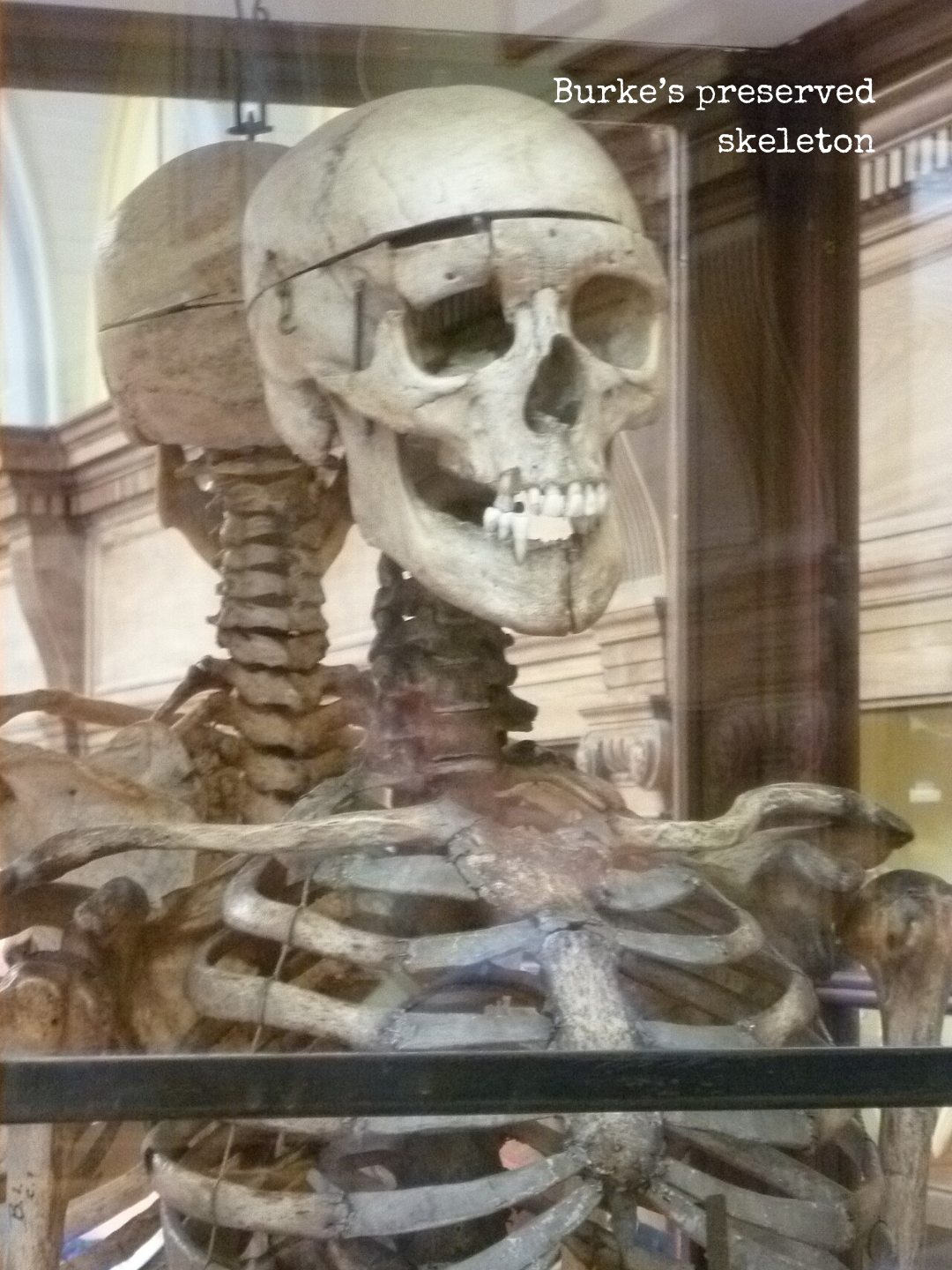
And I trust, that if it is ever customary to preserve skeletons, yours will be preserved, in order that posterity may keep in remembrance your atrocious crimes.
Following the trial, Helen McDougal did indeed walk out of there
And while a verdict of “not proven” may sound like a pretty good deal, recipients of this verdict faced severe public distrust and ostracization
The next day when Helen stepped out of her home to go buy whiskey, she was confronted by a mob and had to be taken to a police building for her own protection
The mob attacked the building and Helen had to escape out the back window to the main, more secure, police station
While there, she tried to see Burke, but they would not let her
She left Edinburgh the next day and no clear or confirmed accounts of her life exist after this
Hare’s wife Margaret was released on January 19th
She travelled to Glasgow to find a passage back to Ireland, but was recognized while waiting to board her ship and attacked by a mob!
She was given shelter in a police station, after which she was escorted by police on to a boat bound for Belfast
There is also no clear account of what became of her after she reached Belfast
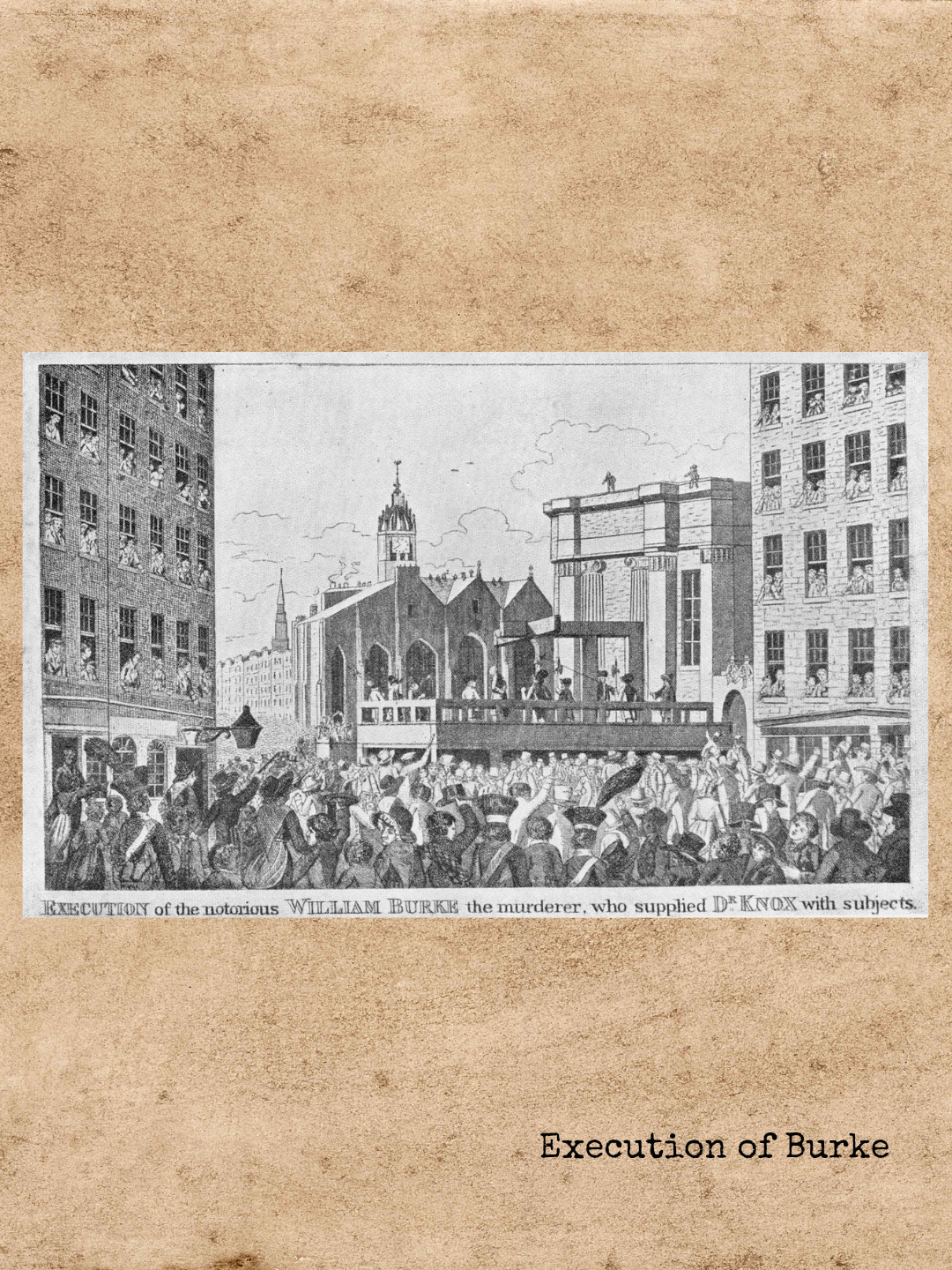
Burke’s execution was scheduled for the morning of January 28, 1829
Crowds were reported to be as large as 25,000
Pursuant to the law, as part of Burke’s sentence, his body was turned over Professor Monro to be dissected in the anatomy theater of the university’s Old College
A limited number of tickets had been issued to witness the dissection, and a small riot broke out as crowds clamoured for a space in the theater
Police had to be called and order was restored when one of the university professors agreed to allow groups of 50 pass through the theater during the dissection
During the procedure, Monro decided to make little… keepsake…
And he used a quill dipped in Burke’s blood to write, “This is written with the blood of Wm Burke, who was hanged at Edinburgh. This blood was taken from his head."
That was not the only artifact preserved from Burke’s dissection
As the sentencing judge had foretold, Burke’s skeleton was given to the Anatomical Museum of the Edinburgh Medical School where it remains to this day
There’s more
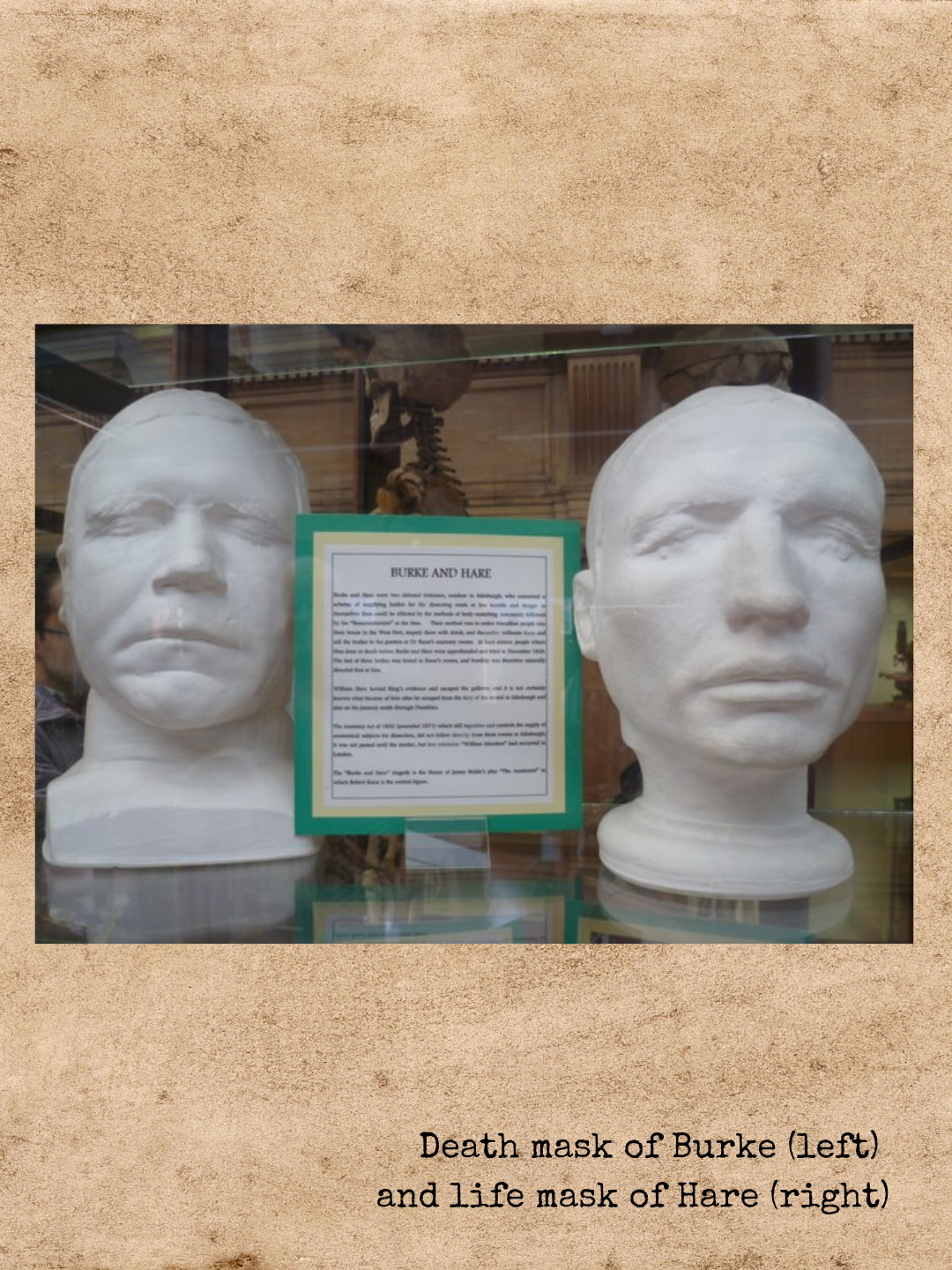
His death mask and a book said to be bound with his tanned skin is also on display at Surgeons' Hall Museum
It is unclear if the university commissioned the book - which is more like a hardcover folder, less of a book with pages in it - or if its creation was more secretive than that
It may have been the case that some of Burke’s skin just went missing following the dissection, and a few weeks later the book popped up for sale
There were also calling card cases made of his skin
Despite a petition on behalf of James Wilson’s mother and sister protesting Hare’s release and immunity, he was released on February 5, 1829.
This extended stay in custody was permitted for his own protection
He was assisted in leaving Edinburgh in disguise by mailcoach
By happenstance though, one of the other passengers had been a junior counselor that had represented the Wilson family!
He recognized Hare, and ratted him out to all of the other passengers
As the coach reached its final stop, word had spread and a large, hostile crowd had gathered to greet him
Police intervened and arranged a decoy coach to fool the crowd, while Hare escaped through the back of the coach into a carriage which took him to the town’s prison for safety
Once the mob had caught on though, they surrounded the prison, heaved stones at the doors and windows, and broke streetlights until 100 special constables arrived to restore order
Under the cover of night, Hare was escorted by the sheriff and militia guard out of town, where they dropped him off on the side of the road and said make your way to the English border
Beyond this, there is one account that he found work in a lime kiln, but was thrown into the kiln by other workers where he was blinded after they learned who he was
Intense…
This is not confirmed though, and there has otherwise not been any reliable evidence of his life thereafter
What about Dr. Robert Knox though?
Knox was obviously questioned as part of the investigation, and stated that he did purchase bodies from Burke and Hare
So far has he knew though, they were just watching poor lodging houses and purchasing unclaimed bodies
Which is the exact sort of thing most of the community and law enforcement turned a blind eye to
The inspector did state that while he found Knox - quote “deficient in principle and heart,” he had not broken any law
Just because he didn’t have to answer to the law though, doesn’t mean he didn’t have to answer to everyone else
Knox was lambasted by the press and in February of 1829, a crowd burned Dr. Knox in effigy outside of his own house
He resigned from his position as curator of the College of Surgeons' museum, and was gradually frozen out of the professional community by his peers
He left Edinburgh in 1842 and lectured in Britain and other parts of Europe.
He eventually was banned from lecturing by the Royal College of Surgeons and removed from the roll of fellows of the Royal Society of Edinburgh a few years later, but this had more to do with not paying his membership dues
He then worked as a pathological anatomist at the Brompton Cancer Hospital and had a medical practice in Hackney for just 6 short years before his death in 1862
Now, lawmakers were aware that the shortage of bodies for medical education was a problem, and knew anatomy murder was a possibility well before the events of Burke and Hare
In fact, 6 months before they had even committed their first murder, a parliamentary select committee had drafted a "Bill for preventing the unlawful disinterment of human bodies, and for regulating Schools of Anatomy"
But, it was rejected in 1829
The West Port Murders committed by Burke and Hare significantly raised public awareness of the issue at hand
Around the same time, in 1831, a London gang of resurrectionists was finally busted for “burking” as well
After this, a bill was quickly introduced into Parliament, and gained royal assent a speedy nine months later to become the Anatomy Act 1832.
Anatomy Act 1832 addressed the body shortage for anatomists in these ways:
It massively expanded the legal supply by allowing the medical community access to bodies that were unclaimed after 48 hours from public institutions such as workhouses, hospitals, and prisons
It also introduced avenues for legal body donation
Individuals could now donate their own body, or it allowed their next of kin to do so
In exchange the anatomy schools often covered costs of a proper burial afterwards
Finally the Act introduced licensing and regulation for handling human remains
These credentials would be obtained by medical professionals
The result was a documented chain of custody, meaning bodies could no longer be purchased from indiscriminate sources without risking one’s license or livelihood
Now, as is often the case, if no one is really happy, it’s usually a good compromise
This did introduce the need for more time consuming, more expensive government oversight - and adoption was slow
The law also sparked intense public outrage—particularly amongst poor communities who felt they were being targeted since they were the ones most often dying in workhouses and the like
The law did fulfil its purpose though and within 10 years, the resurrectionist movement was made obsolete
Friends, this episode took me forever to write!
PLEASE let me know what you think about it!
If you’re listening on Spotify, you can comment directly on the episode there
Otherwise, you can also comment on Instagram, TikTok or YouTube @agoodnightforamurder,
I’ve posted some pictures there of the key players in tonight’s case, and also some photos of grave guns and such like we talked about in tonight’s Victorian Society Tip
You can also see the photos and source links on the episode blog on my website at agoodnightforamurder.com, where you can also check out the merch shop!
Remember, 10% off with code GNFAM10!
Be sure follow me on Instagram, TikTok, or YouTube @agoodnightforamurder
Please rate and review, and share with friends
Thank you for listening,
And I will talk to you again soon