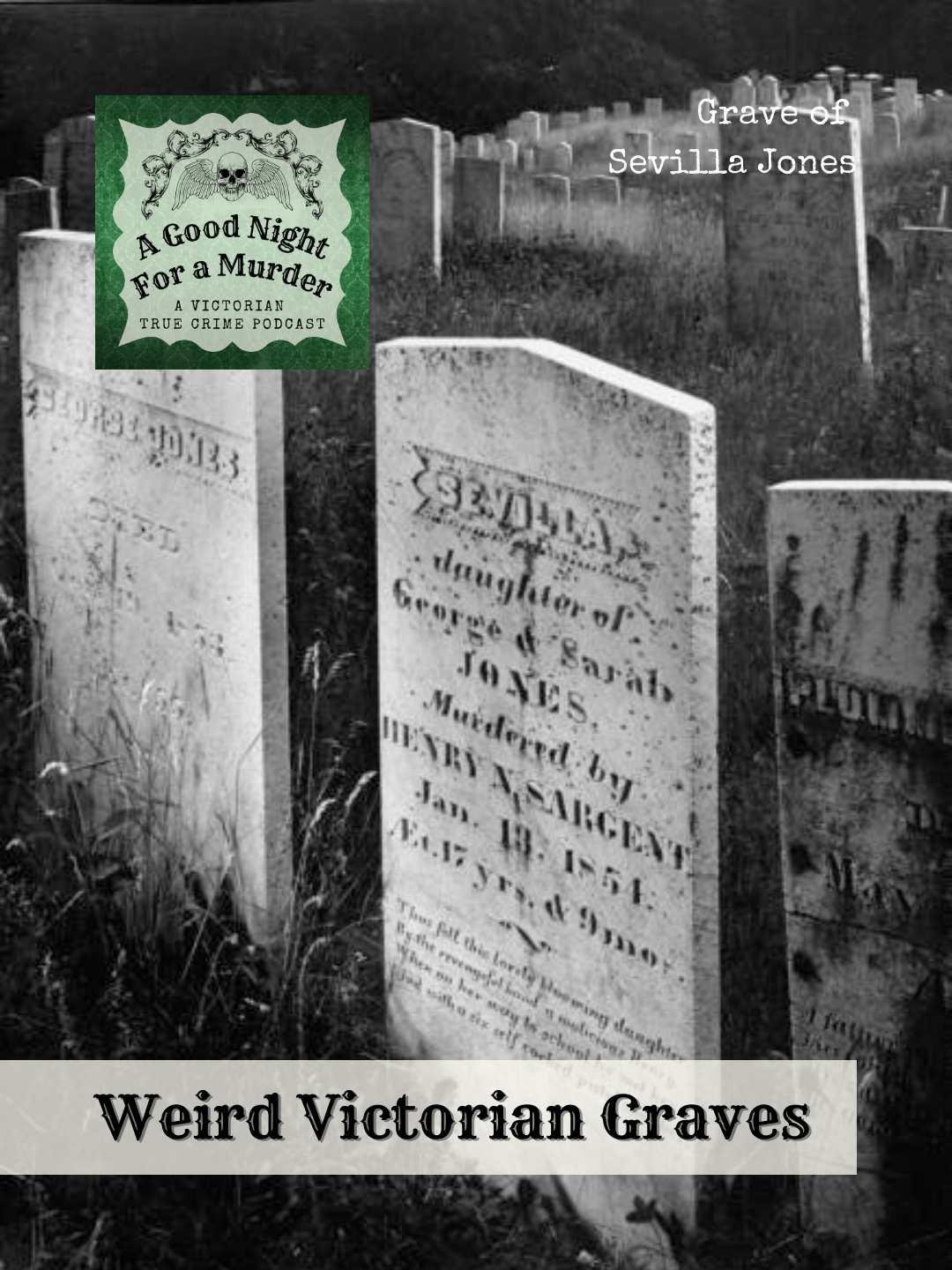
Weird Victorian Graves
A GOOD NIGHT SNACK
SEASON 4 : EPISODE 1
DECEMBER 19, 2025
The first Good Night Snack I have for you, is about weird Victorian graves. Some of the legends are real, some are probably not real, but one thing is for certain, is that they are all really weird… Be sure to stick around and listen to all 4 stories because they get wilder as we go.
Follow along on Instagram, TikTok, and YouTube @agoodnightforamurder.
-
ARTICLES
Sevilla Jones and Henry Sargent – Love and Murder in New Boston
You Asked, We Answered: What's The Story Behind That Mysterious Gravestone In New Boston?
Unusual NH graves tell of murder, mishaps, a beloved dog and a funeral for a leg
Henry and Servilla: or, The Death Bridal
The startling story of the Mary Chambers Bibb mausoleum
The Mystery of the Ticking Tomb - Examining Famous Local Legend Near Landenberg
Did the Mysterious Ticking Tomb Near Landenberg Inspire an Edgar Allan Poe Short Story?
Landenberg Life: The ticking tomb and other eerie encounters
Portrait of John Harrison (1693-1776), English clockmaker
London Tract Old School Baptist Cemetery
History of London Tract Baptist Church in Chester County Pennsylvania
The Infamous Specially-Designed Grave Of Taphephobia Victim Timothy Clark Smith
Timothy Clark Smith—‘That Rings A Bell’
A window to the deceased: Vermont doctor buried with window to his coffin due to phobia
-
INTRO
Hello everyone, welcome to A Good Night for a Murder, a Victorian true crime podcast.
My name is Kim, and this the debut of a new type of episode on the public feed called A Good Night Snack
Last season, Good Night Snack episodes were a Patreon benefit
You may have already listened to the previews last season
But with the changes I announced earlier this month, I’ve decided I really want these stories to be heard
So until further notice, there will be one regular episode a month - covering a case, Victorian society tip, and bonus content on Patreon - and one Good Night Snack episode a month
In these shorter episodes, I’ll focus on profiling famous Victorian people, Victorian lifestyle and society rules, and more historical true crime that may not be enough to build an entire episode out of, but works for a quick Victorian true crime fix…
Hence, the name, A Good Night Snack
The first Good Night Snack I have for you, is about weird Victorian graves
Some of the legends are real, some are probably not real, but one thing is for certain, is that they are all really weird…
Be sure to stick around and listen to all 4 stories because they get wilder as we go.
CONTENT WARNING
A Good Night for a Murder is a true crime podcast that does cover stories including death, violence, sexual assault, and other adult themes.
Please take care while listening.
EPISODE
Sevilla Jones
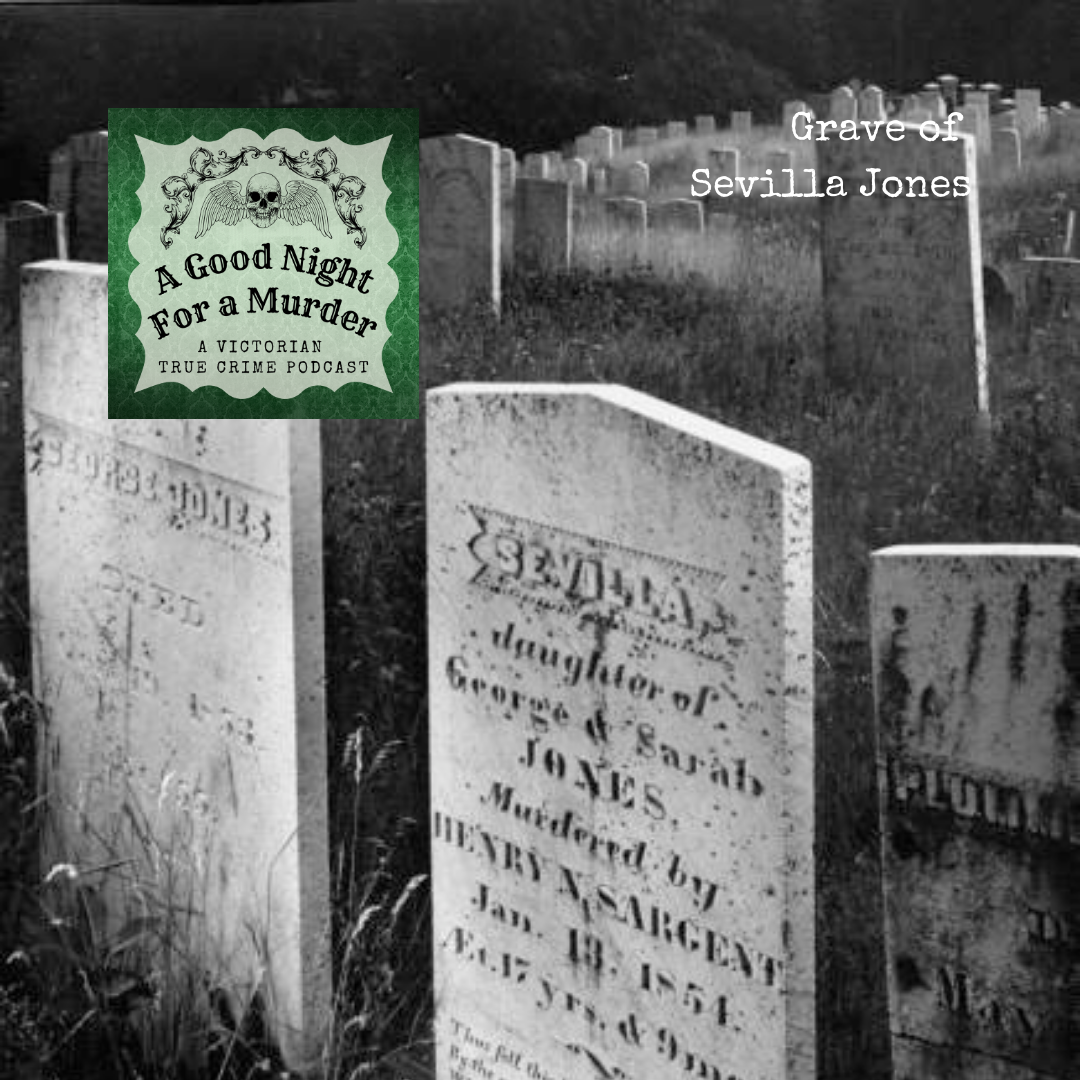
Our first weird Victorian grave is that of Sevilla Jones in New Boston, New Hampshire
The epitaph on her grave reads:
SEVILLA, daughter of George and Sarah JONES.
Murdered by HENRY N. SARGENT, January 13, 1854.
17 years and 9 months.
Thus fell this lovely blooming daughter
By the revengeful hand - a malicious Henry
When on her way to school he met her
And with a six self-cocked pistol shot her.
In 1854, 17 year old Sevilla Jones was living in New Boston, New Hampshire with her mother and younger siblings
Her father had died only the year before
Neighbors of the Jones were the Sargent family
The Sargent family was comprised of Mrs. Sargent, possibly widowed, and her 3 children
Joseph, Elmira, and the eldest, Henry
Henry was 23 and a woodcutter by trade who spent long months away from the family home for work
So, he and Sevilla were neighbors - that’s to be sure…
But… was there more between them?
Were they romantic interests? Courting? Friends? Maybe none of the above?
We don’t really know.
But, whatever the case, Henry seemed to have big plans for he and Sevilla
Henry believed she was destined to become his wife
If Sevilla had shown any affection for Henry, her temperament had cooled recently that winter of 1854, and Henry suspected he knew the reason why
It had nothing to do with him, of course!
But everything to do with another young bachelor in the area, only a year older than Servilla, by the last name of Bartlett,
It seemed he was giving Henry some competition for Sevilla’s affections and, as of late, Sevilla seemed to be preferring his company to Henry’s,
And that made Henry angry.
He suspected though, that the whole reason was because Bartlett’s mother had gotten to Sevilla’s mother, and had convinced her to drive a wedge between Henry and Sevilla
Which Henry simply would not stand for
So, he planned to meet her on the road, early that January morning
The week prior, he went to Boston and bought two pistols and a razor
He also made arrangements for his own burial
On January 13, 1854, at 9 am, Sevilla was walking to school with her younger brother, when Henry approached
Once Henry was within arms reach of Sevilla, he drew a revolver and shot her in the head, 4 times.
Immediately after, Henry turned the gun on himself.
He did not die right away though
A doctor was called to tend to Henry, but when the doctor heard about Sevilla, he refused to treat him
Henry died a couple of hours later
Henry had written a lengthy letter as a suicide note and last will and testment that was later found on him dated January 11 - two days before the murder
It read, in part:
If I kill the girl that I love so dearly, please bury her by my side, both of us in one day.
She proved false by bad advice.
Let this be a warning to all young lovers.
If you want a wife, take her when she says “Yes,” or you may be sorry.
Some may think I have done wrong, but I studied upon it, and thought that I should be love-snapped if I lived, and should see anyone else go with her, and I well know that the girl would not believe anything that I said, so she will never know how well I loved her.
I never should have got so tied up with her if she had not given me encouragement, time and again.
Until Mr. Bartlett’s folks went up there, they never could get her.
Cussed be the folks that lied to the girl.
Folks or the world ought to know that they ruined me, once happy.
I blame Servilla’s mother for coaxing me to go with her daughter, Servilla.
Even after I first rode with her, there was nothing good enough for me until now, and turned my bitterest enemy, by a fools advice.
Henry also wrote:
Now friends, don’t take my death hard, for you know that I am better off in hell, than I am here for the world to laugh at.
Mother, why do you cry?
You ought to think that your son Henry is better dead, than a poor love sick fellow which you see about stores and places and shops.
I have seen them time and time and helped make fun of them.
Now I think of it.
But as I have said, the world will not have Henry N. Sargent for a laughing post.
This last part, Henry addressed to his younger brother, who he thought would carry out his last wishes.
Joseph, I want you should see that we, I mean Servilla and myself, are buried side by side.
Mrs. Jones, will you grant our bodies this decent and Christian burial?—for I know that she has loved me if she don’t yet— and put on our gravestones what we died for.
Of course, this is not up to Henry’s younger brother.
But clearly, Sevilla’s mother read this and said, “yeah, let’s put it on the gravestone, so everyone for the rest of time will know what you did to my daughter…”
And here we are! Over 170 years later… Remembering what a sad, insecure boy Henry Sargent of New Boston, New Hampshire was…
Let’s hear it again now:
SEVILLA, daughter of George and Sarah JONES.
Murdered by HENRY N. SARGENT, January 13, 1854.
17 years and 9 months.
Thus fell this lovely blooming daughter
By the revengeful hand - a malicious Henry
When on her way to school he met her
And with a six self-cocked pistol shot her.
Fortunately, Sevilla and Henry were NOT buried together
Sevilla was buried next to her father, and her brother was later laid to rest on her other side when he passed 30 years later
Unfortunately, Henry is in the same cemetery…
Reportedly about 100 feet away from Sevilla
They’re both in the New Boston Cemetery in New Boston, New Hampshire.
This happens fairly often, victims and their murderers winding up in the same cemetery
And it pisses me off!
I’d like to get your take on it though
I understand that on one hand, that’s where they lived, it’s where their family is buried, the plot has been reserved and paid for…
But on the other hand… it’s disrespectful.
Now the victim’s family has to see you resting near them for the rest of forever? It’s gross.
Take a minute now before we move on to our next story and leave me a little comment somewhere on what you think about this…
Mary Bibb
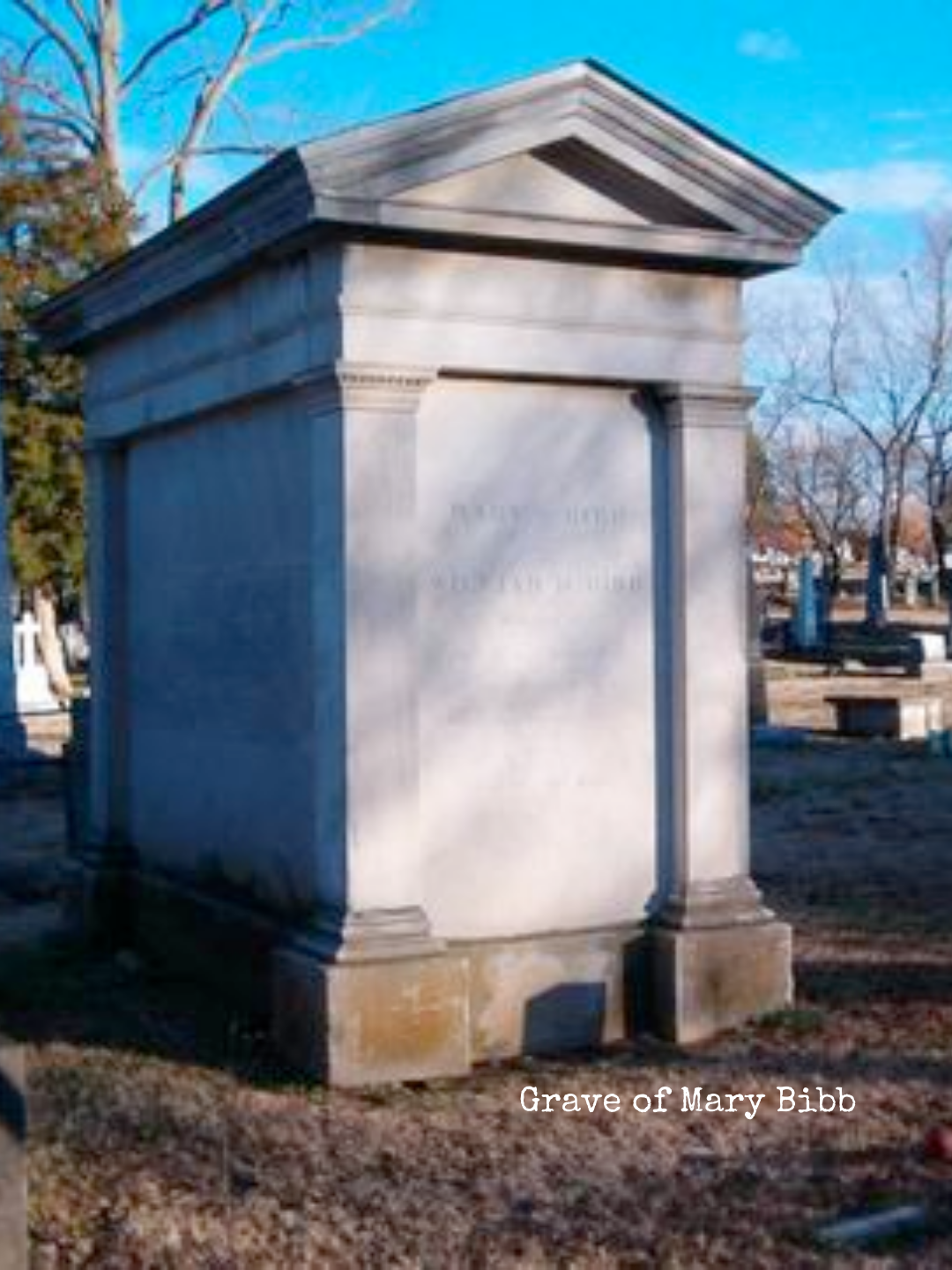
The next grave we’re going to talk about is in the Maple Hill Cemetery in Huntsville, Alabama
To look at it, it would just appear to be a small, sealed mausoleum
But, when I tell you it’s entombed is said to be seated upright in a rocking chair within, you might look at it a little differently
This is the grave of Mary Chambers Bibb who died in 1835 at the age of only 18
Mary, the daughter of a legislator, was set to marry William D. Bibb, the son of the governor
And the pair did wed
The wedding went off without a hitch, but at some point, Mary began to feel unwell
Maybe she had a headache or nervous stomach, as can happen on ones wedding day
It’s reported that a domestic servant, possibly her childhood nanny, gave Mary some medicine to help with whatever was ailing her
Shortly after this, Mary began to feel very, very sick
It turns out, it was not medicine, but poison given to her by mistake
Mary’s health rapidly declined until only a few short days after her nuptials, Mary died
Both families were bereft.
Her new husband commissioned a mausoleum as her final resting place in the Maple Hill Cemetery, the first one to be built there
Legend has it that Mary was buried in her Parisian wedding gown, seated, upright, in her favorite rocking chair
If you approach the tomb, and knock on it, it’s said you can hear the creak of a rocking chair rocking back and forth from within
Wild, right?
Now, I have to say, I don’t think the “seated upright in a rocking chair” bit is true…
Mary’s death was unexpected and it would take anywhere between 4 - 6 months to commission and build the mausoleum
Embalming was not a thing at this point in history
It’s likely that Mary had to be preserved by means of an ice coffin, which is pretty much exactly what it sounds like - a metal coffin packed with ice - in the attempt to slow decomp
Also, just to look at it, it seems quite small to have a full rocking chair and person standing inside…
So, while the legend may not be true, that wouldn’t stop me from testing out a knock or two on it, just to see what would happen…
Fithian Minuit
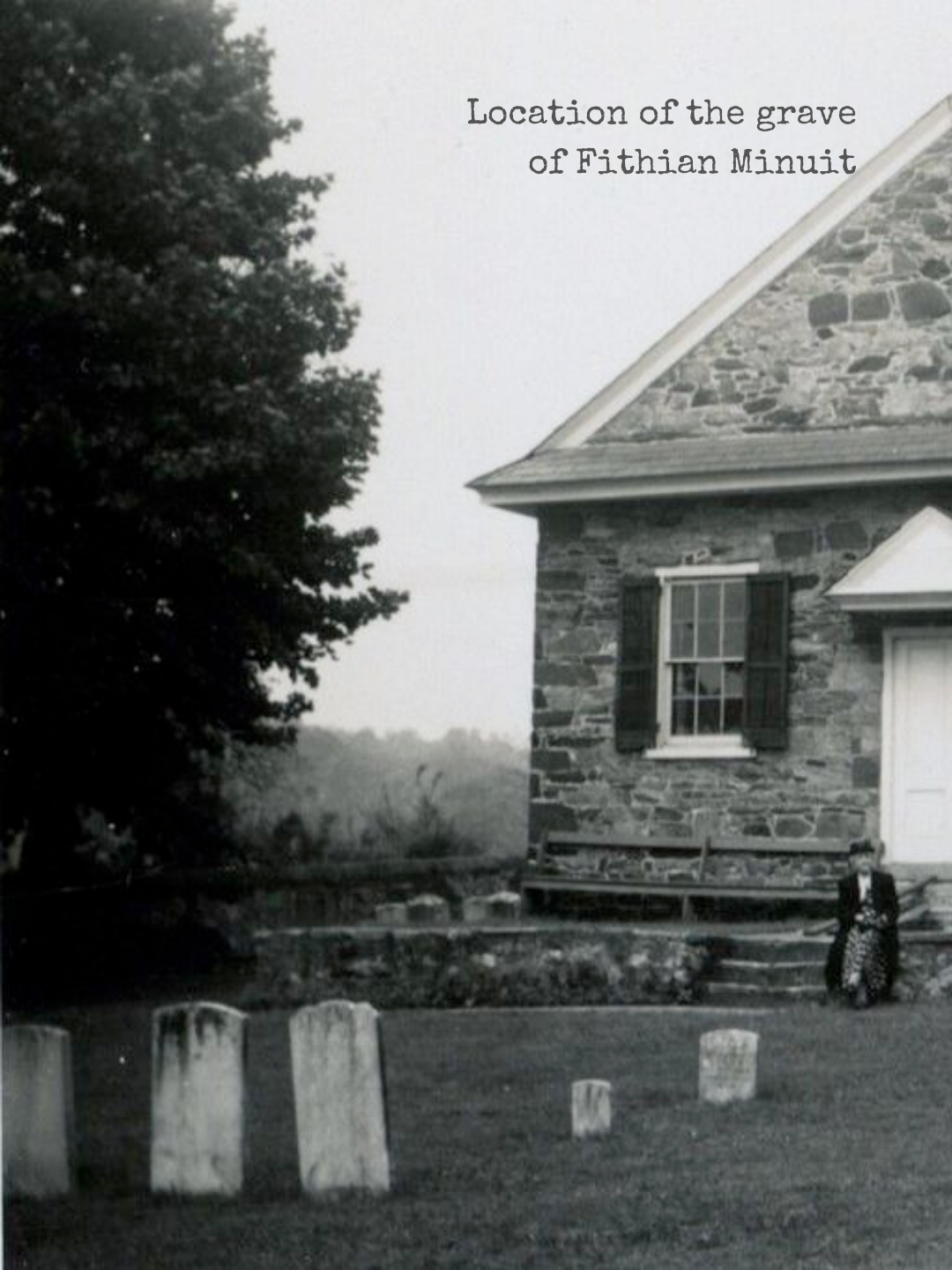
The next grave is located in the London Tract Old School Baptist Cemetery in Landenberg, Pennsylvania and allegedly belongs to a man named Fithian Minuit
As the story goes, back in about 1764, surveyors Charles Mason and Jeremiah Dixon were tasked with mapping out the route for the new Mason-Dixon rail line, and happened to make camp nearby Landenberg, Pennsylvania
A local youngster, Fithian Minuit, no more than about 3 or so, wandered in to camp and toddled right in to Mason’s tent
One of Mason’s assistants thought, “Good heavens, this is no place for a baby!”
And swooped the toddler up in to his arms
Young Fithian promptly started to cry as the assistant looked about for any small toy or trinket that might distract the child, when his eyes set up Mason’s pocket watch
The watch, called a “portable chronometer” at the time, was a brand new invention meant for keeping accurate time in long stretches at sea
it was a fancy bit of equipment
So you can imagine Mason’s assistant’s horror when Fithian grasped the watch and promptly swallowed it
Some versions of the story maintain that Mason then cursed Fithian so that for the rest of his life the timepiece would remain inside him and tick constantly…
And for the rest of his life, that is what happened
Fithian grew up to become a clockmaker, of all things…
He eventually met and married the daughter of a sea captain, named Martha
The couple was fond of saying the ticking that emitted from Fithian represented their love for one another, that would go on for all eternity
The couple was married for 40 years before Martha passed away and was buried at the London Tract Old School Baptist Cemetery
Fithian visited her grave often, and it was there in fact that he was found, passed away over Martha’s grave with a peaceful look on his face.
The ticking never stopped though, even in death
In fact, even today, if you put your ear to the stone where Fithian is buried, it’s said that the ticking clock is still audible nearly 200 years later.
If you’d like to try this for yourself, look for the heart shaped gravestone that reads John Devonold
The grave said to be Fithian’s is the one flush to the ground next to it with no legible inscription.
Now, they say there is a grain of truth in every legend…
So first off, could a toddler have swallowed a pocket watch that continued ticking inside him for the rest of his life…?
We know children do put all sorts of odd things in their mouths, and there are many cases of people swallowing objects of alarming shapes and sizes…
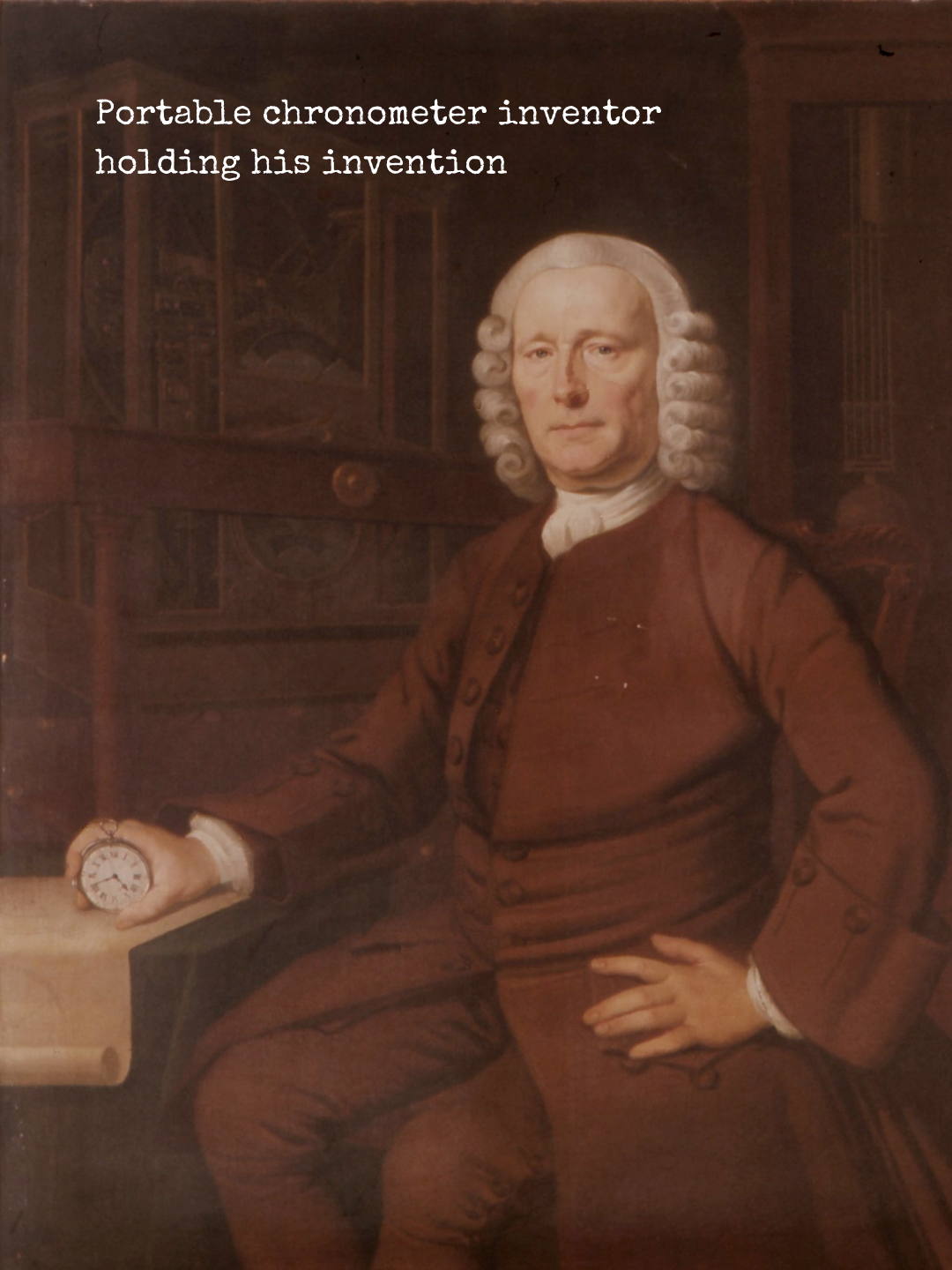
However, this watch was not small… I’ve posted a picture on Instagram and the episode blog on my website of the watches’ inventor, John Harrison holding it
It’s about the size of the palm of your hand, so, from the jump, the legend is already unlikely
If he did manage to swallow it though, would it actually keep ticking?
Again, probably unlikely
While Harrison’s portable chronometer was remarkable in that it kept time accurately for extended periods under a variety of conditions, eventually, it would need to be wound, just like all clocks made before the 1920s
Even if we suspend disbelief for all of that, another bizarre part of the story is how surveyor Charles Mason cursed Fithian that the watch should tick inside him forever…
What is he? A witch?
It wasn’t good to be a witch in 1764, slinging curses about…
So after careful consideration, I have to admit I don’t think much of the story behind this legend is true…
But, could Fithian have been a real person at least?
Well… there is no Fithian Minuit buried in the London Tract Old School Baptist Cemetery…
The grave alleged to be his has no legible inscription…
This doesn’t mean he’s not there though
It’s documented that records have been lost to fires and flooding
I thought though, if I couldn’t find his burial record, maybe I could locate his wife, Martha
There are 4 Martha’s buried in the cemetery, and 3 have death dates well after the 1840s which - if we do the math - is about the timeframe our friend Fithian would have passed
The 4th Martha has no birth or death date, but is buried under the last name of Russel
She shares a marker with 3 other names, all without dates
There is handful of other Russels in the cemetery, though from birth and death date records, it seems they appeared in area in the early 1800s
So I don’t think this anonymous Martha is Fithian’s either
Some people believe that the “ticking tomb” served as the inspiration for Edgar Allan Poe’s “The Tell-Tale Heart.”
While I do see the connections, the ticking in Fithian’s story evolved to a symbol of eternal love, which is a far cry from rhythmic beating Poe’s narrator describes in the Tell Tale Heart
So at the end of the day, I think that’s all this is:
A story of undying love represented by a funny tale that replaced a beating heart with a ticking clock…
…and… maybe a bit of a cautionary tale to keep an eye on your kids!
Dr Timothy Clark Smith
So far, we’ve discussed one grave with an entire true crime story inscribed on it, and two others that while unusual, are probably more based in lore, than fact
Everything I’m about to tell you about our last weird Victorian grave though, is 100% real
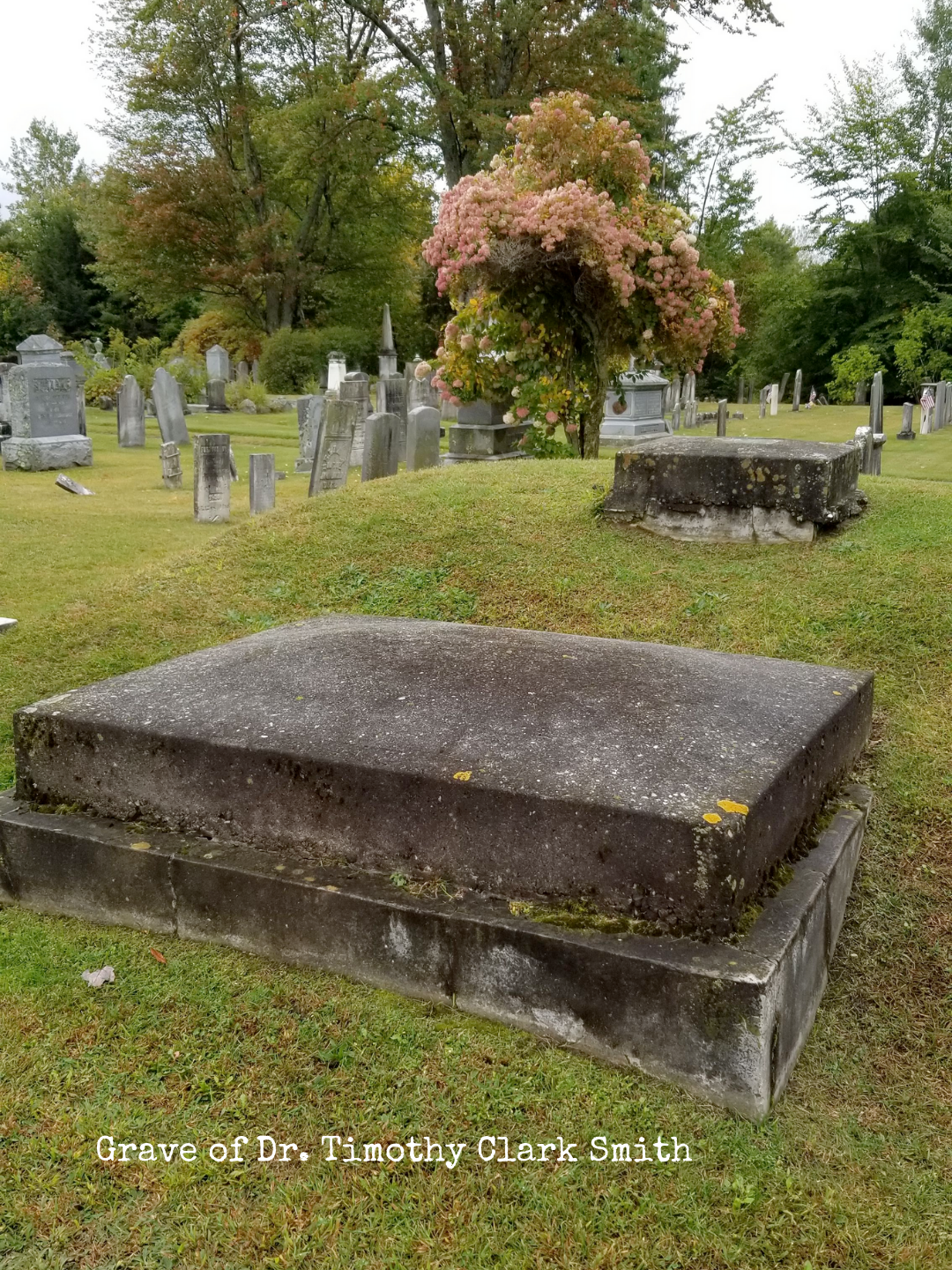
It is the grave of Dr. Timothy Clark Smith in the Evergreen Cemetery, in New Haven, Vermont
Dr. Smith planned his grave with an escape plan in mind
Including a window positioned squarely over his face with a view clear through to the sky above.
Timothy Smith Clark was born in in 1821 in Monkton, Vermont
He graduated from Middlebury College in 1842 and went on to earn a medical degree from the University of the City of New York in 1855
During his career he worked as a teacher, a clerk in the US Treasury Department, and as a physician.
He was a staff surgeon for the Russian Army from 1856 to 1857, and worked for periods as US Consul in Odessa, Russia and Galatz, Romania.
Like many during the Victorian era, Dr. Smith had a fear of being buried alive
At this point in history, this was a very valid fear
It definitely happened, and rather often
Due to illness and accidents that could result in comatose states, or other conditions that could make pulse and breathing extremely faint, it could be tricky to determine if someone was truly gone or not
It was not uncommon for relatives to devise a schedule to check on their deceased loved ones over the course of a couple days to make sure they were… still dead…
In fact they would often intentionally delay burial just to make sure a little bit of decomp was setting in…
Even with all this though, being buried alive was a problem
The Victorians, though, were problem-solvers
They had a number of inventions and devices intended to help them escape the grave or at least alert someone on the outside…
These included being buried with bells in hand, rope systems that would ring a bell or raise a flag outside the grave, breathing tubes, and even being entombed with a supply of food and water
This all cost money though
While a doctor was a pretty well paid profession, it wouldn’t make one ultra-wealthy
But Dr. Smith thought it was worth it, and made extensive arrangements not to be buried alive
To look at the grave, you’ll see a mound of earth with one stone slab at the foot of it, and another directly on top of it
The lower one is the entrance with a small set of stairs that leads down in to the crypt
Dr. Smith is under the mound
He was buried with a bell to ring, a hammer and chisel, and breathing tube
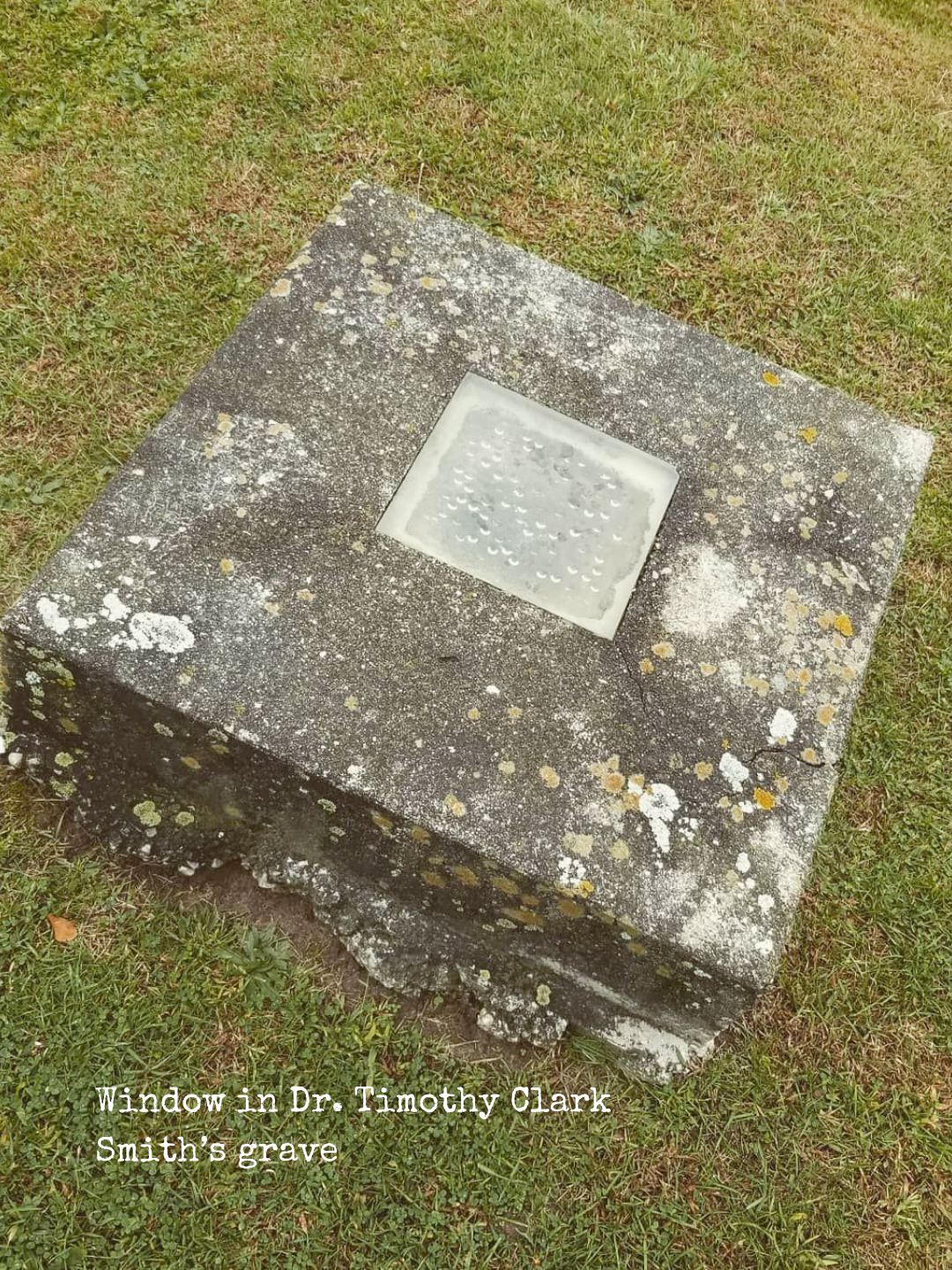
The stone on top of the mound contains a 14 x 14 inch window with a 6 foot tunnel all the way to the bottom where Dr. Smith rests
Dr. Smith died on February 25, 1893 at the age of 71
And he was truly dead.
The window and tube functioned as intended though, and for a long time, visitors could look through the window straight in to the decomposing face of Dr Timothy Clark Smith
An article from 1982 quoted two brothers who grew up in the area and remembered being able to view a skeleton through the window in the 1960s
Today, the window’s visibility only extends down only a few inches
The rest is obscured by moss, roots and condensation from ground moisture.
I have posted pictures of this on Instagram and the episode blog on my website
Well, friends, we have reached the end of weird Victorian graves for this episode
But there are certainly many more we can talk about
So if you liked this episode, be sure to leave me a comment and let me know
Also if you live near any of these graves or have visited them, let me know that too!
If you’re listening on Spotify, you can comment on the episode there
Or if you head on over to Instagram, TikTok or YouTube @agoodnightforamurder, you can let me know what you think there as well.
I’ve also posted some photos of the graves and more.
You can also see the photos and source links for this episode on the episode blog and learn more about Patreon on my website at agoodnightforamurder.com
Also follow me on Instagram, TikTok, or YouTube @agoodnightforamurder
Please rate and review, and share with friends
Thank you for listening,
And I will talk to you again soon
