SEASON 5 : EPISODE 57
NOVEMBER 18, 2026
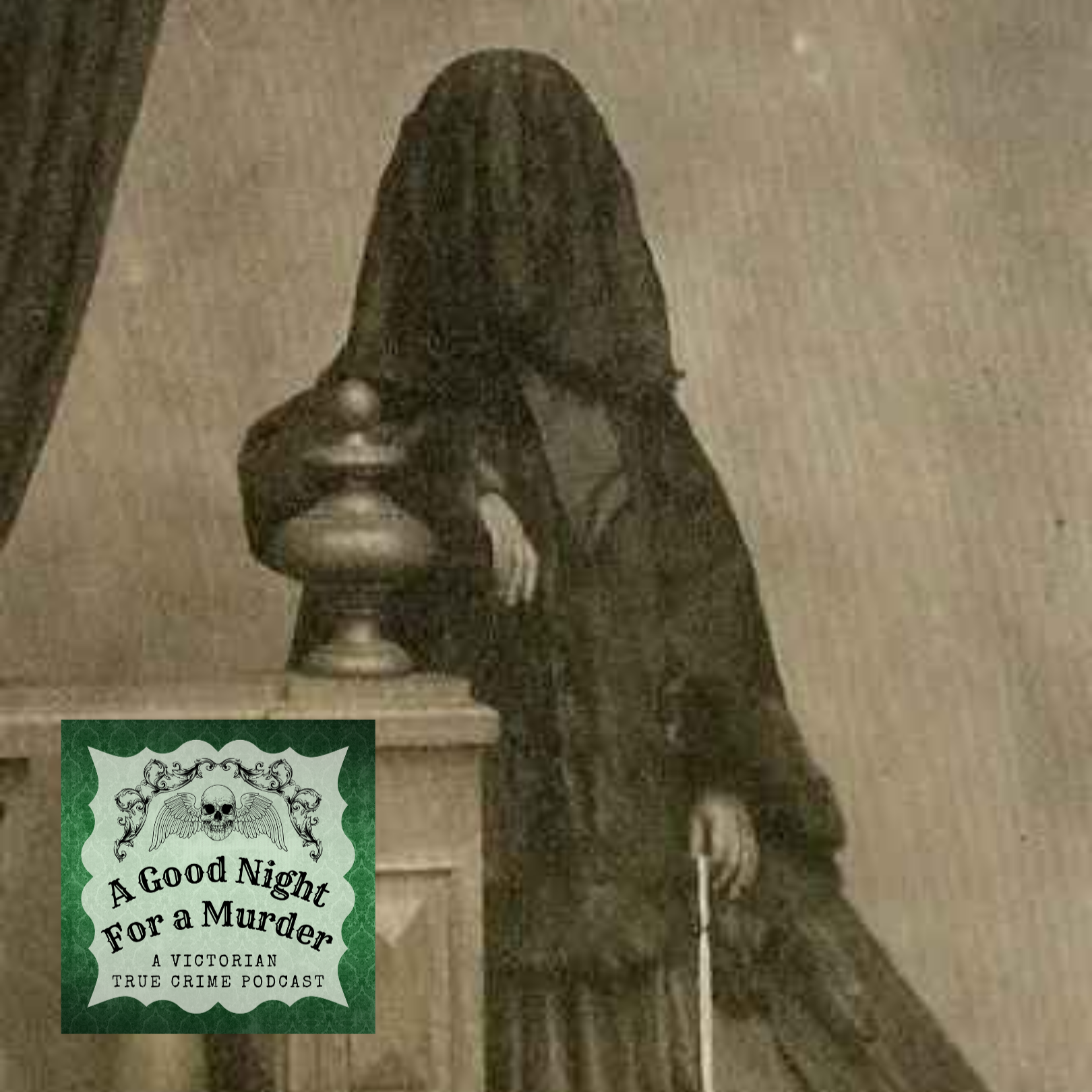
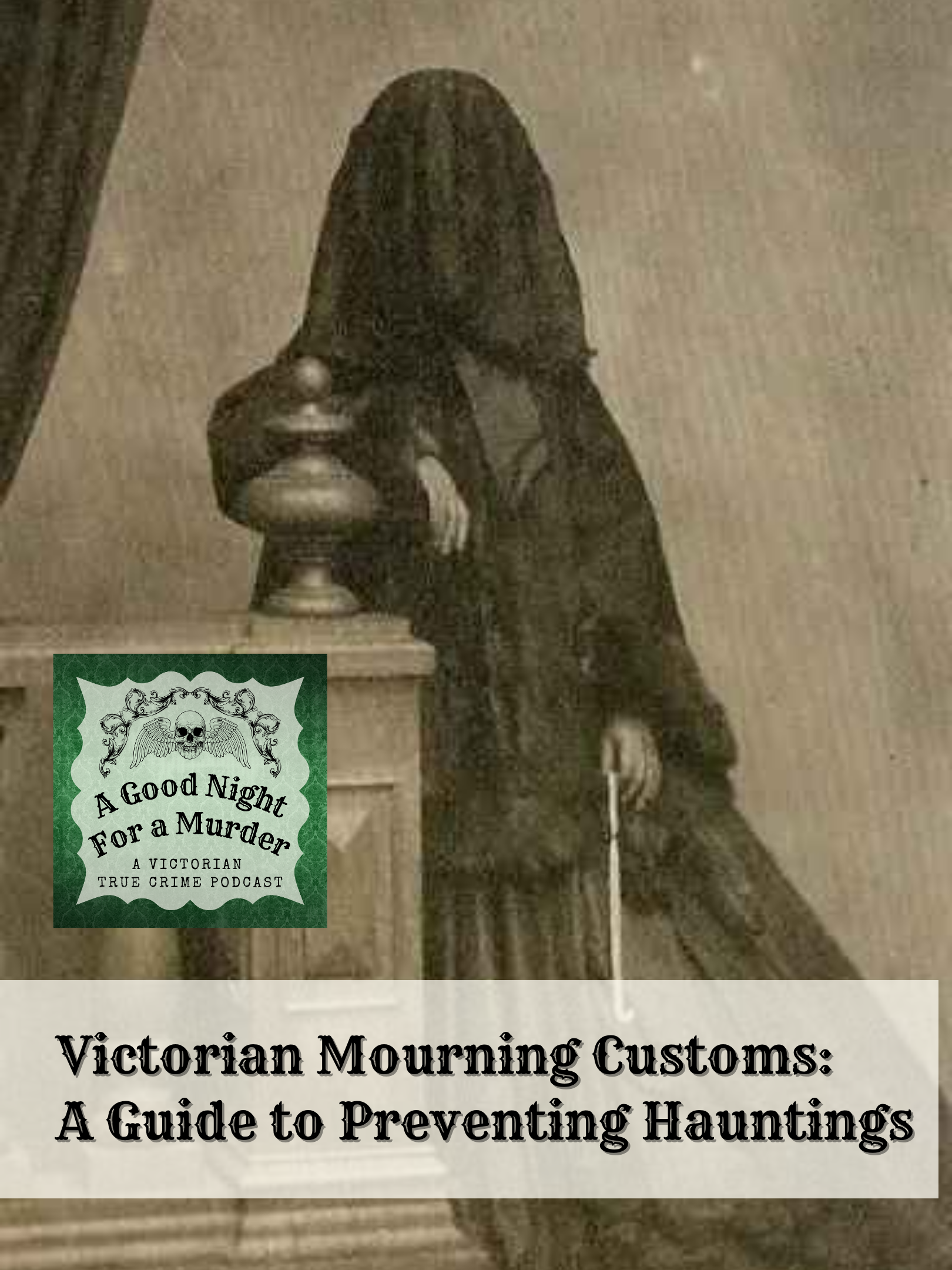
Victorians are known for practicing extensive and specific funeral and mourning traditions.
Why stop the clocks and cover the mirrors?
When was it safe to restart and uncover them?
And what if you didn't do it all exactly right?
I'll cover all this and more on this Good Night Snack episode.
More from this episode:
Free 7 day trial on Patreon
Merch sale at agoodnightforamurder.com
Use code GNFAM10
Follow along on Instagram, TikTok, and YouTube @agoodnightforamurder
-
ARTICLES
Widows’ Weeds: Mourning Fashion in the Victorian Era
Mourning Customs in Regency England
Women Grieving: Victorian and Edwardian Mourning Rules
Until We Meet Again: Victorian Mourning Practices
Victorian Mourning & Funerary Practices
Mid-Late Victorian Mourning Dress
The Victorian Cult of Mourning
A Victorian Obsession With Death
Taken from life: The unsettling art of death photography
Clearing Up Some Myths About Victorian ‘Postmortem’ Photographs
STOP ALL THE CLOCKS – AND OTHER FUNERAL TRADITIONS
8 Intriguing Funeral Customs from the Victorian Era
9 Creepy Victorian Death Traditions
THE STORY OF VICTORIAN FUNERAL COOKIES
Funeral Biscuits in the 1800s: What They Were, Why They Were Served, and How to Make Them Today
-
INTRO
Hello everyone, welcome to A Good Night for a Murder, a Victorian true crime podcast.
My name is Kim, and on tonight’s Good Night Snack episode we’re going to talk all about Victorian mourning and funeral customs
I’ll be covering:
the protocol from start to finish of what to do when someone in the house died,
how and when to wear mourning dress,
what food to serve at a funeral,
why did they do all this?
And what happened if the deceased decided to haunt the family instead of moving on?
Quick reminder that there is a sale happening in the merch shop at agoodnightforamurder.com
Use code GNFAM10 for 10% off
We have a lot to talk about - let’s get started
CONTENT WARNING
A Good Night for a Murder is a true crime podcast that does cover stories including death, violence, sexual assault, and other adult themes.
Please take care while listening.
EPISODE
Let me clarify, that most of these traditions were reserved for the wealthier members of society
Most middle and certainly lower class people did not have the means nor time to mourn the way the upper class did
Mostly, members of the lower class did what they could afford, but then, they had to get back to work
Now, I think the best way to work through all of the mourning traditions Victorians participated in, is to do so chronologically
As we know, Victorians were a superstitious bunch, so one of their first priorities when someone died in the house, was to make sure they didn’t get haunted
Most people did die at home in the Victorian era, by the way
Unlike today where most deaths occur in hospitals or care facilities, if someone in the Victorian era needed caregiving, it was the family that was responsible
Also, it’s not really fair to say their number one priority was not to get haunted - though that did play a part in it, I’m sure
For as much as Victorian’s bought in to the idea of an afterlife where their loved ones remained able to interact with them on our earthly plane, they also very much valued their loved one being able to move on in the spiritual or religious sense
You’ll still hear about this first task being practiced today, which is opening a window immediately after a person expires, so their soul does not get trapped in the room
This is actually less of a Victorian tradition, and more of an Irish heritage tradition
Celtic tradition and later Catholic influence prescribed that it was necessary to crack the window of the room of a decedent so that soul could begin its journey to the afterlife
Why the window and not the door or up the chimney though?
In Celtic folklore, windows and doors are seen as portals providing avenues for spirits to enter and exit though
As Catholicism began to influence early Celtic traditions, it became common to pray in addition to the window opening
The 19th and early 20th centuries brought massive waves of Irish immigration to the US and UK
The majority of these immigrants entered into domestic servitude, including nursing, and quietly continued practicing their own traditions where they now worked
Next, all clocks in the house must be stopped
This was in equal parts superstitious, symbolic, and practical
If the clocks were allowed to go on ticking, a spirit might get confused, thinking they still had things to do and places to be
Stopping the clocks was a way to tell a spirit that their time had ended
Clocks would often be restarted on the day of the funeral signifying that it was now time to “move on”
Symbolically, it signified for the family that they were entering a period of mourning
Their daily lives must be paused for awhile out of respect for their loved one, and to allow them time to mourn
Practically, stopping the clocks served to document the time of death
The coroner could count on the stopped clocks to help fill in a death certificate
Next step was to cover all of the mirrors, and cover or turn down any family photographs in the house
Many cultures regard mirrors as a window to the soul
They also reflect a copy of our world, and many consider them portals to other worlds
If you’re suddenly a ghost that now exists beyond the confines of the physical realm, you could suddenly become very confused by mirrors or even trapped in them!
If this interests you, I do have an entire episode dedicated entirely to mirror lore
In it I talk about more Victorian era mirror superstitions, plus the history of mirrors, the superstition of seven years bad luck for breaking a mirror, Bloody Mary, mirror Feng Shui and more.
It is on Patreon where you can access the entire back catalog of exclusive Patreon-only bonus content to binge as much as you want for only $2 a month
AND, there’s a free 7 day trial right now
I’ll put a link to that specific episode here in the description of the show
The reasoning applied to mirrors is also similar for photographs
Victorian’s wanted to avoid a spirit becoming attached to, or overwhelmed by, photographs of loved ones
Their concern was it might make the spirit hang around or even try to take someone from the living world with them
Like the clocks, mirrors and photos could be uncovered after the funeral
There was a symbolic component to this as well
It reminded those in the house that this was not a time to observe vanity or worldly concerns
This was a time of remembrance, introspection, and focusing on those around you
This sentiment was reinforced by essentially shuttering the entire house
Curtains would be closed, and all lights would be kept low
The exterior entry way and doorbell of the house would be draped in black fabric
This was a clear indicator that the household was in mourning and should be given privacy
A wreath of laurel, yew, or boxwood would also be hung on the door
Victorians were big in to floriography, or the language of flowers,
These evergreen plants were intended to symbolize that although the season had turned for that individual, their spirit would live on
They were also often decorated with black ribbon, or white if the deceased was a child or young and unmarried
There is still a lot to do though, and the family was generally not permitted to leave the house until after the funeral, which typically took place about 4 days after someone died
So, a close female friend would be enlisted to take over the household management, and begin funeral arrangements
It was she who was usually responsible for washing and dressing the body, and preparing the parlor for the viewing
On days 1 through 3 a constant, round-the-clock vigil would be held in the parlor with the decedent
The parlor was usually the largest room, plus the official gathering place in the home
But also, it was usually the best ventilated…
Close friends and family would participate in the vigil, and also house staff during the overnight hours
This was done not only out of tradition and respect, but also to keep things like flies, mice, and domestic pets away
Unfortunately, it was also done to make sure that the person was really dead…
Being buried alive was actually a valid concern during the Victorian era
Doctors could struggle to detect weak breathing or a pulse
Also certain diseases could induce comas or states of catatonia that exhibited muscle rigidity or drops in body temperature that mimicked death
Meanwhile this “close female friend,” who was often an aunt or sister of the resident family, would prepare flowers for the viewing, handle funeral invitations, and manage any other necessities which often included, but were not limited to, calling the post mortem photographer
We’ll start with the funeral invitations
This varied by geography, degree of logistics, and - of course - societal rules…
But, as funeral services were often held in the home, they were usually an invitation only affair
If attendance was anticipated to be too large for the home, the family could pay to hold the funeral in a church
Funeral invitations came on special mourning stationary that featured a thick, black border, so they could be mistaken for nothing else
Hand delivery by private messenger was also very important
By the way, if you received an invitation to a funeral, you had better find a way to go…
It was terribly poor etiquette to skip such an event
If the invitations proved too exhausting for the family though, a death notice could also be printed in the paper
Families sometimes did a mix of both using the newspaper announcement to preserve their peace, while issuing just a few invitations to very close friends and family that would serve sort of like a “ticket” in to the funeral
Another custom was to call the post mortem photographer
Post mortem photography is when families would pose for photos with their deceased loved ones
Now contrary to popular belief, they were not propped up with stands and clamps to look like they were still fully alive
Those things did exist, but they were intended for use on living subjects
Portraits often required someone to sit still for a full minute or more and the props help avoid movement that would produce a blurry photo
The decedents in post mortem photos were usually styled to appear to be resting peacefully on a couch, or in bed, or in the case of children, cradled in their parent’s arms
This practice that sounds completely morbid and bizarre to our modern sensibilities
But, in an era before modern photography, people could go their whole lives without having their picture taken
So, it was common for families to commission memorial photos
The reasoning behind posing alongside the deceased as if they were still alive is surprisingly simple: people wanted to remember their loved ones as they were in life
They would keep these photos as “momento moris,” which is a Latin phrase that translates to “remember your mortality” or “remember, you will die.”
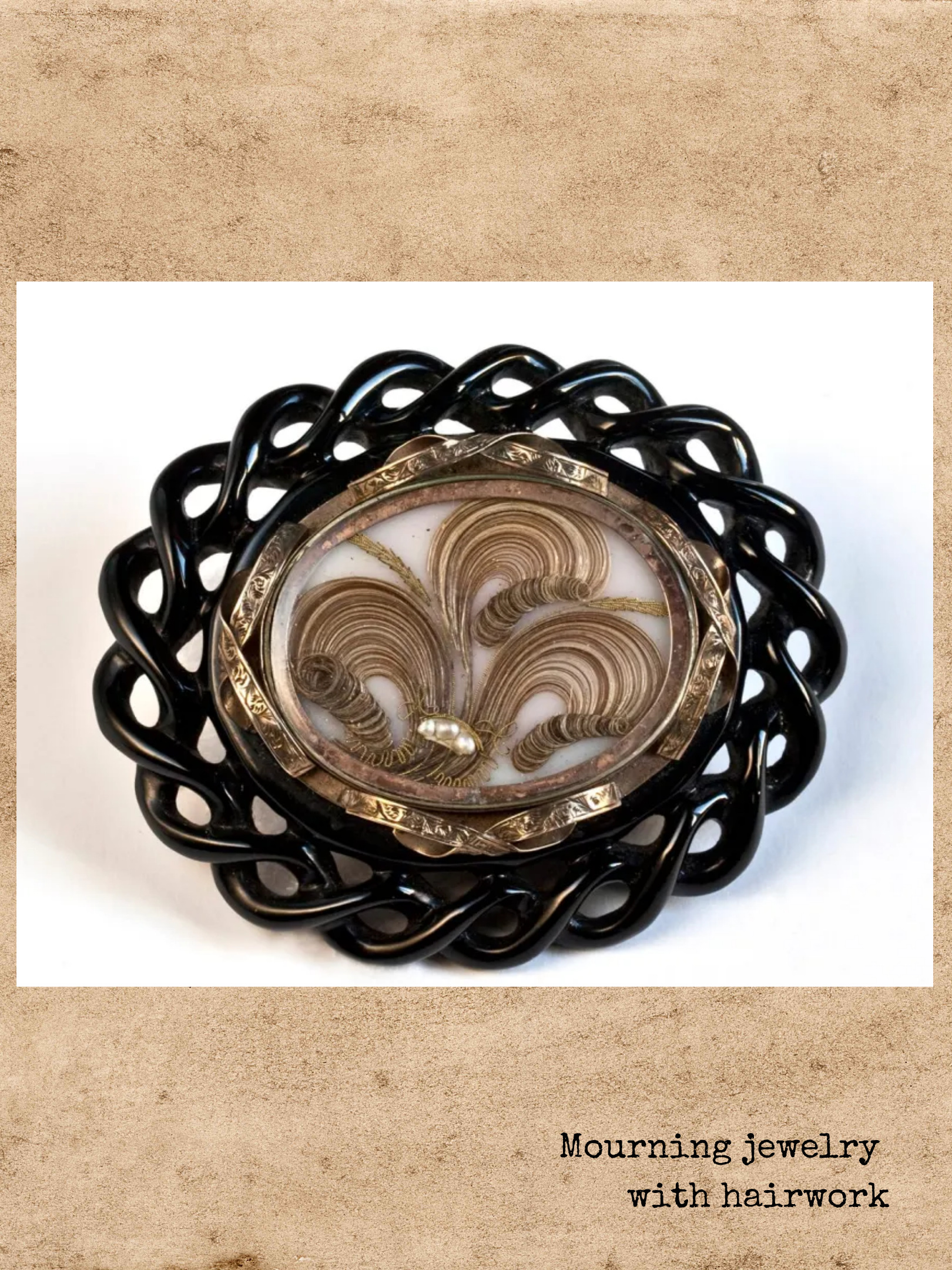
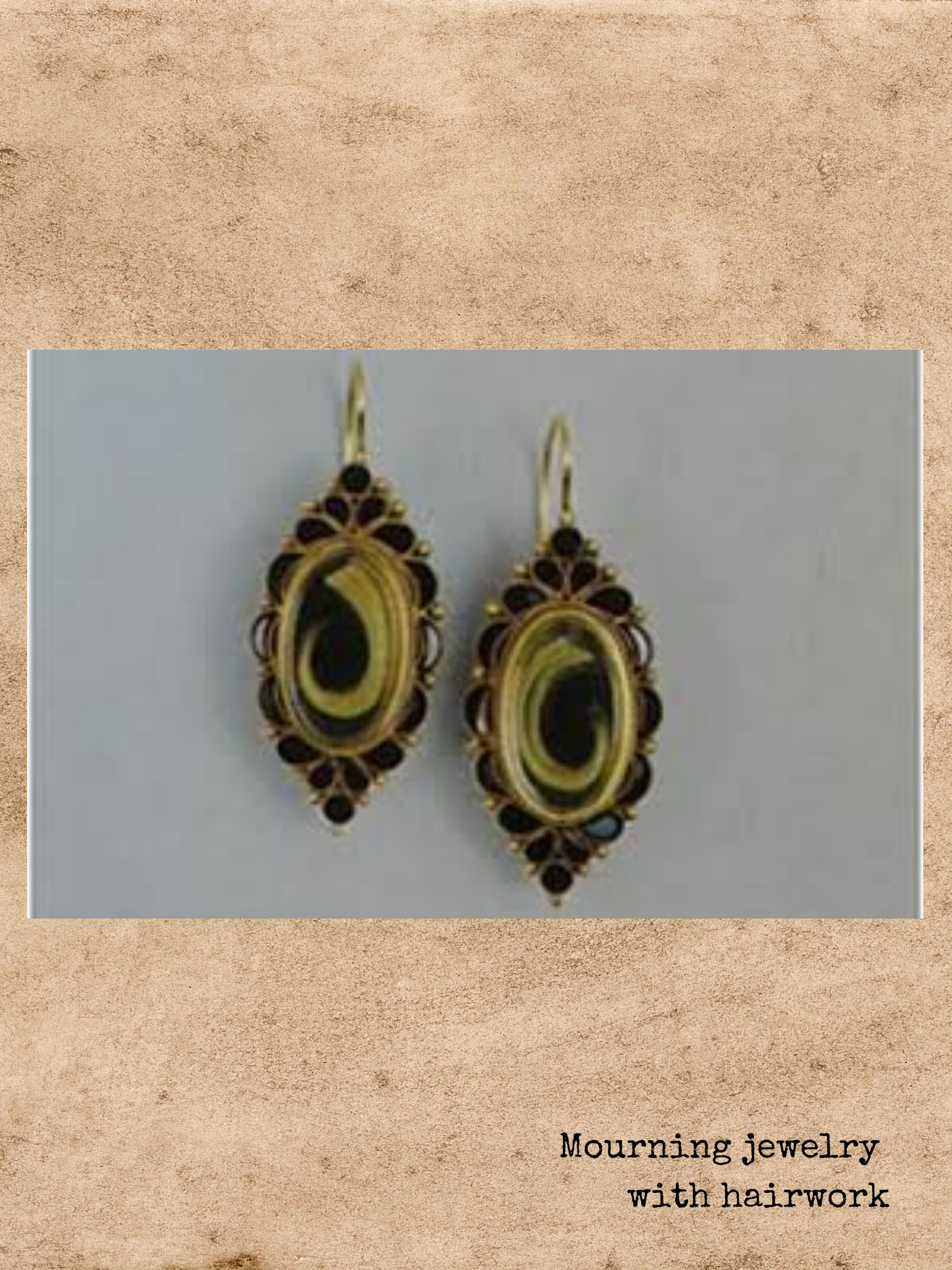
Another “memento mori” the Victorian’s were known for is saving locks of hair
Hairwork was a thriving, specialized profession in the Victorian era
Locks of hair, not only from the deceased, but also babies, children, new brides, and more, would be preserved by weaving them in to intricate designs that would then be turned in to jewelry or other display pieces
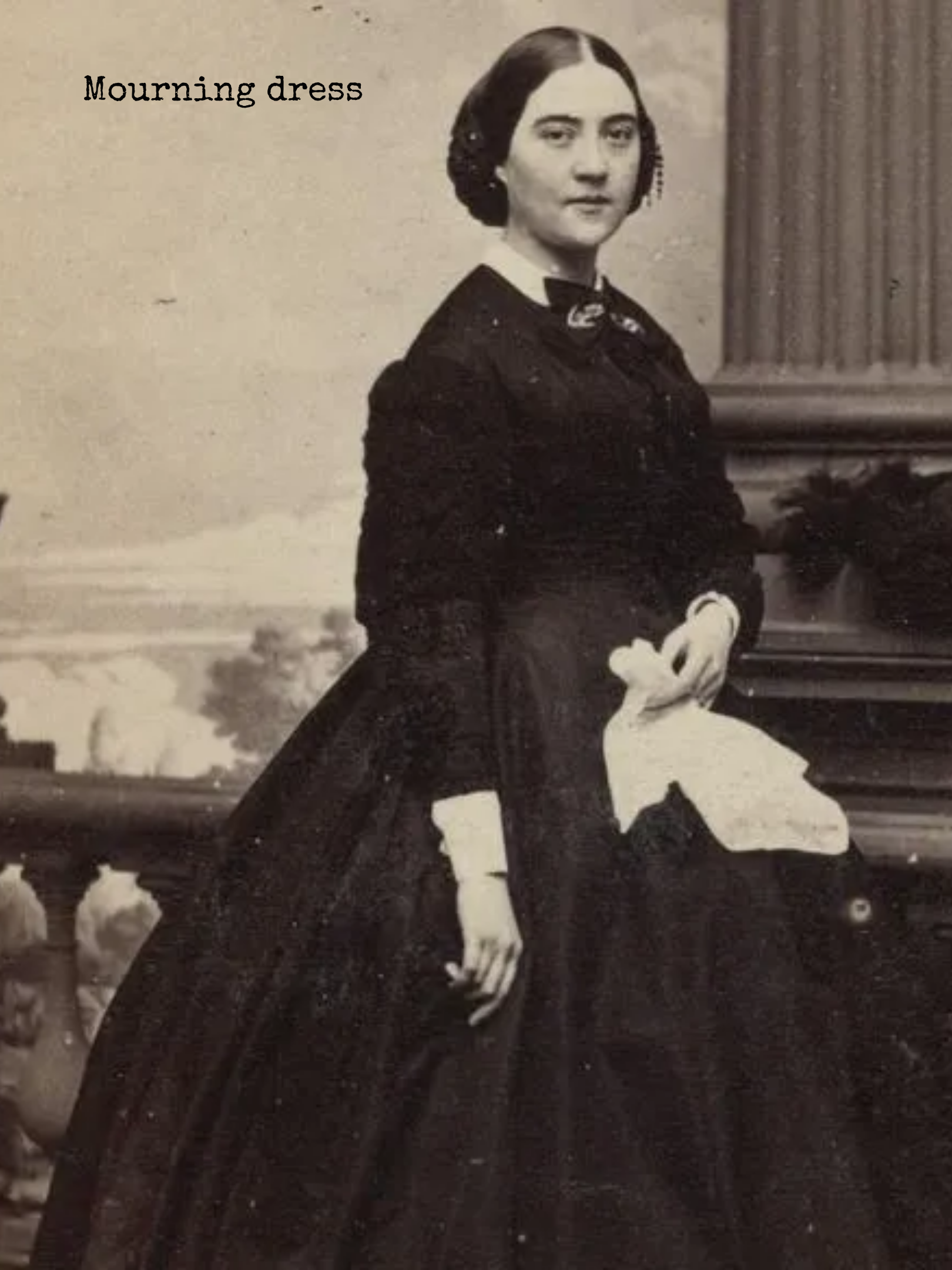
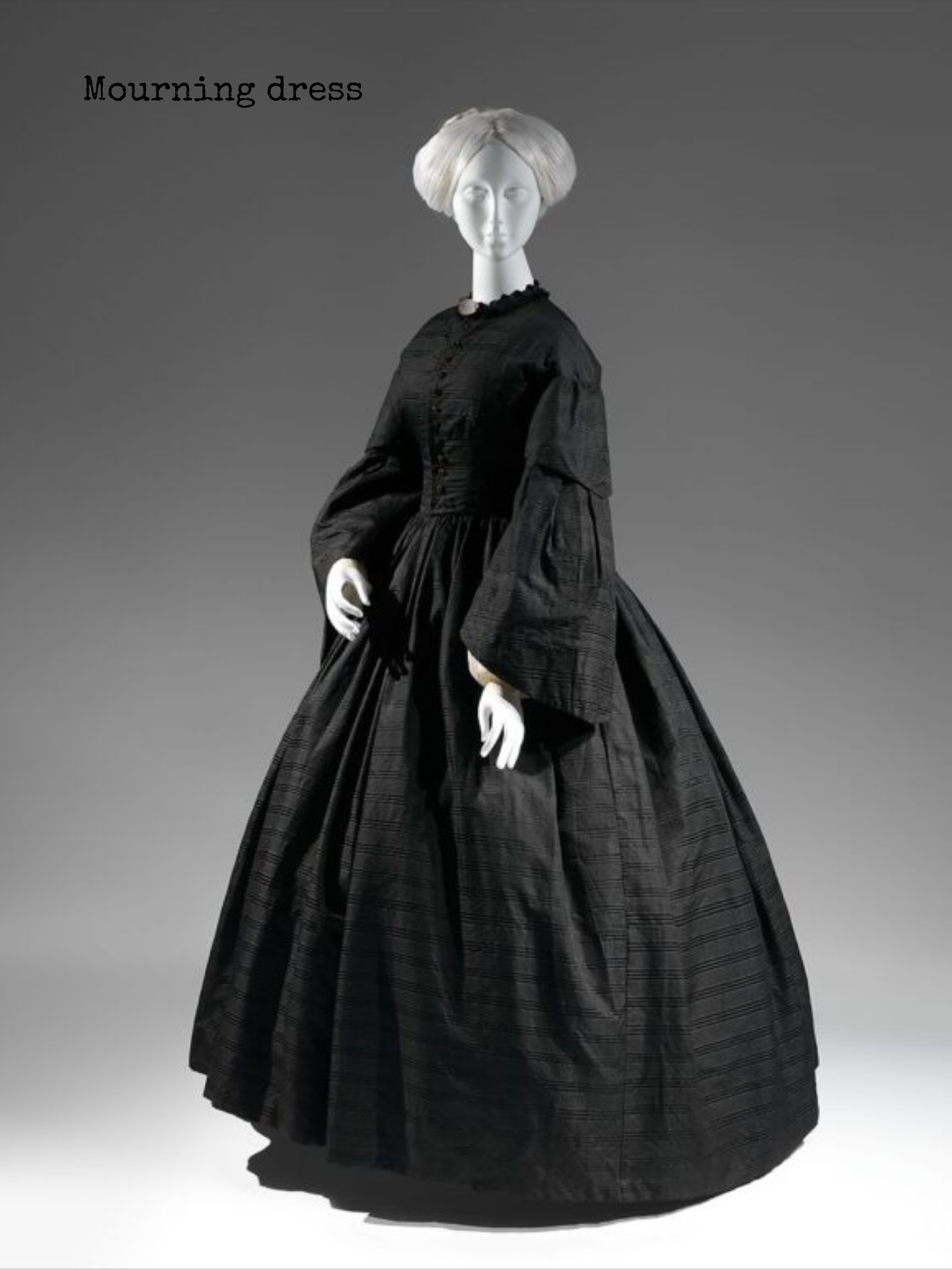
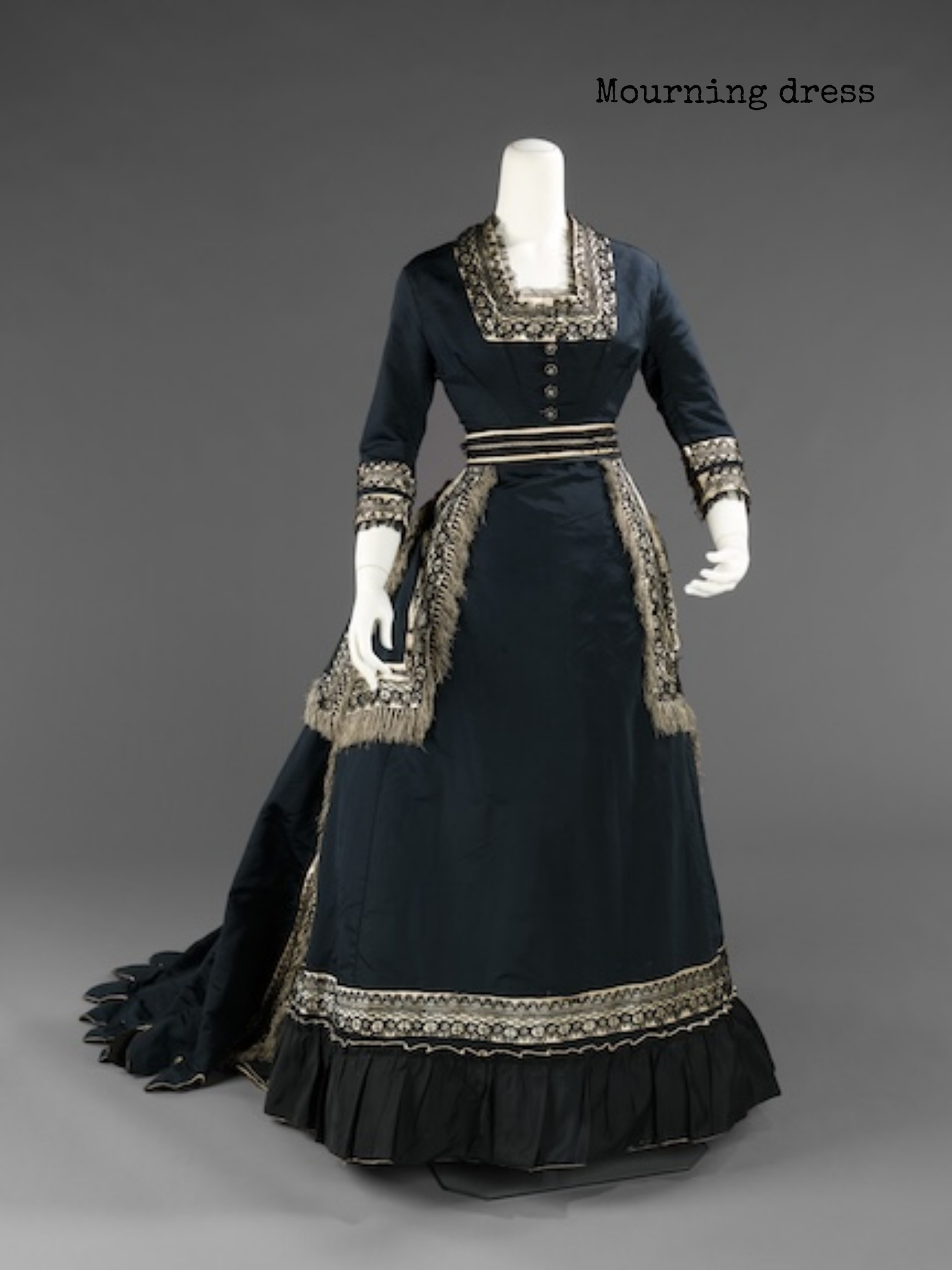
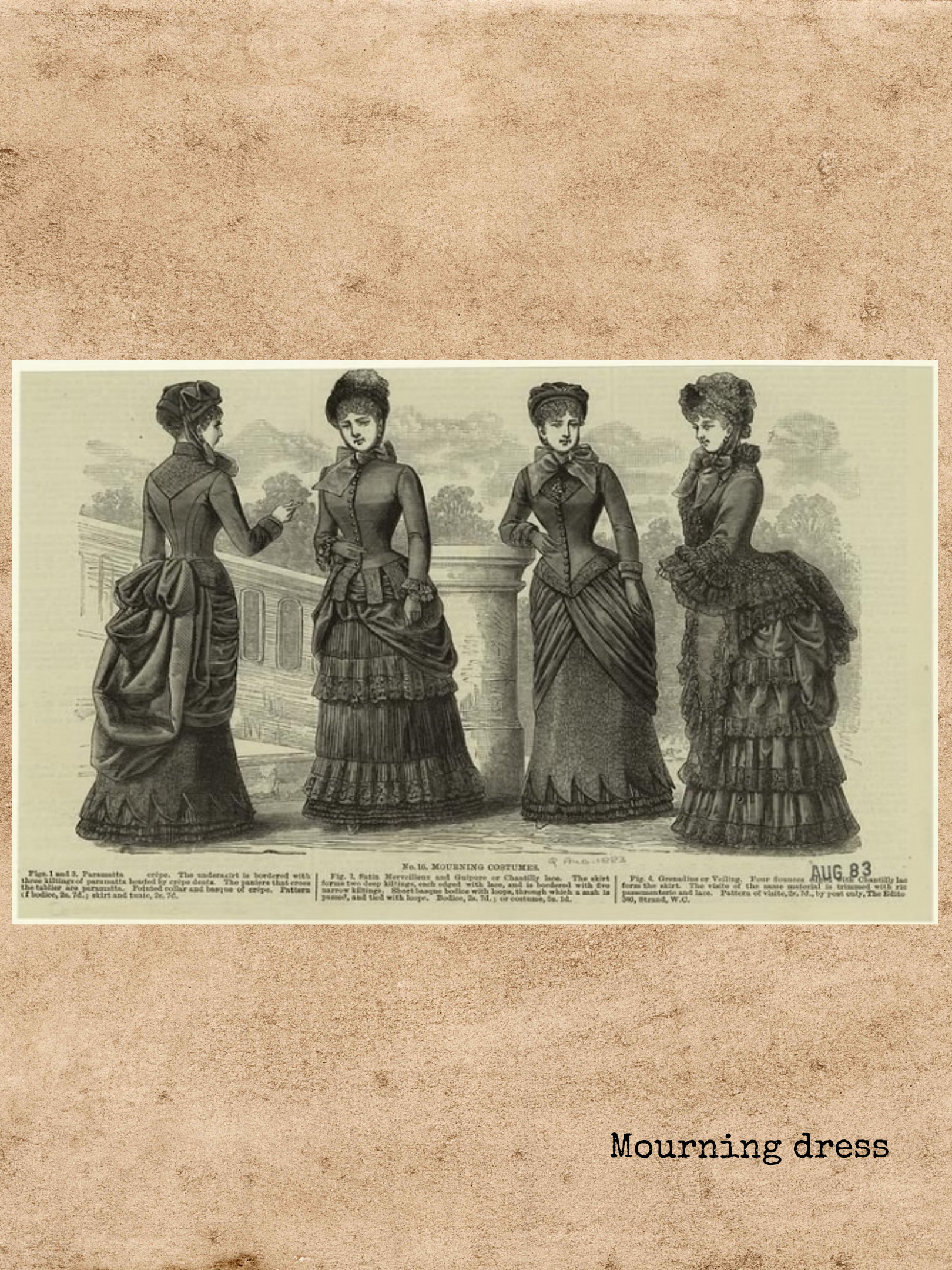
Speaking of things Victorians would wear, let’s talk about mourning dress
Immediately after the death of a loved one, everyone in the immediate family and some of the extended family were expected to change their style of dress to indicate they were in mourning
Depending on their relation to the deceased, they were expected to keep this up for several months to a year or more depending on several factors
I’d say about 90% of the rules of mourning dress are directed towards women.
So we’ll handle those first then circle back to the expectations of men and children
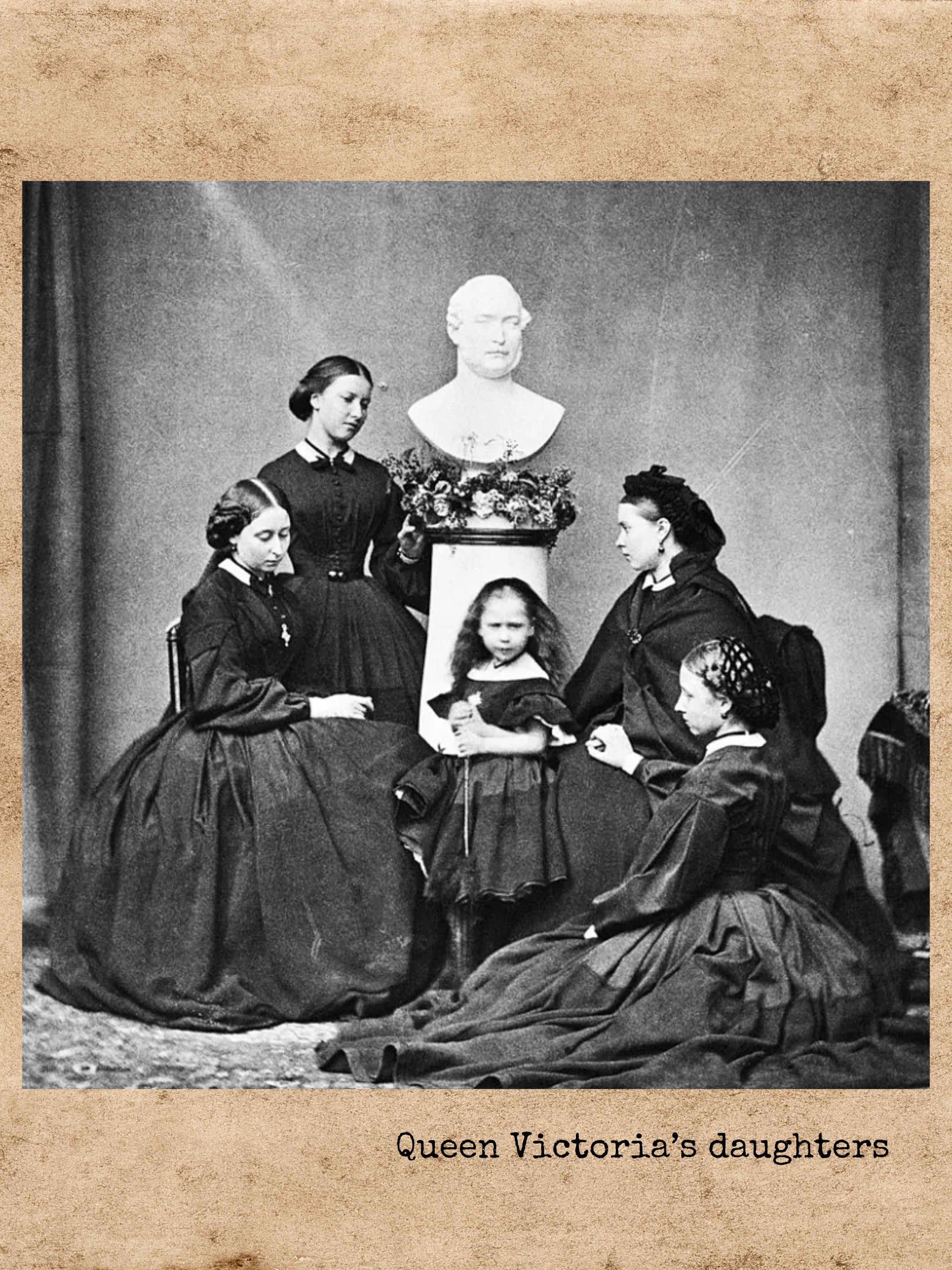
First, “deep mourning” or first mourning was reserved for a woman mourning the loss of her husband and for immediate family.
Relatives wore the deepest color of black dresses in fabrics that were stiff and dull like wool or crepe.
Dresses had to be plain and were not to have any trimmings like bows or ruffles.
No jewelry was allowed, and any necessary pins or buckles had to be completely black, as well as shoes and gloves
Widows also traditionally wore a 6 foot black veil made of 2 layers of crepe fabric
It was heavy, not breathable, and fabric dyes and other treatments often irritated women’s eyes, noses, throats, and lungs
Deep mourning lasted for a year
During this period, women were expected to stay home, and not court, marry, attend any parties, social gatherings, charity functions, or otherwise
Extended family were expected to follow the rules of “second mourning” for about 6 months
Immediate family and widows would also advance from deep or first mourning to second mourning
During this stage, different black fabrics as well as white collars, cuffs, or shawls were permitted
Straw bonnets were also allowed so long as they were decorated with only black ribbon or flowers
Black mourning jewelry, most commonly made out of a dull material called jet, was allowed, as well as the memento mori hairwork pieces we talked about before
It was about this time that widows could also exchange the heavy veil for a lighter version
The last stage is called third mourning or half mourning
This is when one could start to introduce gray, lavender or white to different parts of the wardrobe
Fabrics like cotton or silk could be integrated, and gold jewelry could be worn
This phase was, again, expected to last, give or take 6 months
So, depending on how close you were to the deceased, a woman could spend anywhere from 6 - 9 months to a full year plus in mourning
If another relative died while you were in mourning, that period didn’t count “time served.”
Family were expected to re-enter mourning for the appropriate time period
The rules of mourning so far as dress and behavior for men were significantly less life altering
Men were not subject to any of the isolation rules as women were
While it can be argued that men were the breadwinners and were required to go to work, they could otherwise go about their business as they pleased
The most common indicator a man was in mourning was wearing a black band on his hat
If the band was very wide, that was indicative of “deep mourning”
If it was more narrow - 2nd or 3rd mourning
They might also wear less shiny gloves or cufflinks…
They were only expected to keep this up for about 3 - 6 months
It was acceptable for a widower to be married again within a year, especially if they had children at home
Children did not have heavy mourning burdens placed upon them either
Younger children would often be dressed in white to signify their innocence and distance from death
Older children’s clothes would follow the rules of half mourning, though the timeframe for dressing as such would not be nearly half as long as it was for adults
Interesting, Victorian society treated men and children in much the same way while women bore the brunt of heavy mourning traditions…
Anyway!
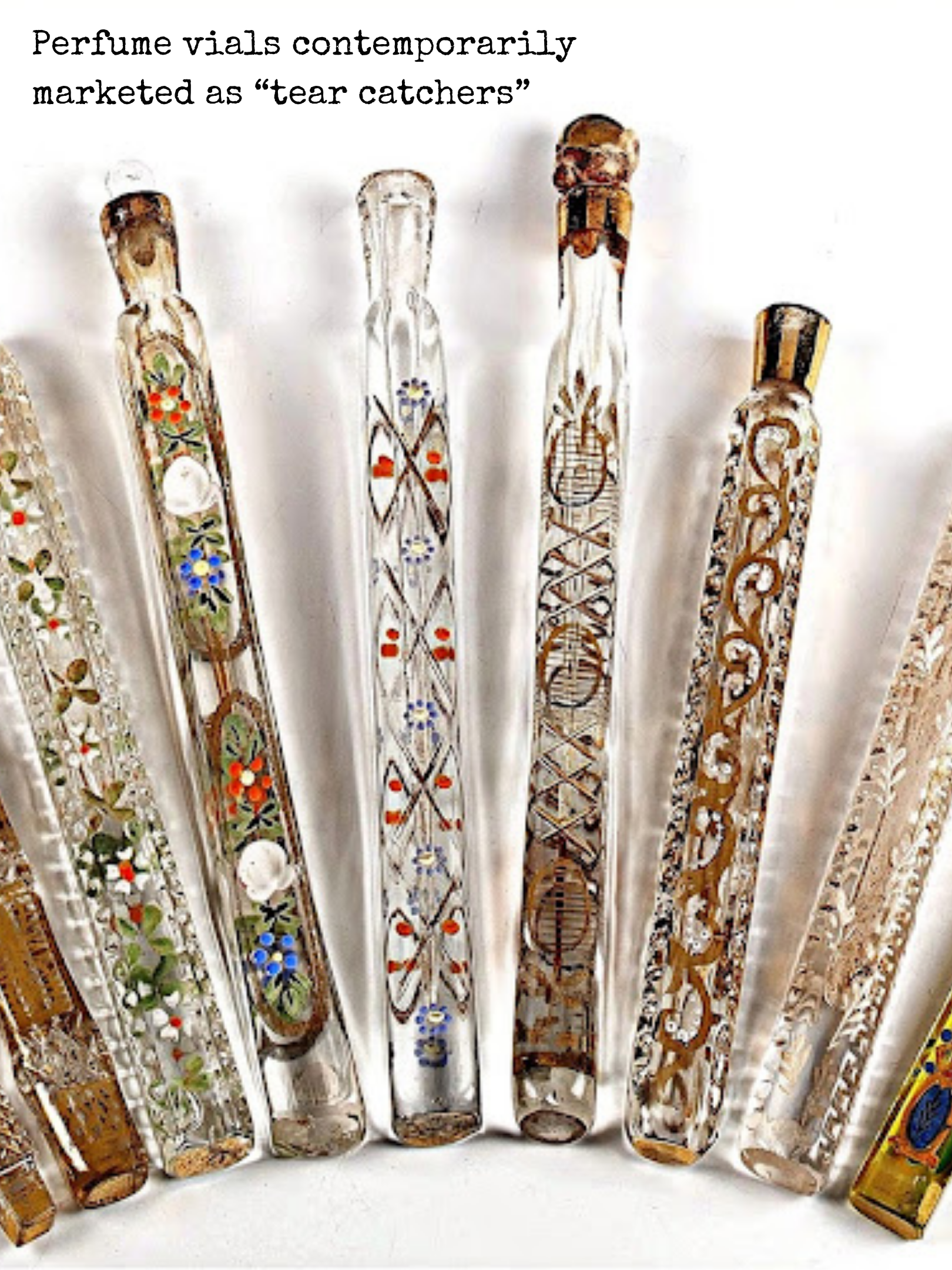
One thing Victorian widows and mourners did not use were “tear catchers”
There are a number of small glass vials that can be found amongst some antique dealers that are marketed as “tear catchers,” stating that Victorian era widows would use them to collect and measure the tears they shed for deceased husbands
There is zero evidence of this practice
More likely is these were just perfume vials that modern resellers wanted to romanticize to turn a profit
So, clocks are stopped, the pictures and mirrors have been covered, the memento moris have been taken, the funeral invitations are out, our mourning dress is on…
It’s time for the funeral
Like the viewing, the funeral service would be held in the home
As mentioned before, if the house could not accommodate all guests, it could also be held at the church
When it came time to head to the cemetery - and this is very important - the body must be carried out feet first
If not, it was believed the deceased could look back at the house, and may stay and haunt the house
Or, worse, they could beckon a loved one to follow them in to death
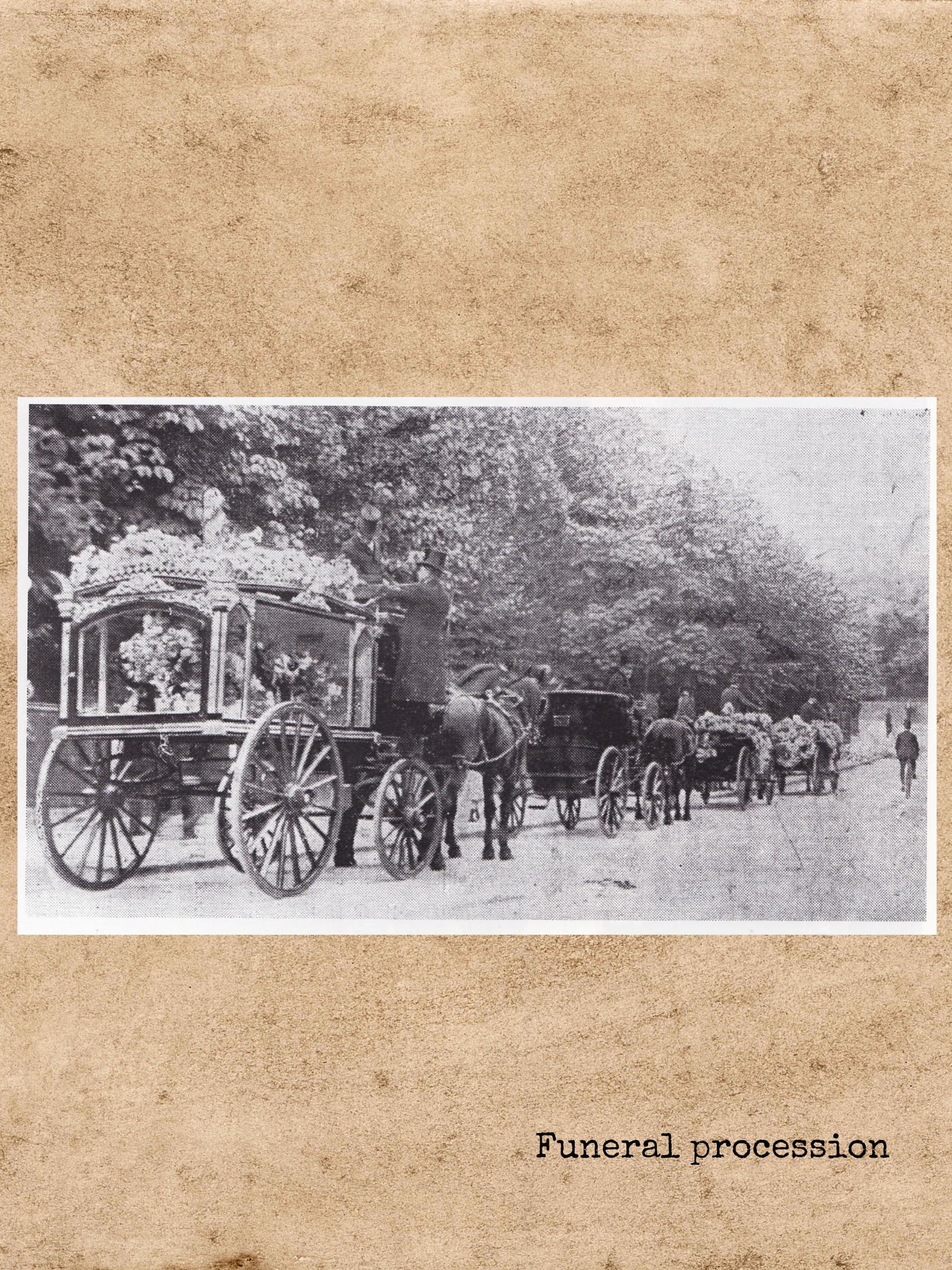
The funeral procession usually included the clergyman, 6-8 pallbearers, the hearse, then the carriage of immediate family members, followed by other carriages for extended family
Only the men though…
That’s right, traditionally, women would not attend a graveside service
In rural communities where societal rules were less stringent, women would attend
But in high society, women were considered too emotionally fragile to be present at a burial
Also, if they let the women go to the funeral, who would be preparing the meal for when the men got back?
It’s true - after the funeral, guests would return to the house for post-funeral snacks called a collation
This would consist of light finger foods like cold meats, bread, cheese, and pickled vegetables
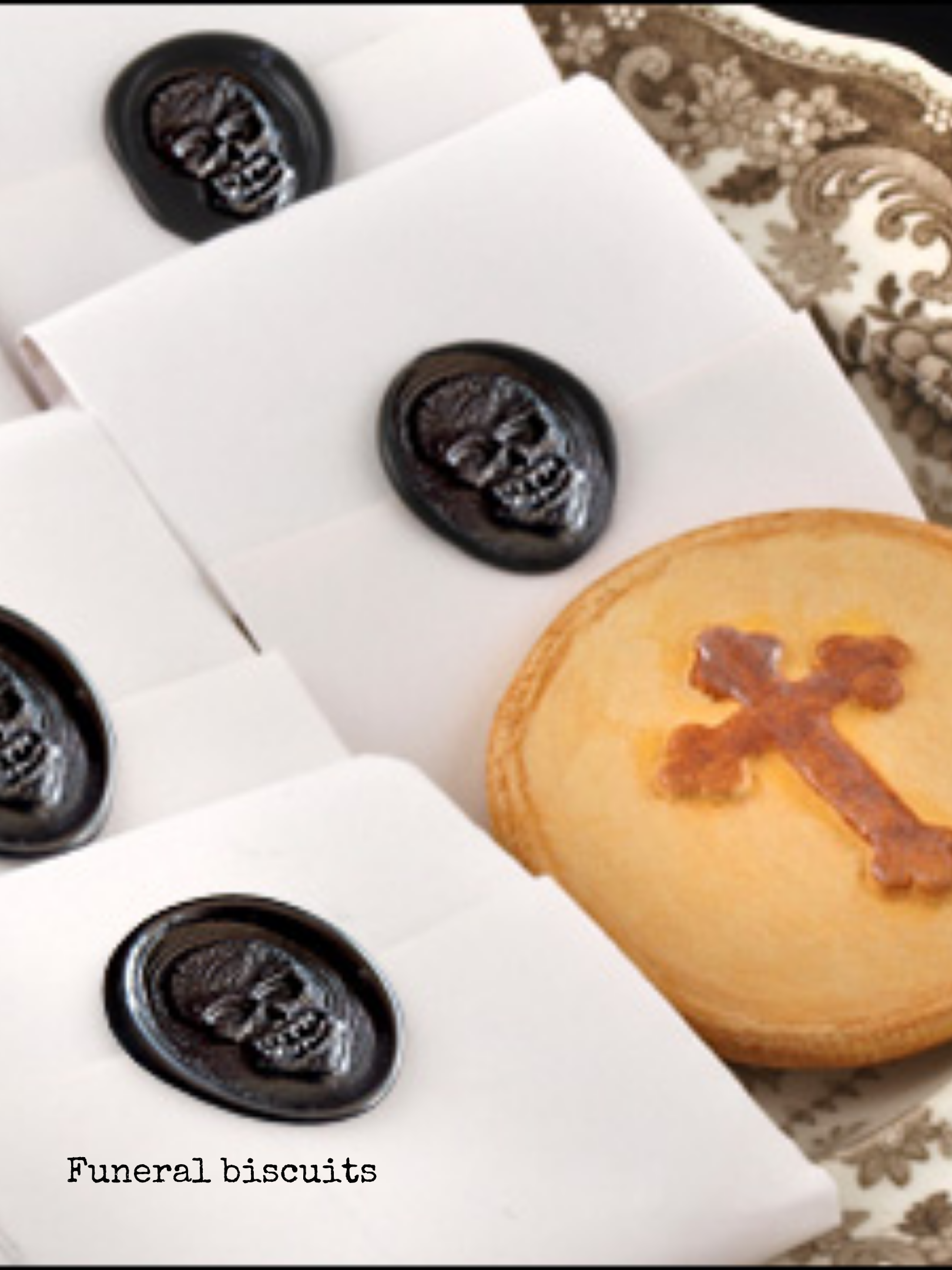
This fare varied, but one usual staple was funeral biscuits
These were a heavy, dense sort of cookie that was heavily spiced with ginger, caraway seeds, or molasses.
These were made to keep, and served as a practical bite to sustain those mourning for whenever they found the strength to eat a little bit
They were often wrapped and sealed with black wax, and many also saved them as keepsakes
Also common were what has come to be known as “funeral pies”
These were pies made of raisins or other dried fruits
Dried fruit was always present in pantries no matter the time of year, making it the most convenient choice for a funeral meal
Port wine or sherry was the traditional drink, often spiced with cloves, nutmeg, ginger, and mace.
It was also customary, by the way, that after the body had been carried out of the house, clocks would be restarted, the curtains reopened, and photos and mirrors uncovered.
This reversal ritual was to indicate that it was okay for everyone to now move on, including any spirit that may be lingering in the house
But… what if… they didn’t move on though…?
What if the family suspected they were being haunted by the spirit of someone recently deceased?
Remember, many Victorians viewed the afterlife as just a continuation of earthbound life
They believed that after death our friends and loved ones were going on about their business all around us
As such, a haunting wasn’t necessarily something to fear
Victorians often approached a haunting - especially one following a recent death - as sort of a problem or puzzle that needed to be solved.
What needed to be done before they could cross over?
Did they have some unfinished business?
Was there a message they needed to get across?
Had some accidentally left a clock ticking or a photo uncovered!?
Whatever the issue, there were two primary ways to resolve a haunting
First, was a seance
Families would hire a spiritualist medium to come conduct a seance right there in the parlor, with the goal of contacting the spirit to find out what has holding them back from moving on
The second was collectively referred to as “ghost laying”
This encompassed a variety of methods for ridding a space of ghosts including prayer or folk remedies
Some remedies included sprinkling salt along windowsills, burning protective herbs, or the use of iron rods or other items to “bind” a spirit to its grave
Which of these methods Victorians chose to deploy depended mostly on “the vibe” of the haunting
If the spirit was appearing in corners gazing at you pleadingly, they probably just had to tell you something
But if they were being a menace and making loud sounds in the night or throwing things, stronger measures needed to be taken
Finally, we literally just talked about this in the last episode which was “The West Port Murders: Burke and Hare,” where the Victorian society tip was about how to prevent bodysnatchers
So, if you want an in depth review of the measures Victorians took to do so, go listen to that episode if you haven’t already
But since it’s very relevant to this episode as well, we’ll just do a quick recap now
Body snatching was a problem most prevalently from the late 18th century through about the 1830s
And it didn’t matter if you were wealthy or poor - it was all the same to the body snatchers
The key difference was what lengths one’s family could afford to go to protect their loved ones’ graves
So, from the least invasive to the most complex, we have:
Holding the body in a secure mortuary house for a few weeks
Or, wealthier Victorians would just make use of locked stone mausoleums
Body snatchers were only interested in fresh bodies, you see…
Otherwise there were watch towers and watch societies
Watch towers were tall stone towers within the cemeteries that were for public use, but most often staffed by cemetery management
Watch societies were kind of a club you and your friends made with the promise to stand vigil over all of your graves when your time came
There was also something called coffin collars, which were U shaped metal rods that would be fitted over the decedent’s neck and bolted to the bottom of the coffin
This worked because body snatchers would often dig down at the head of the grave and break open just one end and pull the body out that way
For this reason, some wealthier families elected to use sturdy metal coffins that were more difficult to break in to
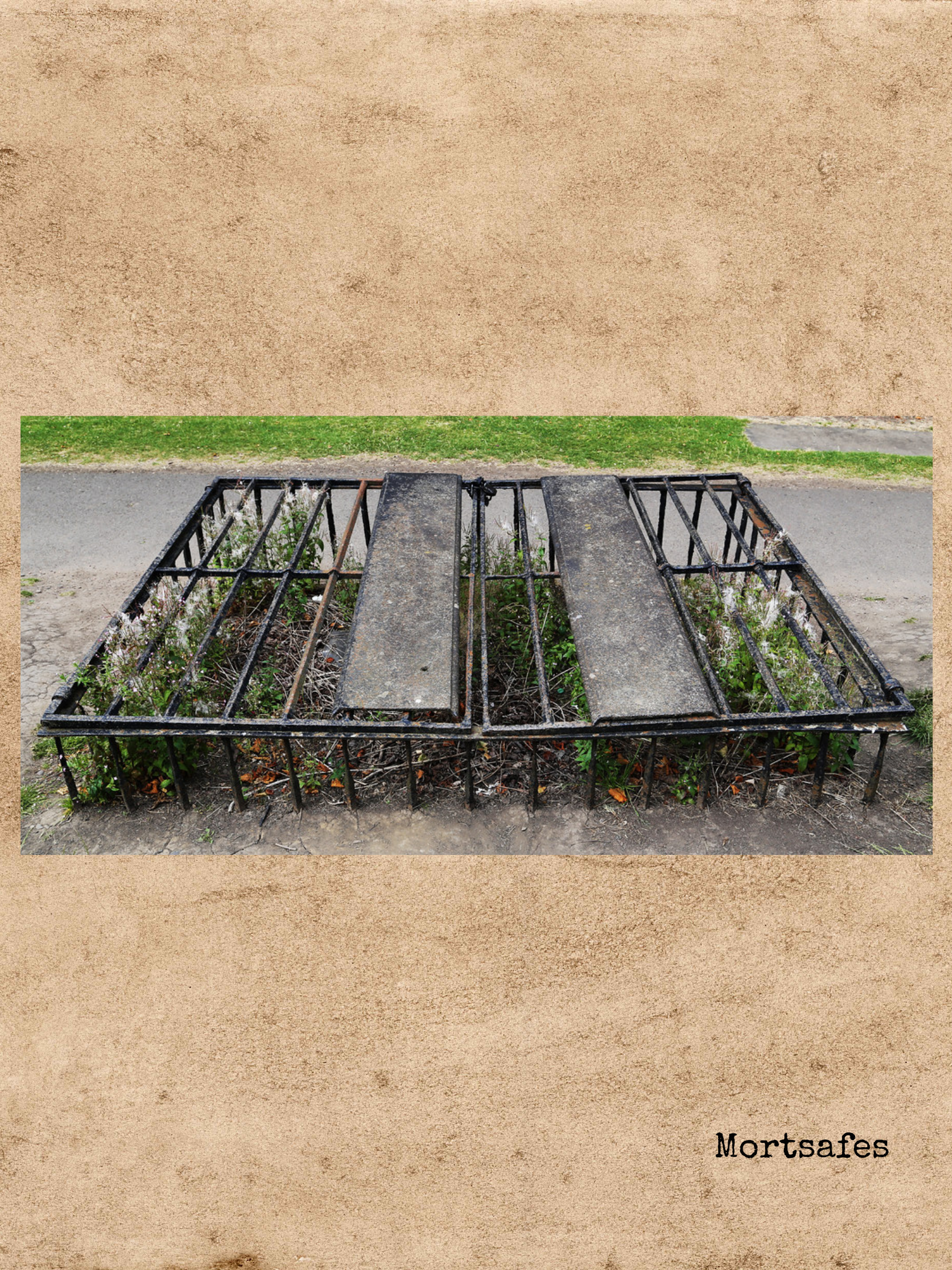
To keep body snatchers out all together, mortsafes could be rented
These look like an iron work cage over a grave
This sounds and looks pretty unsettling to us, but they served to keep body snatchers out by enclosing the entire grave within a metal frame
And for those very serious about protection, there were grave guns and coffin torpedoes
These sound like they’re straight out of a Bugs Bunny cartoon
And while they weren’t super common, they were real.
Grave guns could be rented for a few weeks and operated by a series of trip wires
Coffin torpedoes were as they sound - torpedoes that would detonate if the coffin was tampered with
To us, here and now in the 21st century, a lot of what Victorians did can sound excessive
So, why were they like this?
And what would happen if you just didn’t participate in all of the rituals?
There are 4 main reasons why Victorians adopted these practices around mourning and funerals
First, death and dying was simply just more woven in to the fabric of everyday life then than it is today
Today, nearly 80% of deaths occur in hospitals or care centers
In the Victorian era it was more common for those who were sick, injured, or at the end of life to stay in their homes and be attended to mostly by family members
And while it’s kind a of a myth that the mortality rate was much higher for adults back then, one thing that is true, is that while people may have been surviving their traumas or ailments, having their care take place at home kept others in the community much more aware of what was going on
You knew the neighbor’s mother was ill, another neighbor’s son in law had infection from an accident, the shopkeeper’s daughter was fighting a fever
And you were aware of their progress
The question of “are they going to make it?” was frequently a part of that conversation
So, for Victorians, death and dying was more present and constant
It would only stand to reason that their customs when someone died would impact their daily lives just as much
I’ve heard some say that Victorians had such extended mourning rituals, particularly for women, because women didn’t really want to get married again
That women would use being in mourning as an excuse to stay off the marriage market
And while I 100% believe that was true for some, being in mourning wasn’t like… taking PTO…
It was extremely restrictive on women’s lives
The sentiment was that so long as you’re in mourning, you’re supposed to be at home
This applied to pretty much everything except church - no dances, balls, luncheons, events, nothing
Plus, for many women, not having a husband was like being out of a job
Family may extend some generosity towards them, but otherwise, since women of a certain class rarely worked, the clock was ticking on how long a woman could afford necessities without a husband
If she had children that was even more incentive to find a source of security again
Another reason these rules existed was just an extension of Victorian ideals overall
Victorians believed outward appearances were a direct reflection of a person’s morals and character
If your home and dress were tidy and well maintained, you could count on that person to be reliable and honest as well
As such, it was not acceptable to appear overly emotional in Victorian society
So when Victorians lost someone they loved, they were usually not encouraged to display their grief
But, there was a very sanitized, scripted set of mourning customs you could follow
And that was much more acceptable
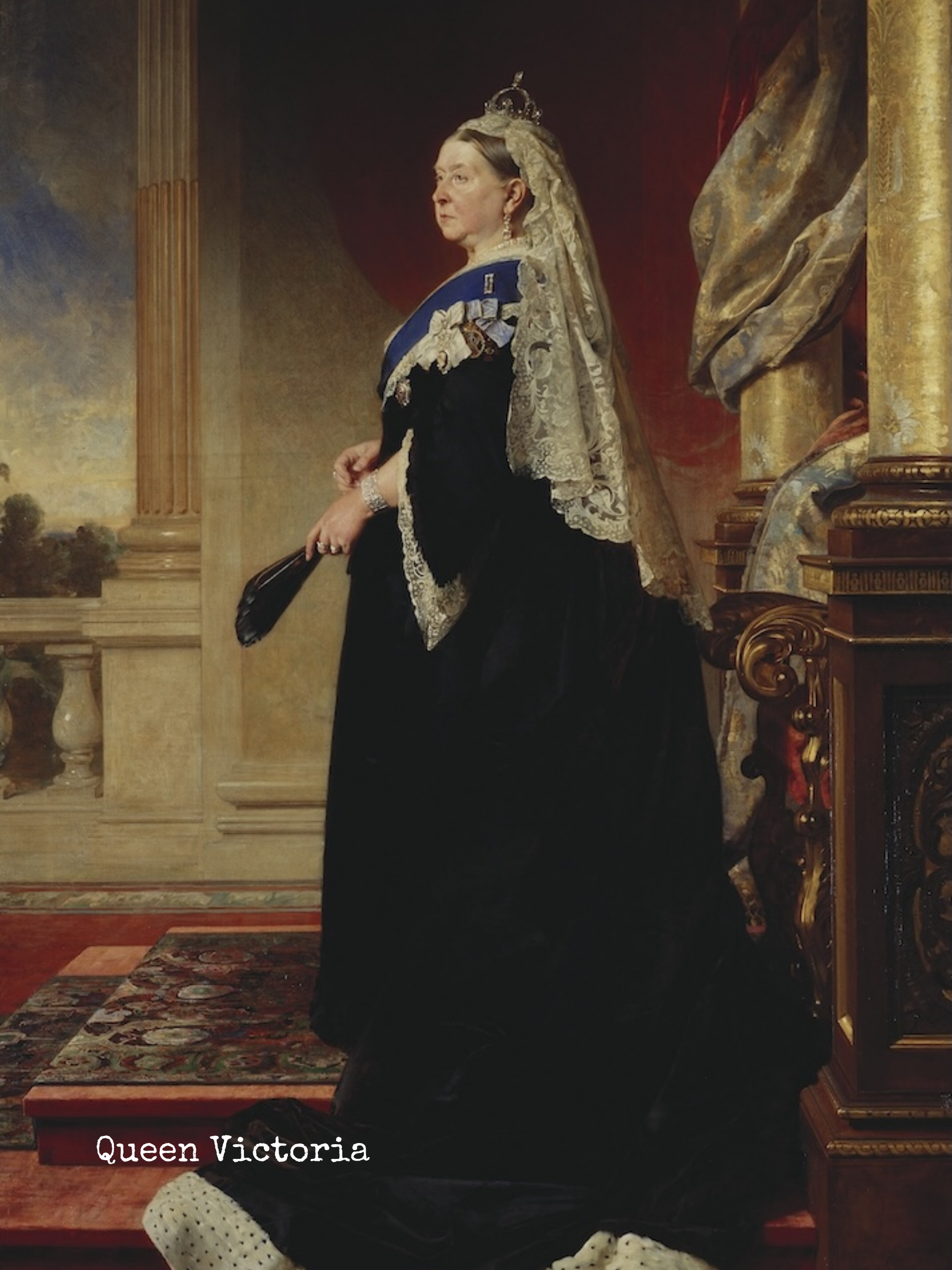
Beyond the standard rules of decorum, another reason was because that’s how the royals mourned
Queen Victoria, whom the Victorian period is named after, mourned her husband for decades
She wore mourning dress until the day she died, refused to consider remarrying, and never fully returned to her royal duties
Now I know I just got done saying women were significantly pressured to be married again, but the queen makes her own rules
The takeaway was that it was en vogue to mourn as long as possible
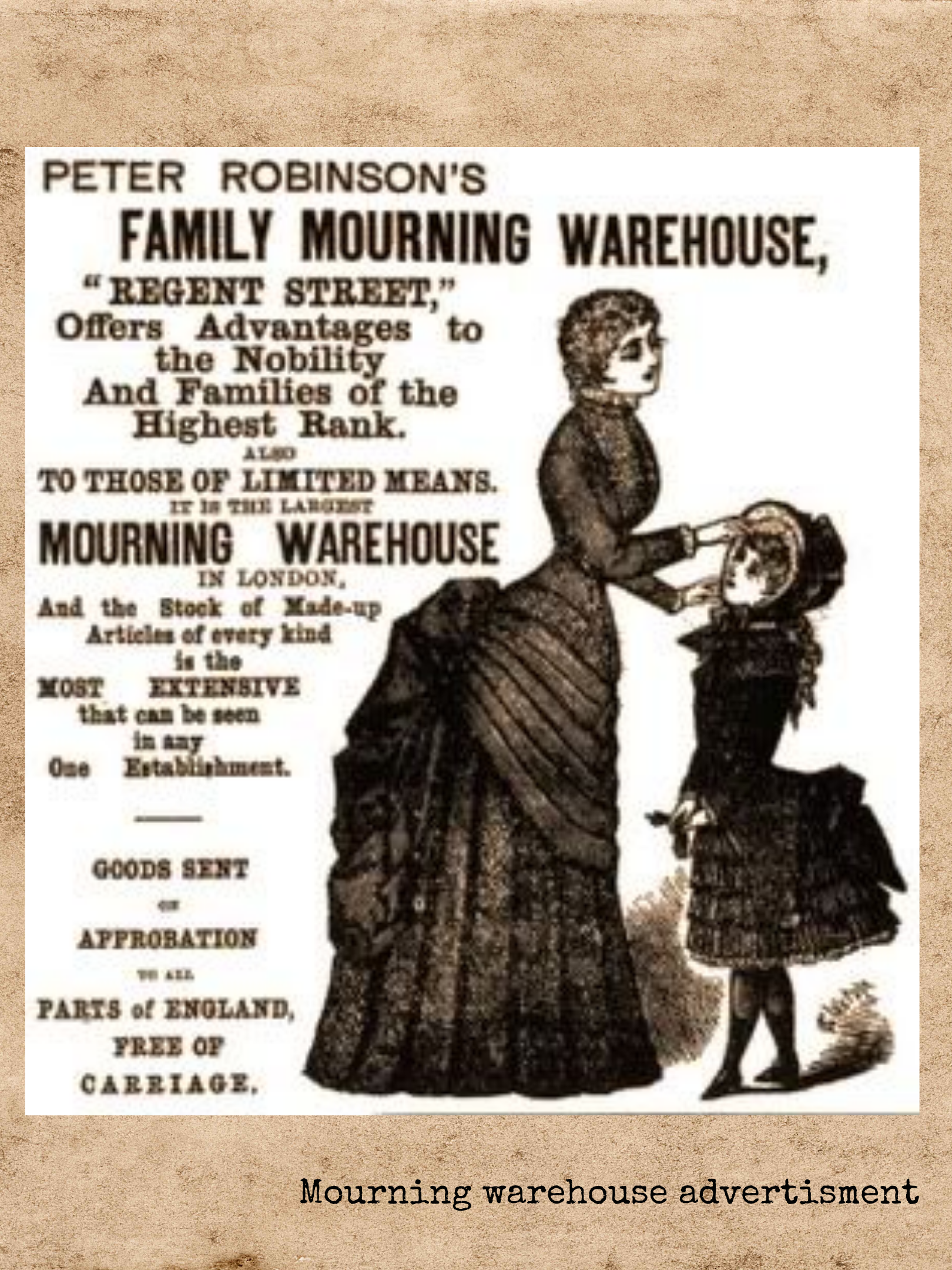
The final reason for why Victorians seemed so obsessed with death and mourning, is good, old-fashioned Capitalism
Just like today, if there’s money to be made, people will find a way to make it
Those who dealt in the mourning and funeral sales industry were all too happy to capitalized on the societal pressure to follow these very visible mourning protocols
Because if there’s anything worse than losing a loved one, it’s being shunned from society
And, if there existed a thing to “help you mourn,” and you didn’t use it - were you really in mourning?
Opting out could give the impression that one was cold, callous, or untrustworthy
And that reputation could trickle down to your whole family
Do you want to ruin your family’s reputation because you didn’t like wearing your mourning veil?
Just wear the veil!
You understand my meaning…
Businessmen of course recognized the enormous influence of the mourning process and were there to exploit it at every turn
Now by this point, some of you may be thinking you could never handle mourning customs the way the Victorians did - and you’re glad traditions have evolved
But, I also know there are a lot of you out there who find some of these Victorian era rituals… kind of lovely…
In a world where our jobs offer less than a week of bereavement time even for your closest family members, I totally get it
I am curious to know what you think about the Victorian mourning customs we discussed tonight though
If you’re comfortable sharing, let me know if you or anyone you know actually practice any similar traditions
If you’re listening on Spotify, you can comment on the episode there
Or if you head on over to Instagram, TikTok or YouTube @agoodnightforamurder, you can let me know what you think there as well.
I’ve also posted some photos of mourning dress, Victorian hair work and more.
You can also see the photos and source links for this episode on the episode blog n on my website at agoodnightforamurder.com
Also follow me on Instagram, TikTok, or YouTube @agoodnightforamurder
Please rate and review, and share with friends
Thank you for listening, and I will talk to you again soon